Water Scarcity and Everyday Challenges in Foskadanga
Before 2022, water scarcity was a part of everyday life in Foskadanga village in the Alipurduar district of West Bengal. Villagers struggled to access water for household needs, bathing, livestock care, and farming. Often, both women and men had to travel long distances to fetch water. The shortage affected not only people’s daily lives but also farming, livestock, and fundamental needs such as sanitation.
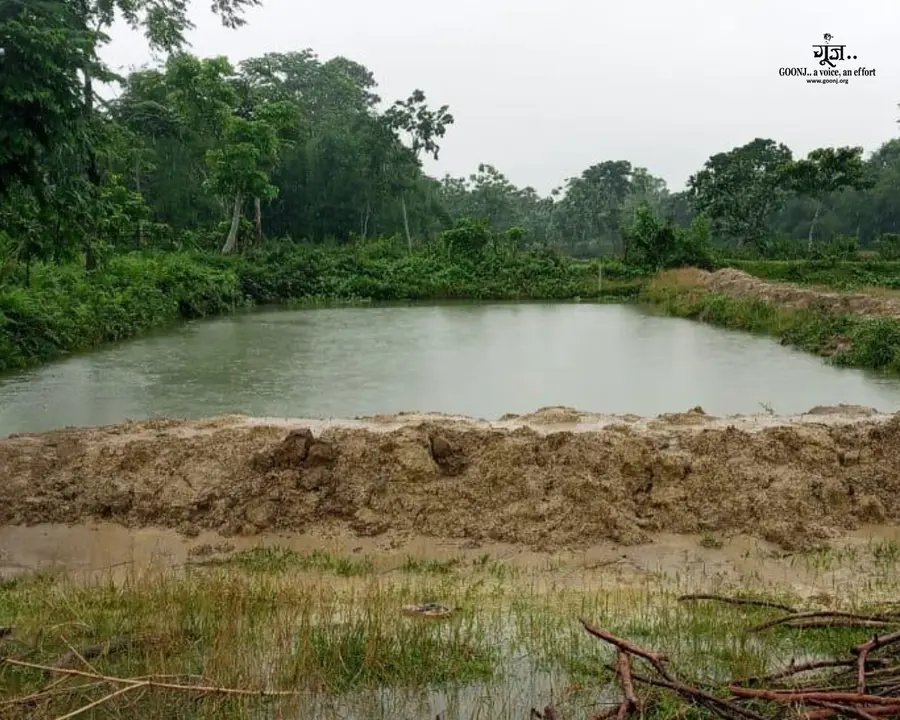
Foskadanga is a remote village in West Bengal, home primarily to the Rava tribe and other Adivasi communities. The livelihoods of residents depend on forests, daily-wage labour, and small-scale farming. The village had an old pond, but over time it had fallen into disrepair. It could no longer retain water effectively, and its usefulness to the community was gradually diminishing.
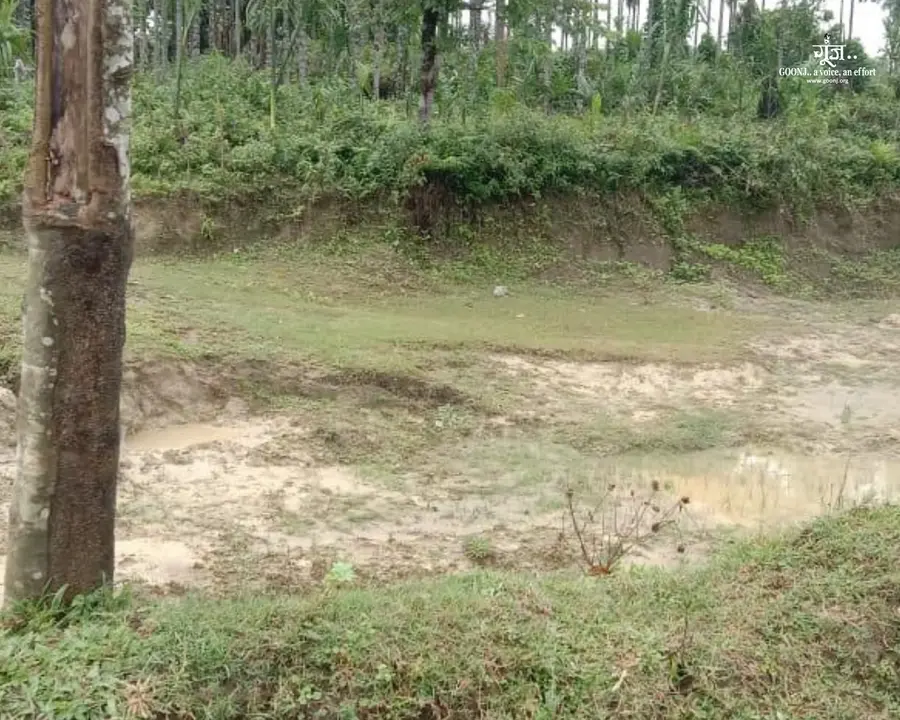
Pond in Foskadanga Before Restoration
A Community Conversation Around Water, Sanitation and Menstrual Wellbeing
Amid these circumstances, a community meeting was organised in the village in 2022 under Goonj’s Not Just a Piece of Cloth (NJPC) initiative. The initiative focuses on fostering dignity and awareness around menstruation. Through it, women gain access to clean, reusable MY Pads, offering a safe and dignified menstrual hygiene option. The effort, however, extends beyond access to menstrual products. It creates space for conversations around the silence, hesitation, and social perceptions that often surround menstruation. Through community meetings and dialogues, women are able to share their experiences openly, contributing to greater awareness and understanding of the issue.
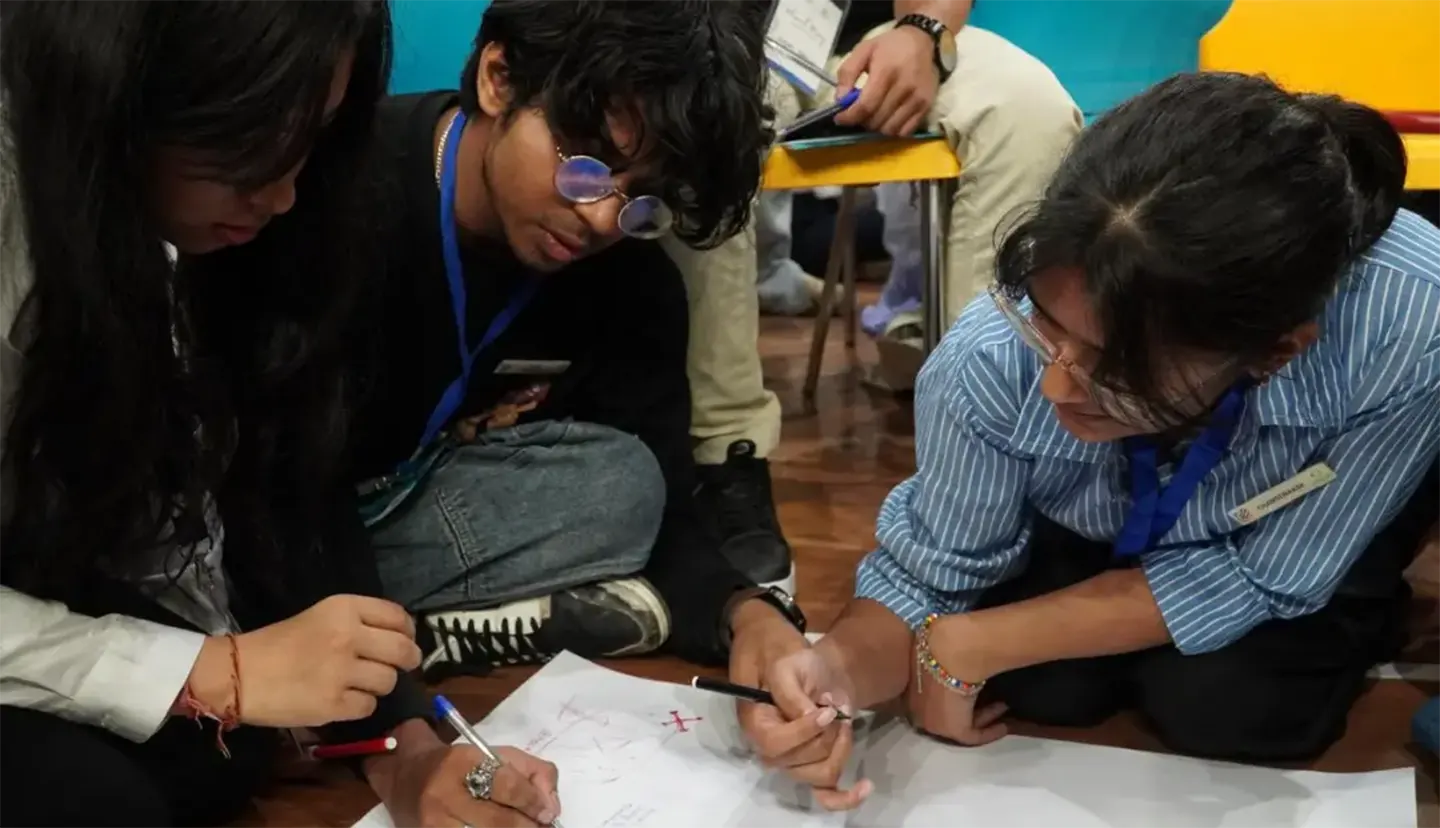
During the meeting, women and men spoke openly about the everyday challenges they faced around water and cleanliness. Women, in particular, shared the difficulties of maintaining hygiene during menstruation. The shortage of water was affecting not only their daily routines but also their ability to meet essential sanitation needs.
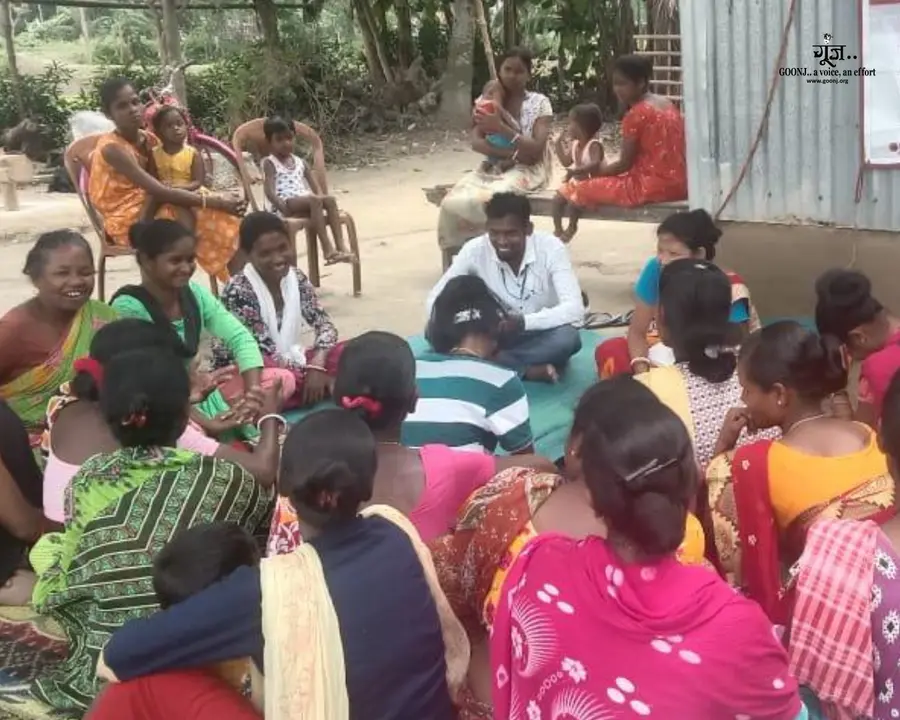
Community Meeting in Foskadanga Village
Reviving the Village Pond Through Collective Effort
The village’s old pond had long been a source of water for bathing, washing clothes, and cleaning menstrual cloth during periods. However, its condition had deteriorated over time, making everyday tasks increasingly difficult for residents. During the discussion, community members recognised that restoring the pond could address several of the village’s pressing needs and improve access to water for a range of daily activities.
By the end of the meeting, nearly 80 community members — women and men alike — came together to take up the work. Through collective effort, they began cleaning and restoring the pond. Their shared labour led to the revival of a pond measuring 90 feet in length, 45 feet in width, and 15 feet in depth.
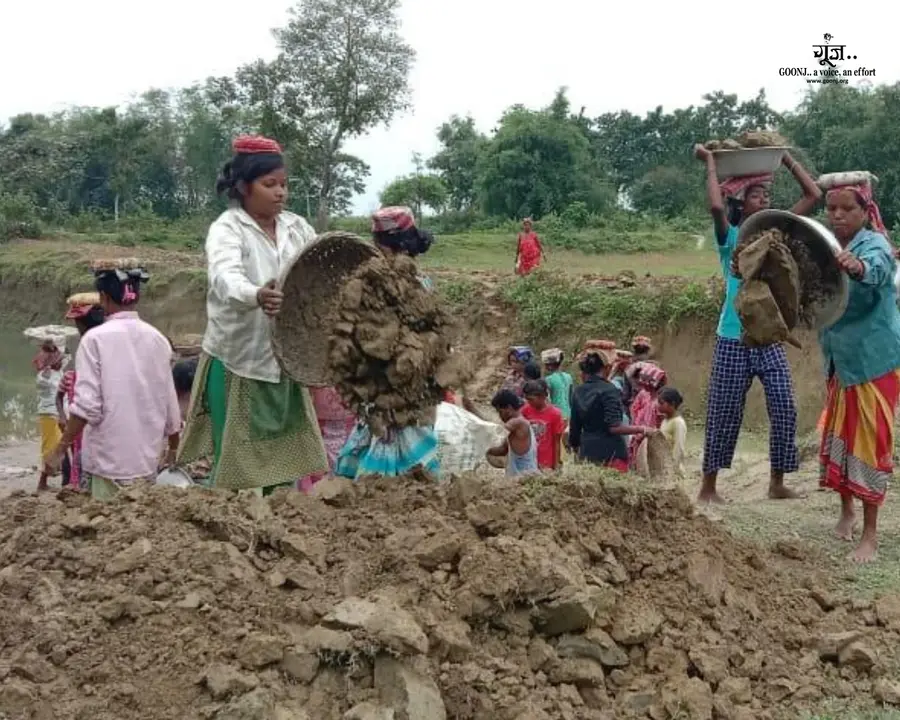
Community-Led Pond Restoration in Foskadanga
Sitala Orang, a local resident, said, “This pond will provide water for farming, and people can also use it for bathing.”
The work went beyond cleaning the pond. Over several days, community members came together to remove silt, deepen the pond, and restore it for use. It was a collective effort that emerged from the community’s recognition of its own needs and its decision to address them through shared action.
Restored Pond in Foskadanga Village
Four Years Later: 2026
When Goonj’s local team revisited the village in 2026, the pond continued to be an active part of community life. Villagers were using it for bathing, household needs, livestock, and farming. Where people once had to travel long distances in search of water, they now had access to a water source within the village itself, saving considerable time and effort in their daily lives.
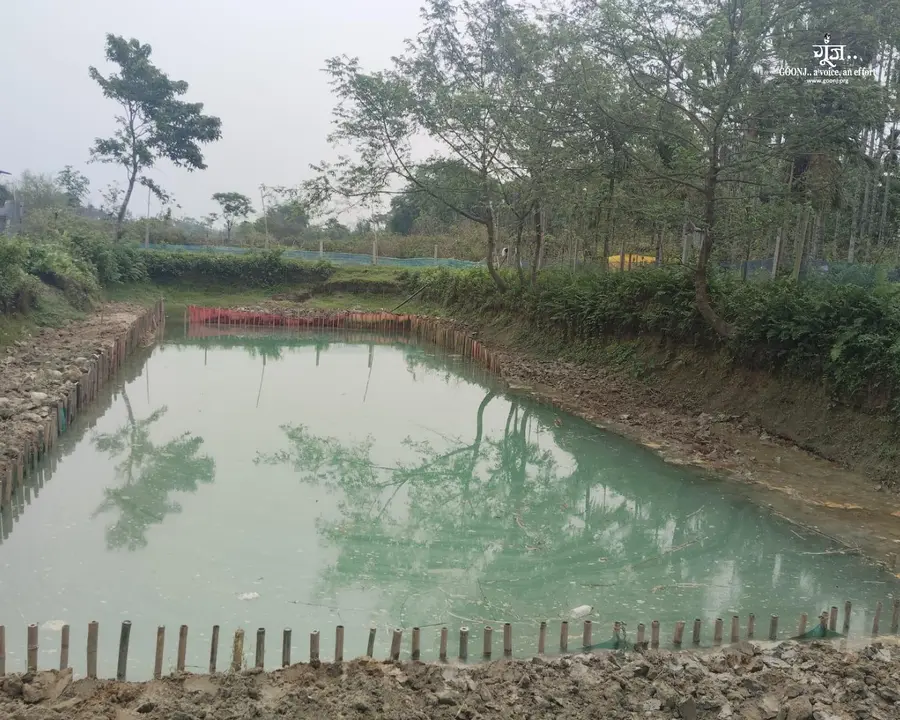
The restored pond in Foskadanga village being used for bathing, farming, livestock care and other daily needs in 2026.
Today, the pond’s water is also being used to cultivate seasonal vegetables. A group of community members has taken up fish farming in the pond as well. The income generated from selling the fish is partly set aside for purchasing new stock, while the remaining amount is shared among those involved. According to villagers, the pond has become an important resource for both farming and everyday needs, contributing to greater water availability within the village.
Community members also shared that the effort brought more than improved access to water. It strengthened a sense of collective ownership and reinforced the belief that people can come together to address shared needs. Today, residents regard the pond as their own collective achievement and speak of creating similar water resources in the future whenever the need arises.
This effort was about far more than restoring a pond. It was a process of engaging with the community, understanding local needs, identifying solutions through dialogue, and collectively acting on them. The story of Foskadanga illustrates how, when people come together around shared concerns and priorities, even the revival of an old pond can bring meaningful changes to everyday life across an entire village.
Today, challenges related to water access and sanitation continue to affect communities across many parts of the world. In this context, collective efforts such as those seen in Foskadanga demonstrate how local resources, community participation, and shared action can create pathways for meaningful change.
Be part of this movement
For over two decades, Goonj has facilitated thousands of such conversations, sparking action-led solutions where communities take charge of their own challenges. Our invitation to you is, start from where you are.. From a small change of starting a Goonj kee Gullak or Team 5000, joining a long and deep change process, or things in between- organising a collection drive, a volunteering journey, an internship, or simply walking with us signing for a Goonj monthly newsletter subscription.. More on www.goonj.org or write to [email protected].
About Goonj
Goonj’s menstrual wellbeing work across India connects urban textile surplus to become a resource for menstrual wellbeing of women and other menstruators in rural India. Our focus is on enabling participation with dignity as we strongly believe that development begins when people engage with their own challenges using their own effort, strengthened by shared resources.
Be a Stakeholder in our Work
Start where you are. Organise a collection drive. Begin a Goonj kee Gullak. Volunteer. Intern. Or stay connected through the monthly newsletter. Many ways to engage. One choice to make — take action.
More on www.goonj.org | Write to [email protected]
Many options, but the choice is always one; Taking Action..