Life Along the River
Sagardwip is an island located near the banks of the River Ganga and forms part of the Sundarbans delta in West Bengal. The communities living here depend heavily on natural resources for their livelihoods. While some families earn through fishing in the river, others rely on agriculture made possible by the fertile alluvial soil of the region.
Challenging Generations of Silence
For years, women in Naraharipur village lived with restrictions and taboos associated with menstruation. Deep-rooted beliefs discouraged women from entering agricultural fields during their periods, while conversations around menstrual wellbeing remained largely absent. These practices, passed down through generations, shaped the daily lives of women in the community.
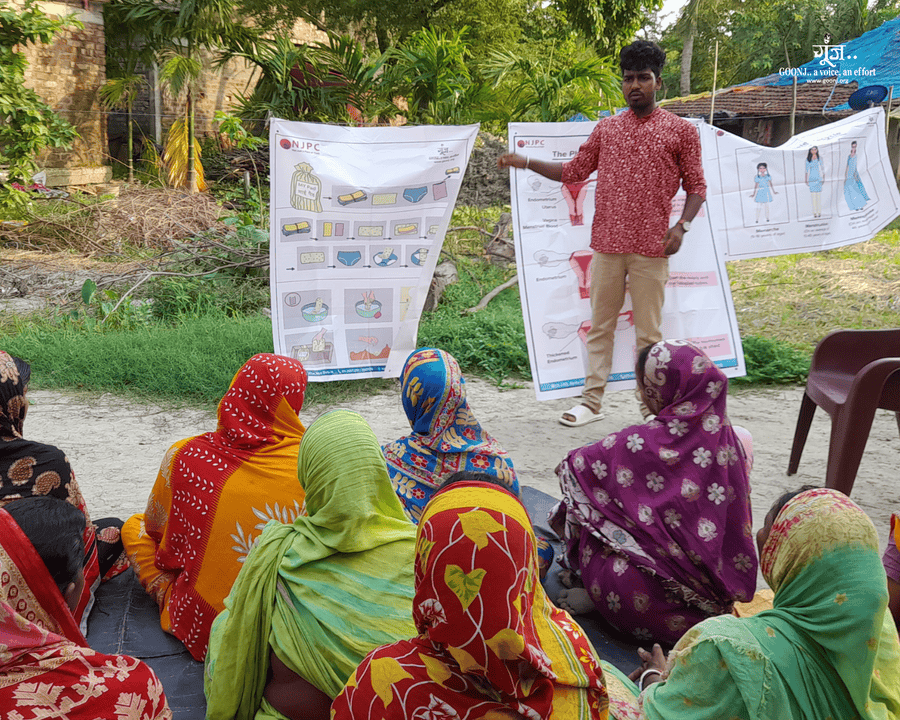
Women participating in a Goonj Chuppi Todo Baithak.
When Team Goonj facilitated a Chuppi Todo Baithak (Break the Silence Meeting) with around 20 women from the village, the discussion gradually opened up space for women to reflect on the menstrual traditions they had long followed. As women shared their experiences. That is when Rupali (name changed) spoke up.
“We thought that if a woman visited the agricultural field during her periods, then the crop wouldn’t be produced well. Earlier, there were many superstitious practices, but now we have knowledge about them,” she shared. Her words resonated with many others in the group who had grown up hearing and following similar beliefs.
From Awareness to Action
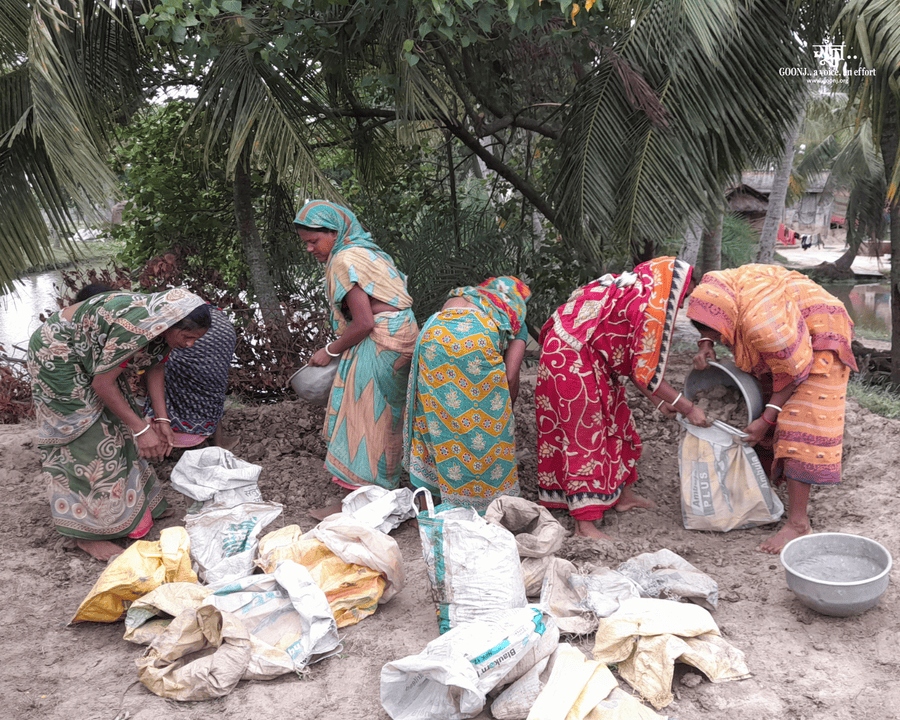
Women collectively harvesting ginger in Naraharipur.
Rather than allowing menstrual taboos to determine their participation in community life, women here decided to take collective action. To counter the belief that menstruating women should stay away from agricultural work, the group came together to start a community farming initiative. Pooling their savings, they purchased ginger seeds and fertilizer and prepared to cultivate the land themselves. What began as a conversation about menstruation soon evolved into a larger effort around confidence, participation, and reclaiming spaces from which women had traditionally been excluded.
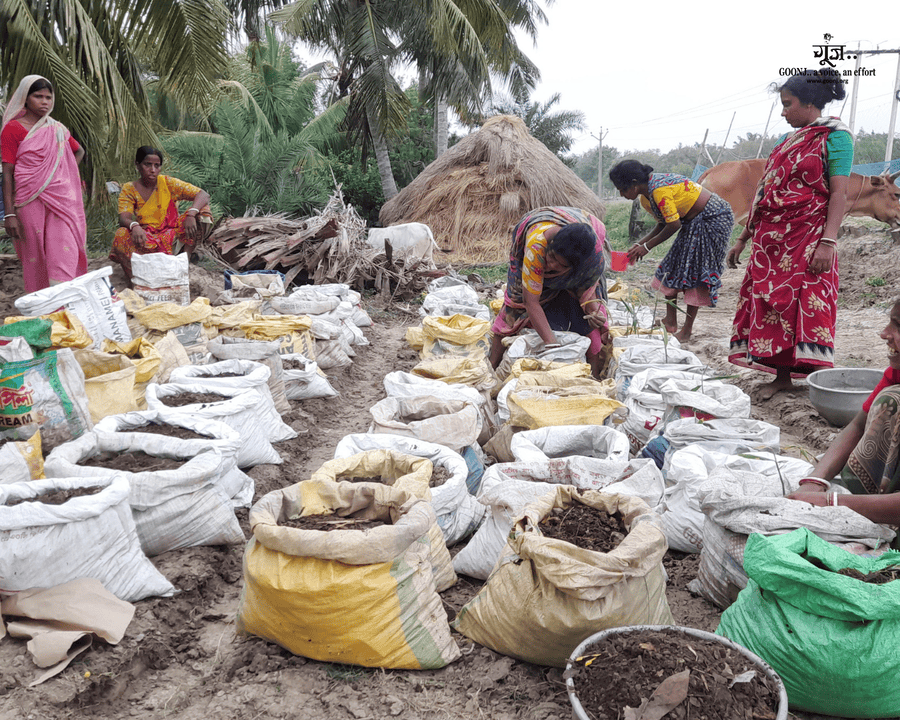
A collective ginger harvest led by women in Naraharipur.
Harvesting More Than Crops
The women collectively cultivated ginger and harvested nearly 100 bags, each weighing around 40 kilograms. Part of the produce was retained for household consumption while the remaining harvest was sold locally.
The sale generated an income, creating a resource that the group could reinvest in future community-led initiatives. More importantly, the effort demonstrated the strength of collective action, where women worked together to challenge social norms while building a source of livelihood and nutrition.
In Naraharipur, women did not merely question old beliefs—they demonstrated an alternative. By stepping into the fields together, they showed that menstruation need not be a barrier to participation, productivity, or leadership.
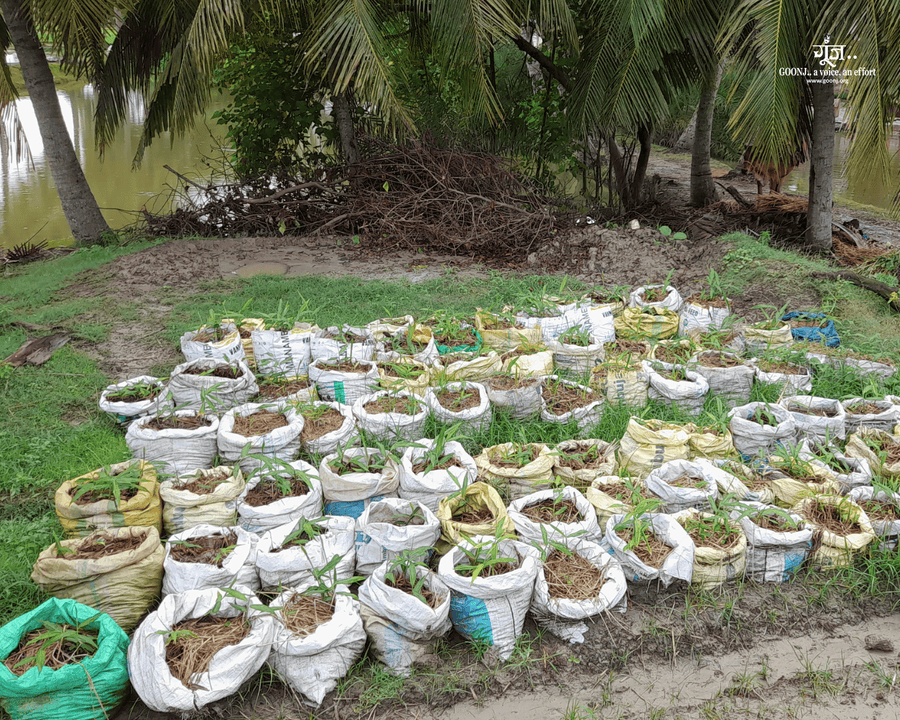
By working together, women redefined what participation and leadership can look like.
About Goonj
Goonj’s menstrual wellbeing work across India connects urban pre and post consumer textile surplus to become a resource for menstrual wellbeing of women and other menstruators in rural India. Our focus is on enabling participation and action with dignity as we strongly believe that development begins when people engage with their own challenges using their own effort, strengthened by shared resources.
Be a Stakeholder in our Work
Start where you are. Organise a collection drive. Begin a Goonj kee Gullak. Volunteer. Intern. Or stay connected through the monthly newsletter. Many ways to engage. One choice to make — take action.
More on www.goonj.org | Write to [email protected]
Many options, but the choice is always one; Taking Action..