Listening Before Solving: What Women Identified as Their Priority
Menstruation is often treated as a standalone issue addressed through awareness sessions, products, or health interventions. But for women, menstruation is woven into the realities of her daily life: access to water, safety, nutrition, health, time, and agency. That’s why it’s a human issue. In Jite Katkari Wadi, a tribal settlement in Maharashtra’s Raigad district, this understanding unfolded in an unexpected way.
A Safer Path to Water Through Collective Action
When the community first came together with Goonj’s team to discuss challenges affecting their lives, menstruation did not emerge as an immediate priority. Instead, women spoke about a daily struggle that shaped their routines: reaching the village well through a difficult and sometimes unsafe path overgrown with dense bushes.
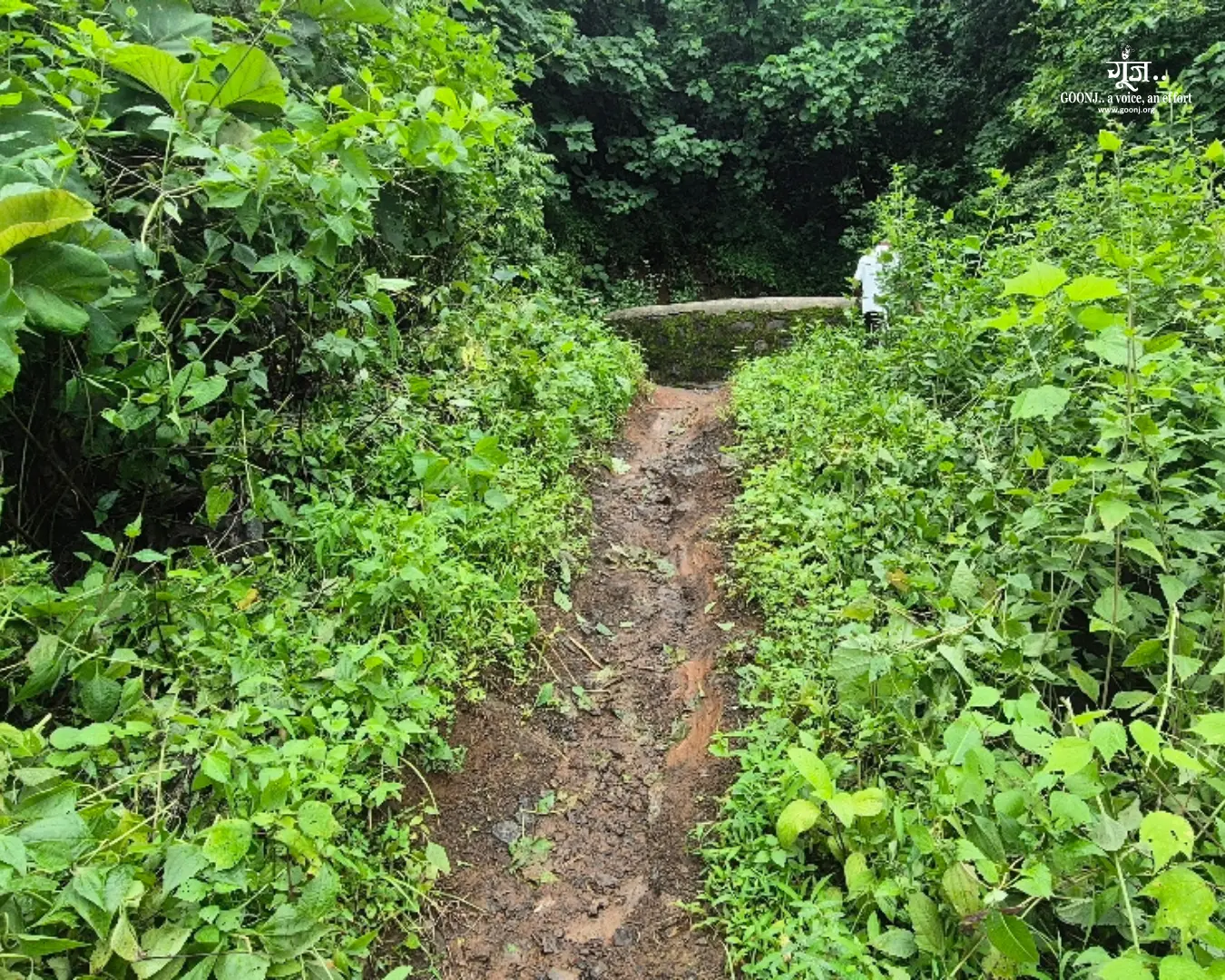
The Difficult Journey to the Village Well in Jite Katkari Wadi
The conversation did not begin with solutions. It began with listening. As women reflected on their own concerns and heard stories of how other communities had addressed local challenges through collective effort, they identified what mattered most to them. Within days, many women came together to clear the bushes around the well. What emerged was more than a cleaner pathway. It was a visible demonstration of collective action and local leadership. The well became safer and easier to access, but equally important, women experienced the possibility of solving a problem together.
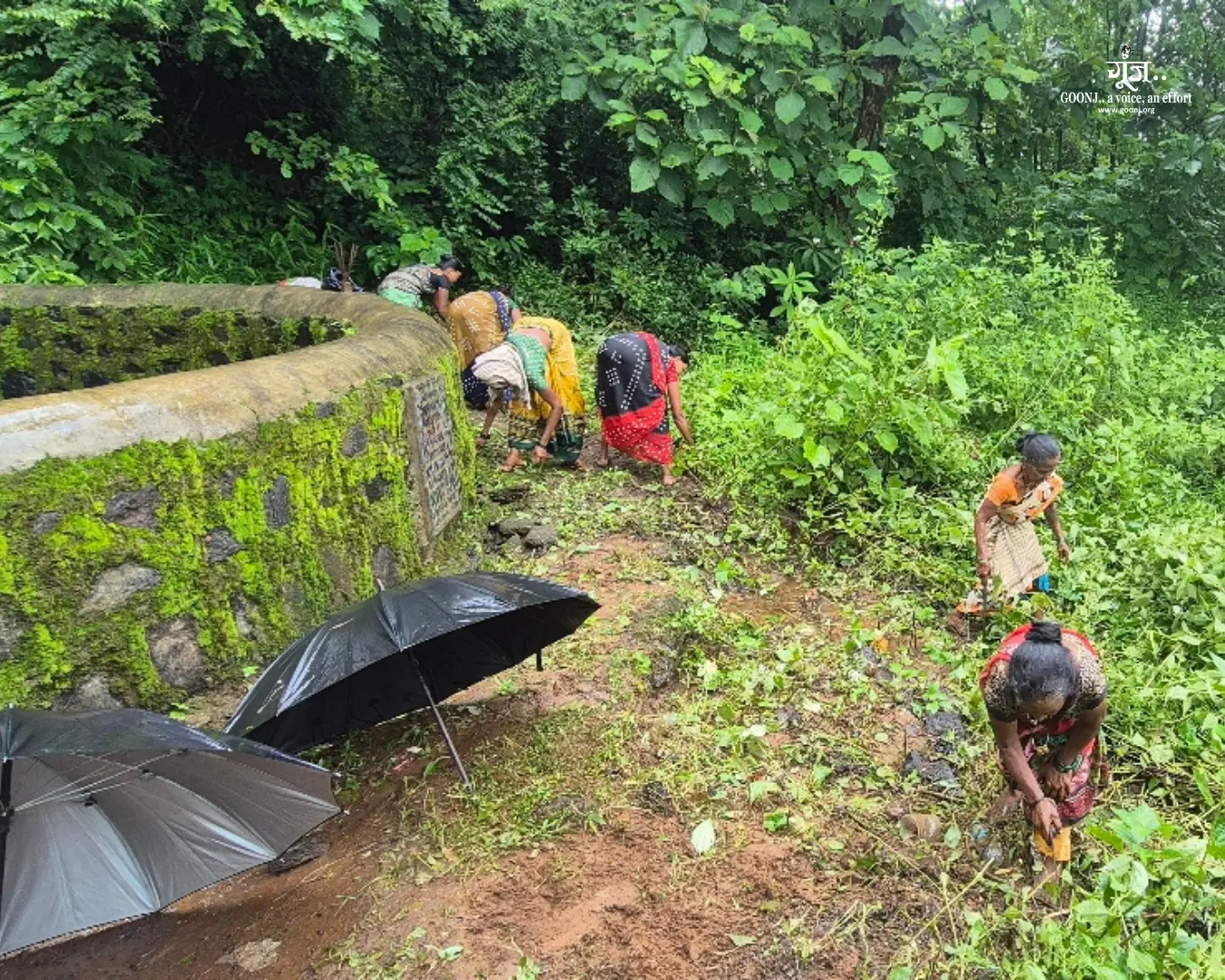
Women Come Together to Improve Access to Water
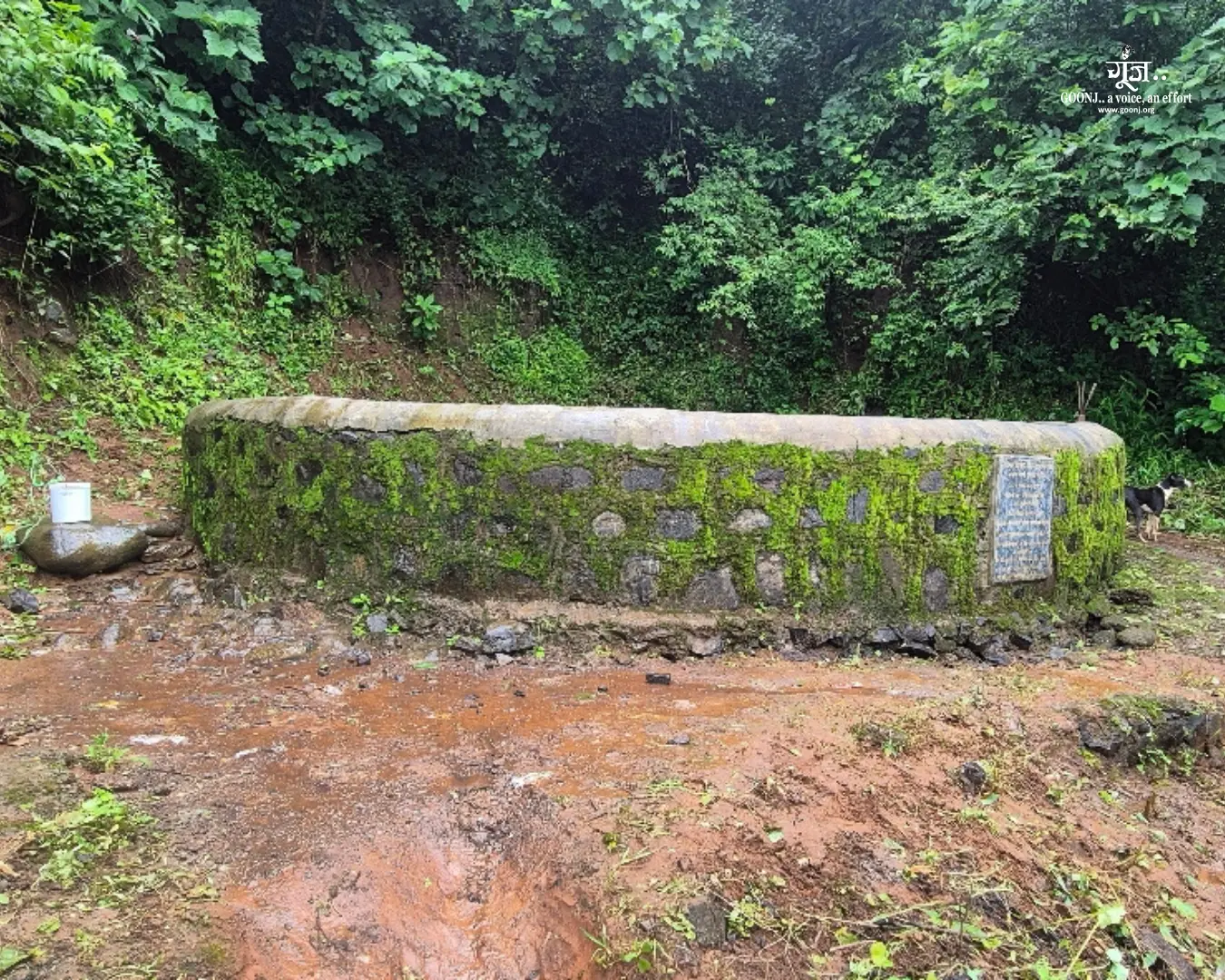
Cleaned Path for accessing Community Well in Jite Katkari Wadi
From Access to Water to Community-Led Nutrition
That experience sparked another idea. The women decided to start a community farm on common land in the village creating a local source of vegetables and nutrition for their families.
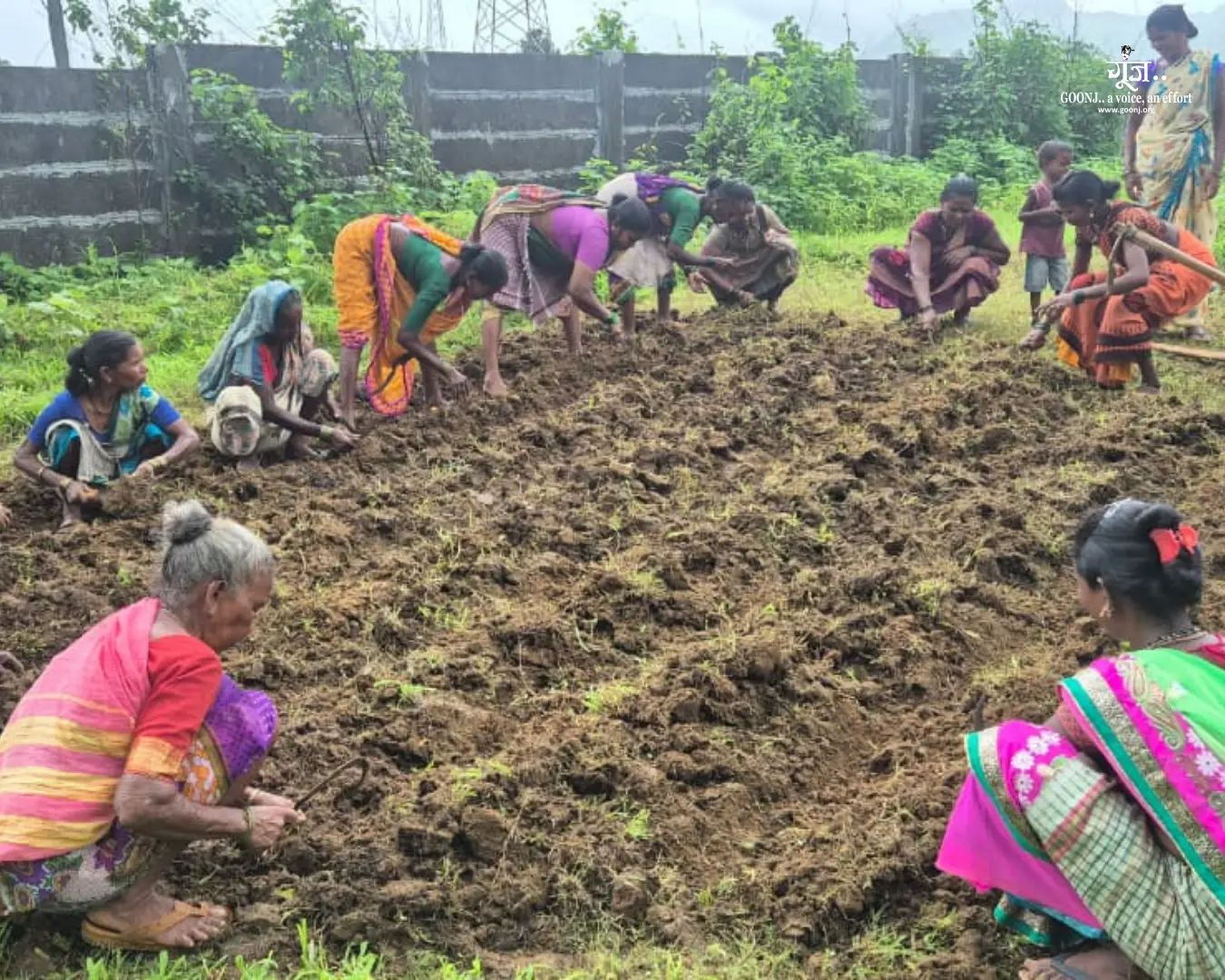
Women Build a Community Farm for Better Nutrition
Creating Space for Conversations Around Menstrual Wellbeing
Only after these actions did the conversation move towards menstrual wellbeing. At the end of the well-cleaning effort, Goonj facilitated a Break the Silence (Chuppi Todo Baithak) discussion around menstruation, hygiene, body changes, and the use of reusable MY Pads. For many women, it was the first time these subjects were discussed openly.
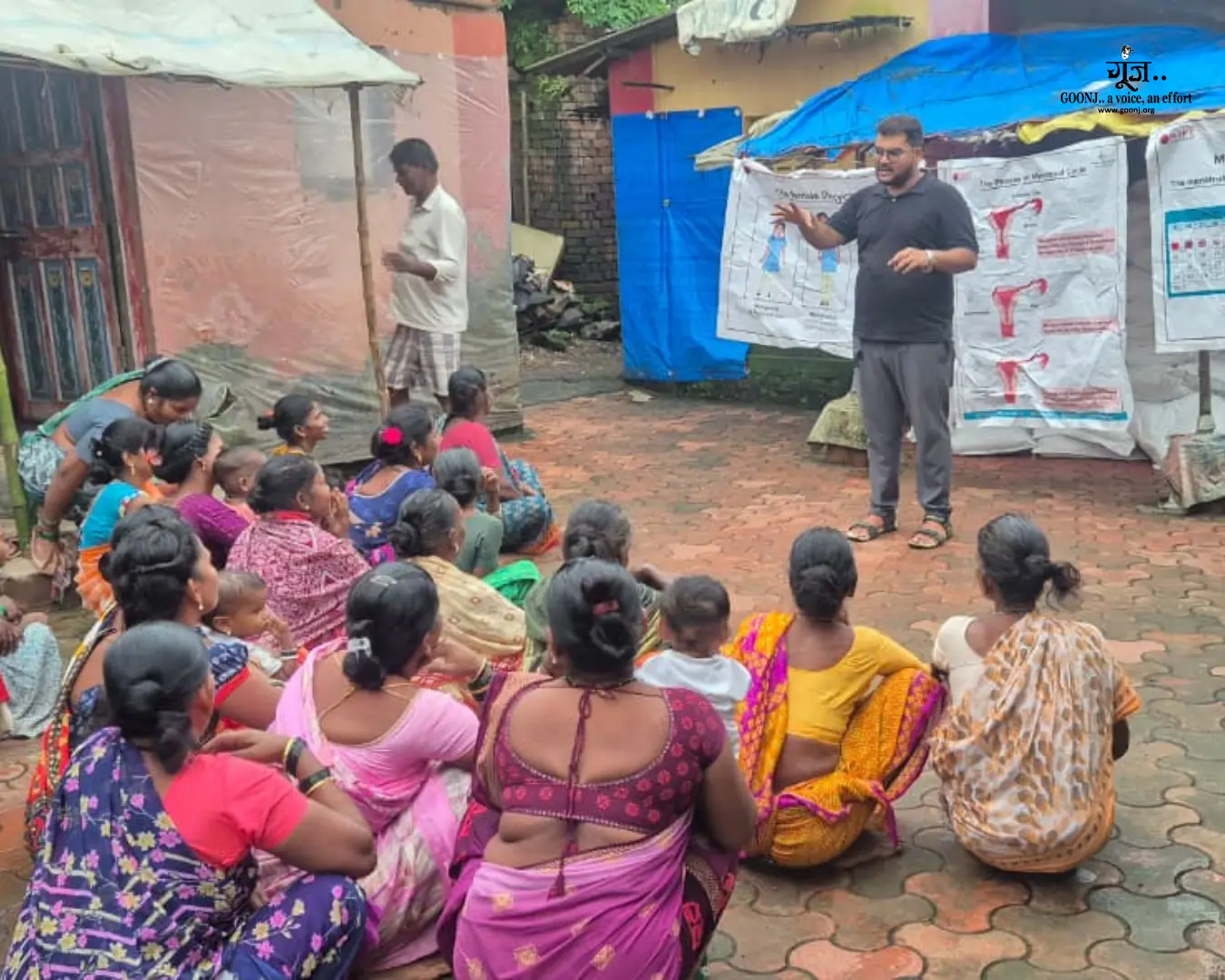
Opening Conversations on Menstrual Wellbeing in Chuppi Todo Baithak (Breaking the Silence meeting)
“For the first time, someone is thinking so much about our health. Deciding to grow vegetables for ourselves and learning so much about menstruation—this has happened for the first time in our wadi,” shared Kusum Harishchandra Hilam, a resident of the village.
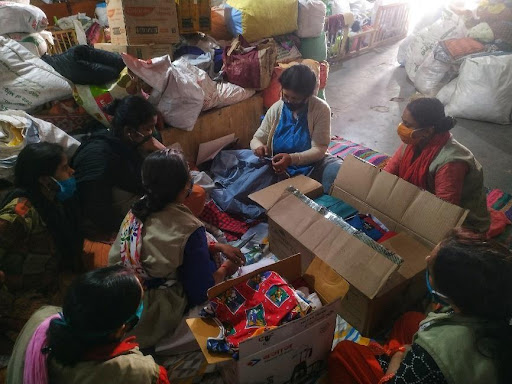
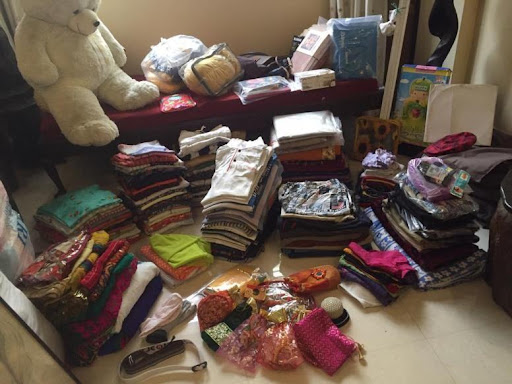
Each participant was rewarded with a Women Kit containing reusable cloth sanitary pads and other essential materials. Yet the kit itself was only one part of the story. These kits represent a larger ecosystem of participation. Made from surplus pre- and post-consumer cotton cloth contributed by individuals and organisations in cities, they create a connection between urban surplus and rural needs. The exchange is not charity; it is a cycle of contribution, participation, and dignity. Communities take action on priorities they identify, while resources that would otherwise go to waste are redirected towards collective wellbeing.
Why Menstrual Wellbeing Begins with Agency
What happened in Jite Katkari Wadi offers an important insight. Women’s health cannot always be addressed by starting with health alone. Sometimes the entry point is a safer path to water. Sometimes it is collective work around a shared concern. Sometimes it is the confidence that comes from seeing change happen through one’s own effort. A community farm and an accessible well became a menstruation story because women were able to decide the problem, shape the solution, and act on it together.
And perhaps that is the larger possibility: when communities are trusted to define their priorities, conversations about health, dignity, and wellbeing no longer remain isolated interventions. They become part of a broader process of agency, collective action, and lasting change.
About Goonj
Goonj’s menstrual wellbeing work across India connects urban textile surplus to become a resource for menstrual wellbeing of women and other menstruators in rural India. Our focus is on enabling participation with dignity as we strongly believe that development begins when people engage with their own challenges using their own effort, strengthened by shared resources.
Be a Stakeholder in our Work
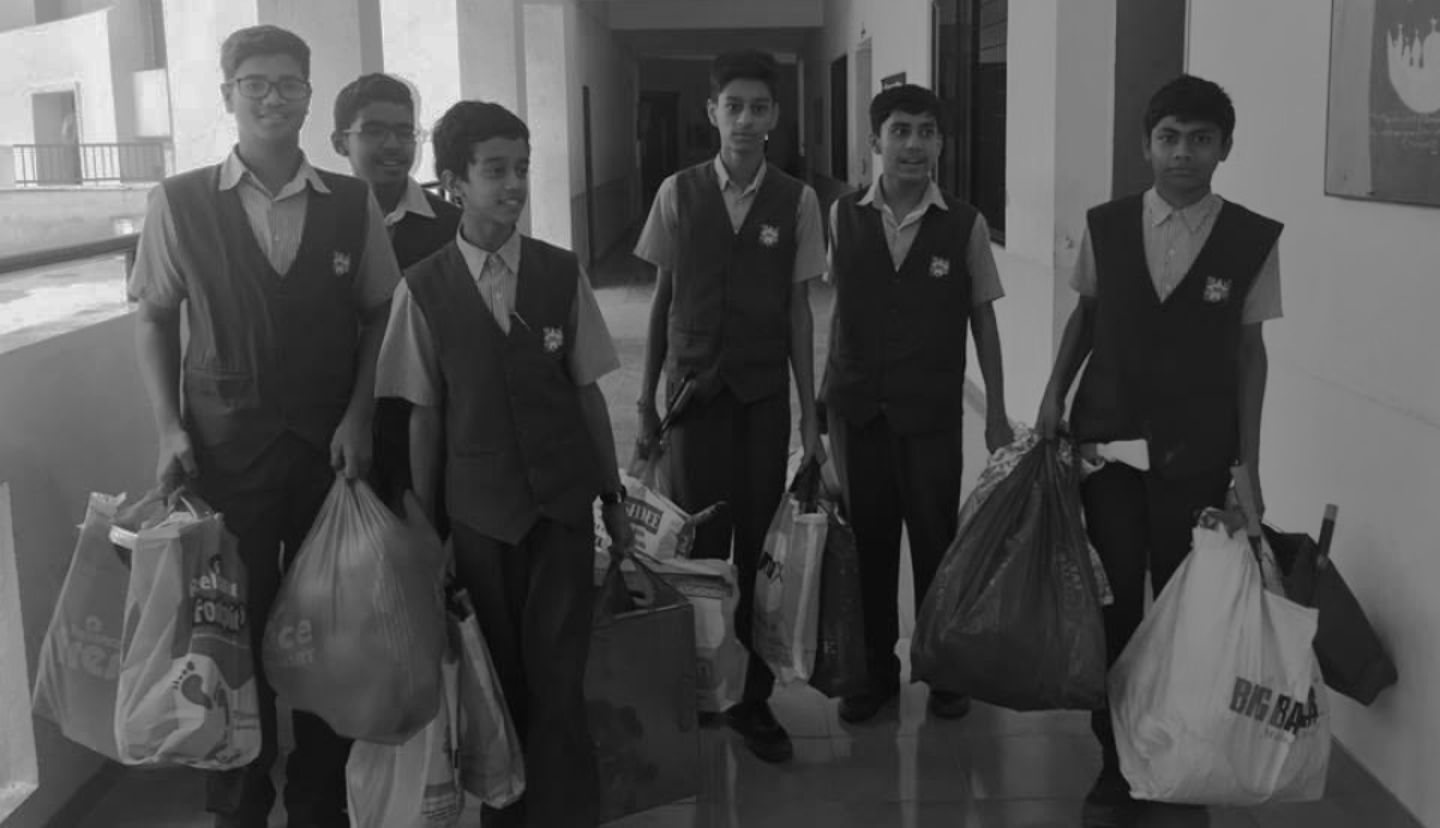
Start where you are. Organise a collection drive. Begin a Goonj kee Gullak. Volunteer. Intern. Or stay connected through the monthly newsletter. Many ways to engage. One choice to make — take action.
More on www.goonj.org | Write to [email protected]