Mohitnagar is a village in the Jalpaiguri district of West Bengal where families follow different occupations. Some families are involved in pottery work or traditional blacksmithing or iron-working occupations while others migrate to states like Gujarat, Kerala, Delhi, and Maharashtra for better income opportunities.
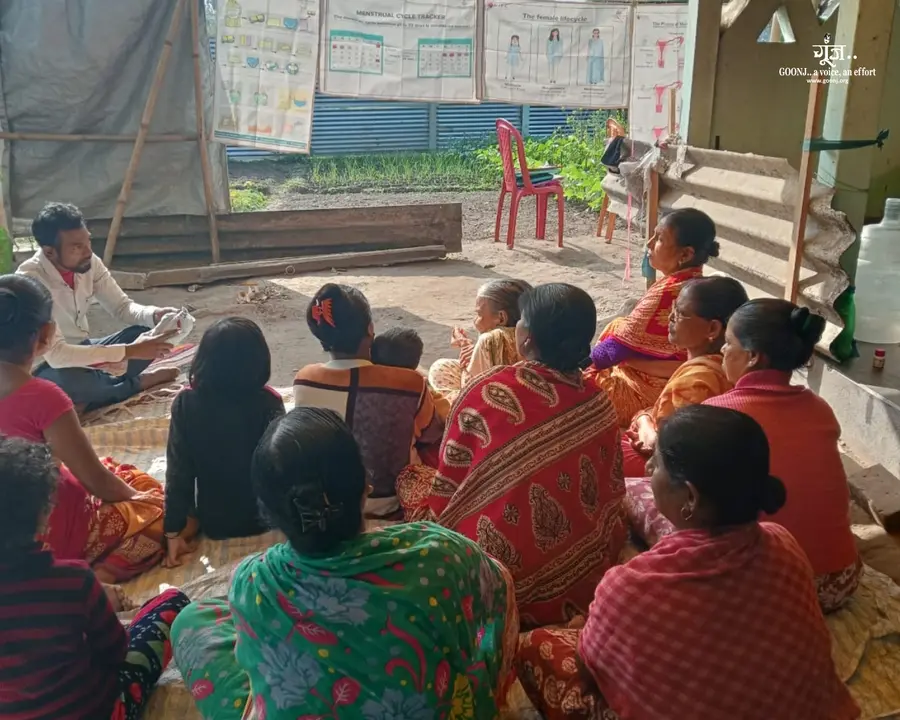
When Team Goonj held a one-hour Chuppi Todo Baithak (break the silence meeting) with nearly 16 women in the village, the discussion brought out common menstrual practices in the village. Some women shared how they throw their menstrual cloth into open spaces due to the absence of safe disposal awareness. Post the meeting they promised that in future they will dispose of the cloth more carefully. The conversation gradually moved to a deeper discussion around shame, silence, nutrition, and women’s health during menstruation. That’s when Kavita, (not her real name) spoke. She shared that she uses only one cloth during her period and has been using the same piece of cloth for the last one year. She shared that in her early years of menstruation when she asked her mother about it she got slapped and was told to keep the conversation about menstruation secret. Her mother also gave her a set of do’s and don’ts to follow while menstruating. Kavita shared that her entire family follows these rules till date.
From Dialogue to Community Action
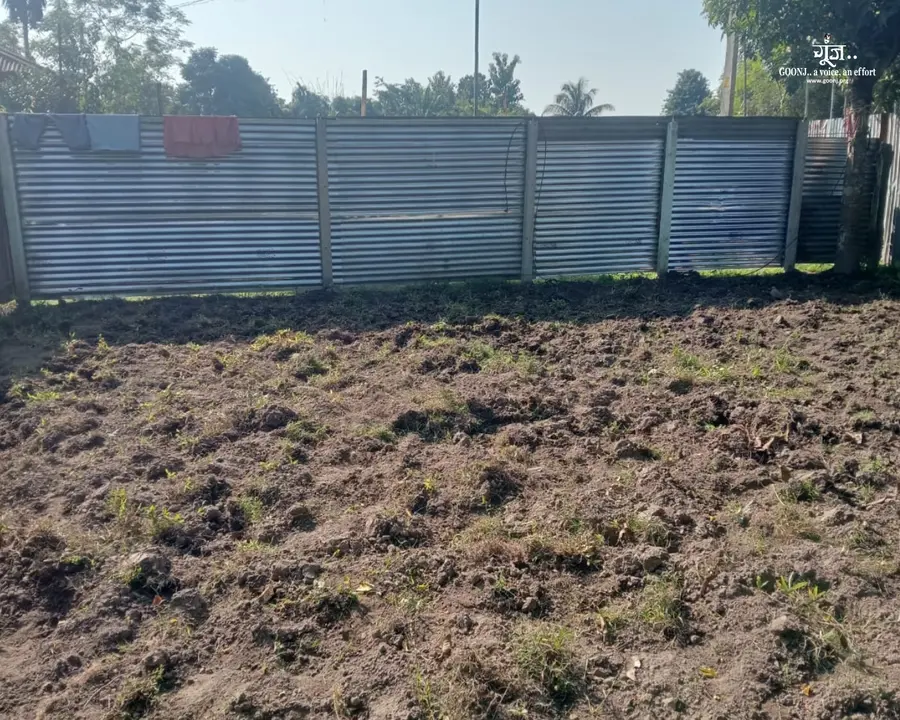
Unused Community Land Prepared for Farming
During the same meeting, as the Goonj team motivated the women to take collective action on their menstrual issues an idea emerged while discussing nutrition and menstrual health challenges faced by low-income rural families. Women shared how access to green vegetables and nutritious food often becomes difficult for women during menstruation, especially in economically vulnerable households. Anita, from the village said the village has many families who can’t afford buying sufficient green vegetables which the women especially need during menses. Women agreed that farming of vegetables would help respond to nutritional needs of local women and also be an example of women-led community development through collective participation. The local women decided to start a community farming on an idle common space in the village. Soon locals came together to prepare the plot (L -48 ft, W-42 ft) to grow vegetables.
Harvest, Earnings and Future Commitment
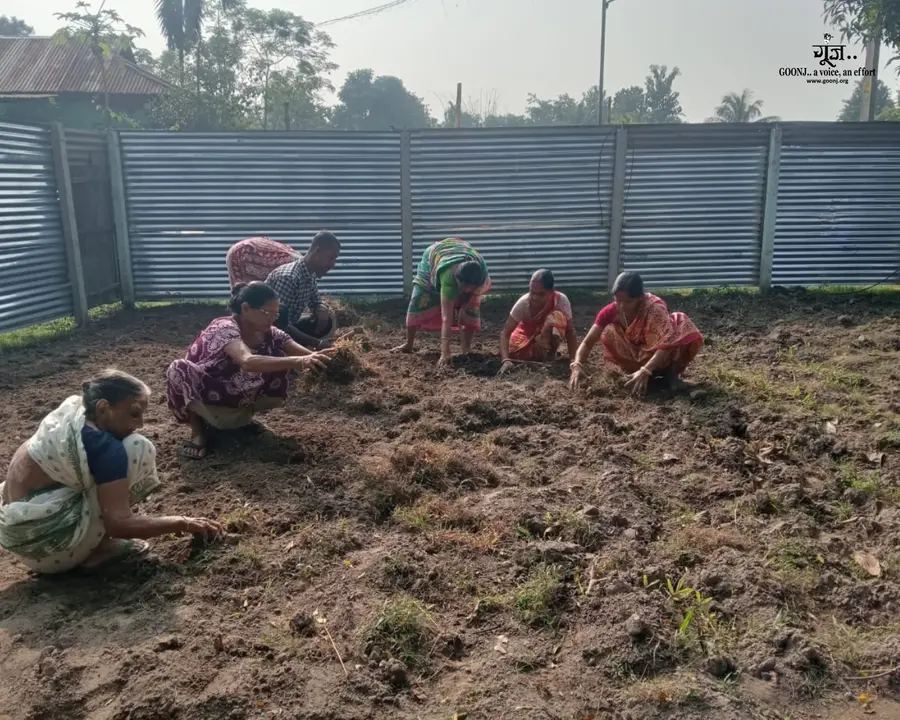
Women from Mohitnagar working together by preparing soil and planting vegetables.
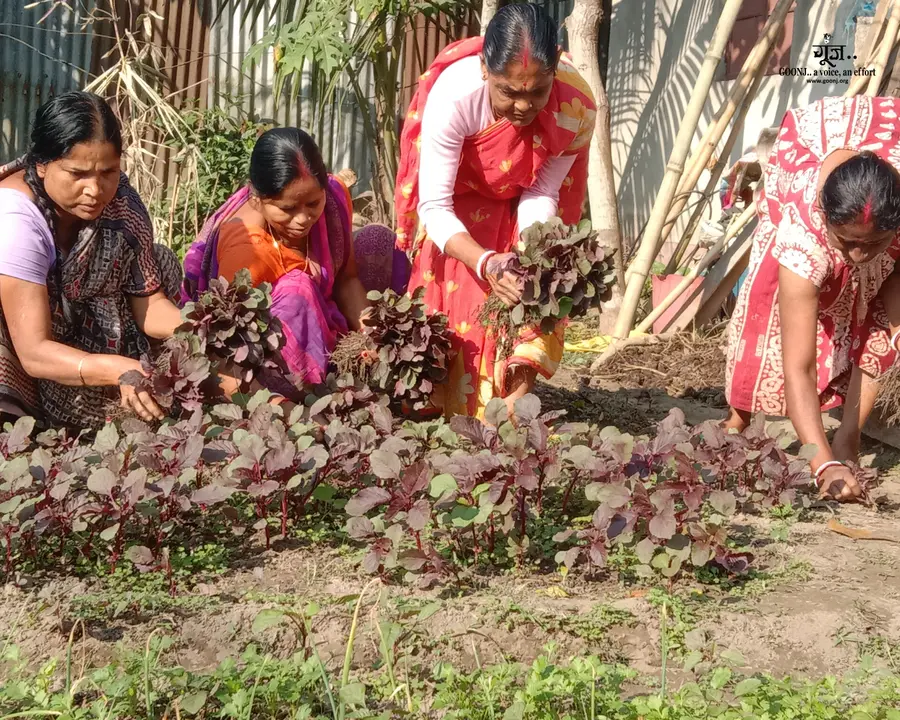
Women starting to harvest leafy vegetables from the community farm
From the produce, whatever was not consumed locally, was sold by the group to the local market, bringing a handsome earning as well. Now the women have committed to use this money for the next community farming project. The effort created a small but important cycle of local ownership, where awareness led to action, and action generated resources for the next phase of collective work.
Linking Awareness with Community Progress
In Mohitnagar, a discussion that began around menstrual stigma and safe menstrual practices gradually transformed into a shared effort towards health, nutrition, dignity, and community resilience. This sequence of events reflects how Goonj’s menstrual wellbeing framework of 4 A’s – awareness, affordability, access, and action connects menstrual wellbeing with community participation and grassroots problem-solving. All local women received Goonj’s My Pad Women Kits that include MY Pad – cloth pads and undergarments made from urban pre- and post-consumer textile surplus. This menstrual wellbeing model offers a sustainable, dignified menstruators led solution while sparking dialogue and collective action on menstruation in rural communities.
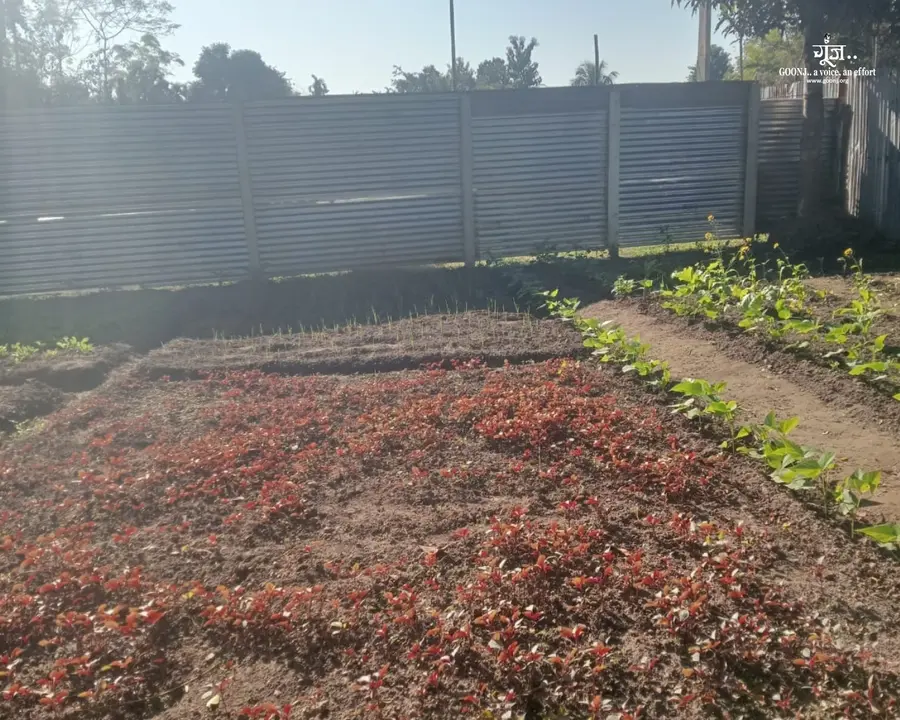
Community Vegetable Farm Supporting Nutrition needs
About Goonj
Goonj’s menstrual wellbeing work across India connects urban textile surplus to become a resource for menstrual wellbeing of women and other menstruators in rural India. Our focus is on enabling participation with dignity as we strongly believe that development begins when people engage with their own challenges using their own effort, strengthened by shared resources.
Be a Stakeholder in our Work
Start where you are. Organise a collection drive. Begin a Goonj kee Gullak. Volunteer. Intern. Or stay connected through the monthly newsletter. Many ways to engage. One choice to make — take action.
More on www.goonj.org | Write to [email protected]