Across India, water challenges rarely look the same. In one village, a clogged irrigation canal reduces crop yields. In another, the disappearance of a community pond erodes both livelihoods and local traditions. Elsewhere, a silted pond leaves an entire village struggling for drinking water.
What remains common, however, is that these challenges are deeply local and so are their solutions.
In parts of Tamil Nadu, Andhra Pradesh, Bihar and Maharashtra, Goonj’s Cloth for Work (CFW) initiative created a space where communities could come together, collectively reflect on the issues affecting their everyday lives, and decide on actions rooted in their own priorities, resources and knowledge. Rather than introducing external solutions, the process enabled villages to identify what already existed, what had been lost over time, and what could be restored through collective effort. In recognition of their contribution, participants were rewarded with need-based family kits prepared from responsibly channelled urban material surplus, valuing dignity over charity.
Restoring an Irrigation Canal in Kattankulam
In Kattankulam village of Tamil Nadu’s Kanchipuram district, the community identified an irrigation canal as the source of a growing agricultural problem. Over time, the 860-foot canal had become clogged with weeds, sediment and debris, restricting the flow of water to agricultural fields. For farmers, the impact extended beyond water availability— it translated into lower crop productivity and increasing hardship.More than 75 villagers, including men, women, young people and elders, came together to clean and restore the canal.
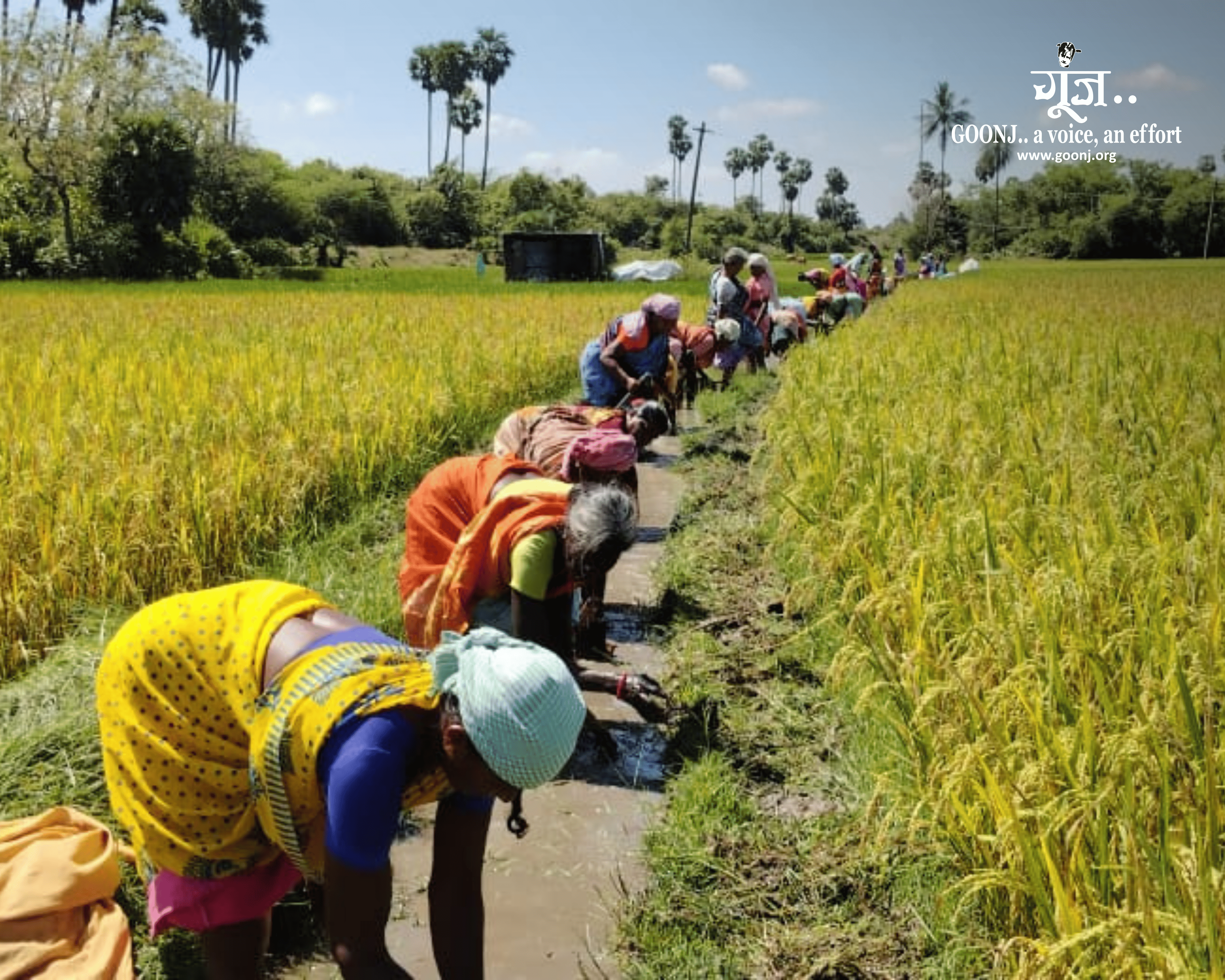
Over 75 villagers restored the 860-foot irrigation canal through Goonj’s Cloth for Work.
Creating New Water Storage in Galipadu
Further south, Galipadu village in Andhra Pradesh’s Alluri Sitharama Raju district faced a different challenge. While agriculture remained the primary occupation for most of its 170 families, inadequate irrigation infrastructure repeatedly limited cultivation.
Instead of restoring an existing resource, 105 villagers collectively created new water assets by constructing two water storage ponds. These locally built structures helped address irrigation gaps, allowing farmers to cultivate paddy more consistently. Improved water availability contributed to greater food security for families while enabling them to sell surplus produce in local markets, creating an additional source of income.
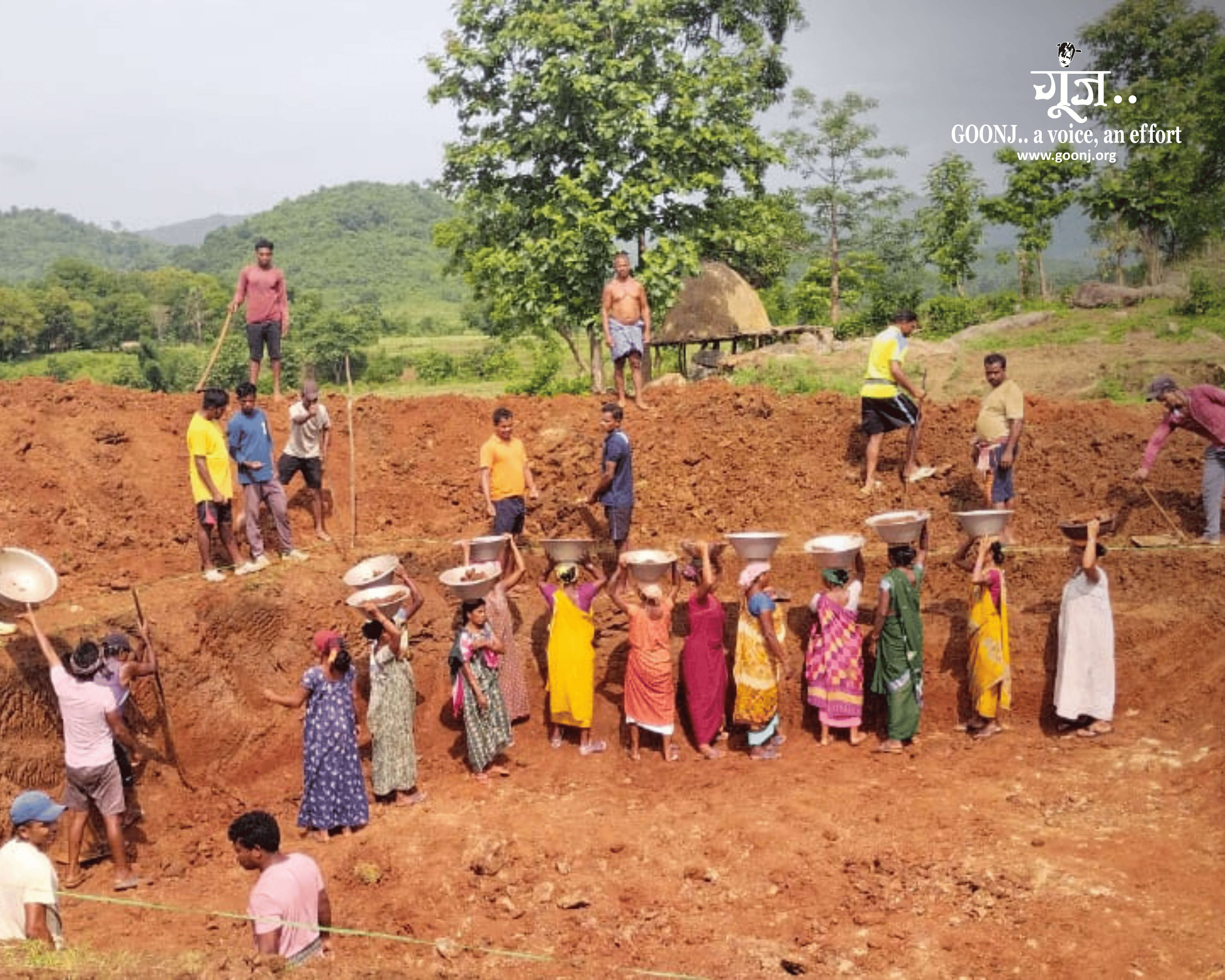
105 villagers in Galipadu came together to build new water storage ponds.
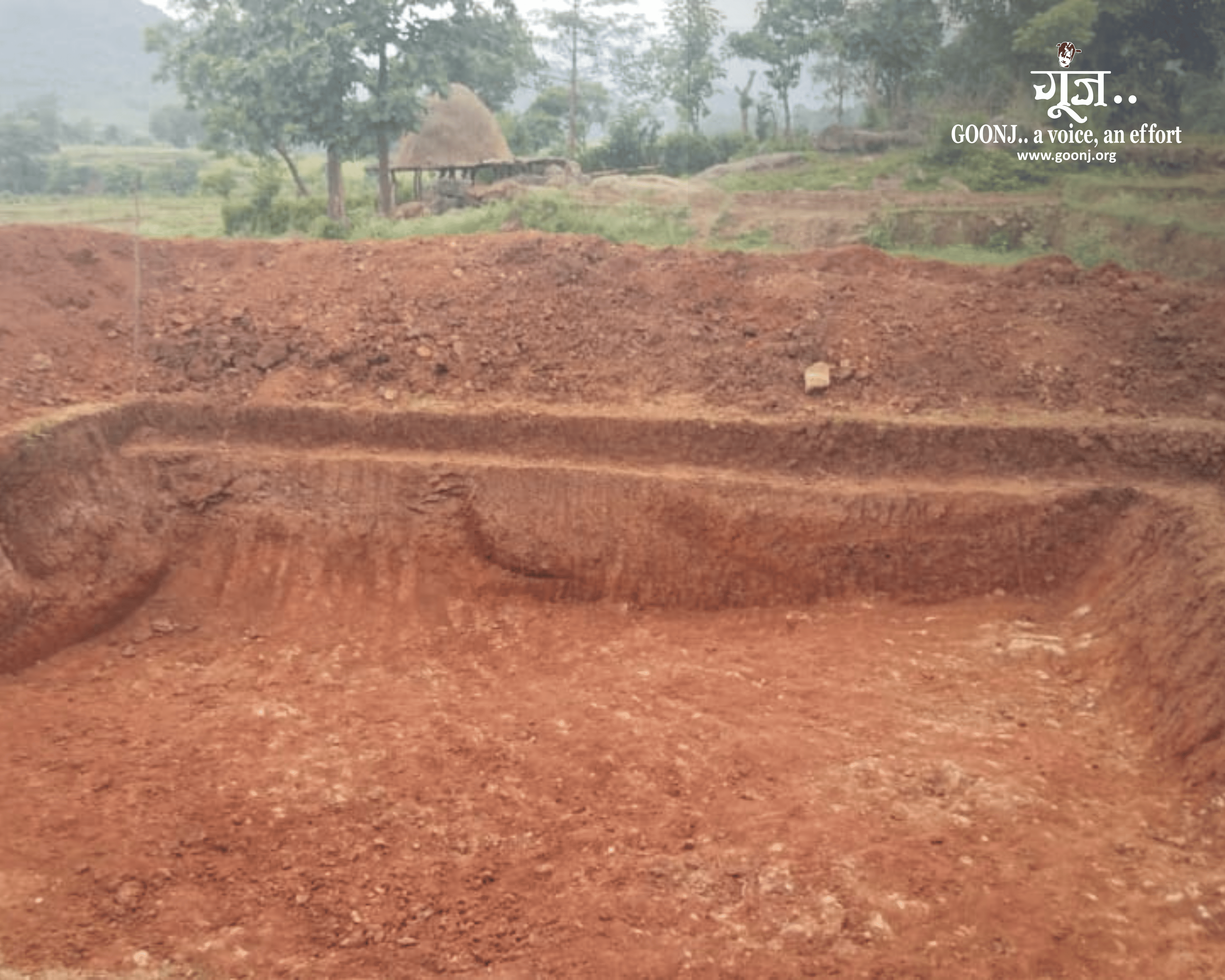
The new storage pond helps Galipadu farmers grow paddy more consistently.
Reviving a Community Pond in Musahari Tola
In Musahari Tola of Bihar’s Madhubani district, water carried significance beyond agriculture. Traditionally, ponds formed an integral part of community life, supporting bathing, irrigation, livestock, fish farming and religious practices that depended on clean water. Over the years, however, one village pond had become heavily polluted and overrun with water hyacinth, leaving it unusable.
The process began with conversation. During a village meeting facilitated under Cloth for Work, people decided to revive the pond. A total of 105 people contributed voluntary labour to restore it. Today, the revived waterbody serves nearly 500 families and once again supports multiple everyday needs. Its restoration has also brought back a shared space connected to local cultural practices that had gradually disappeared as the pond deteriorated.
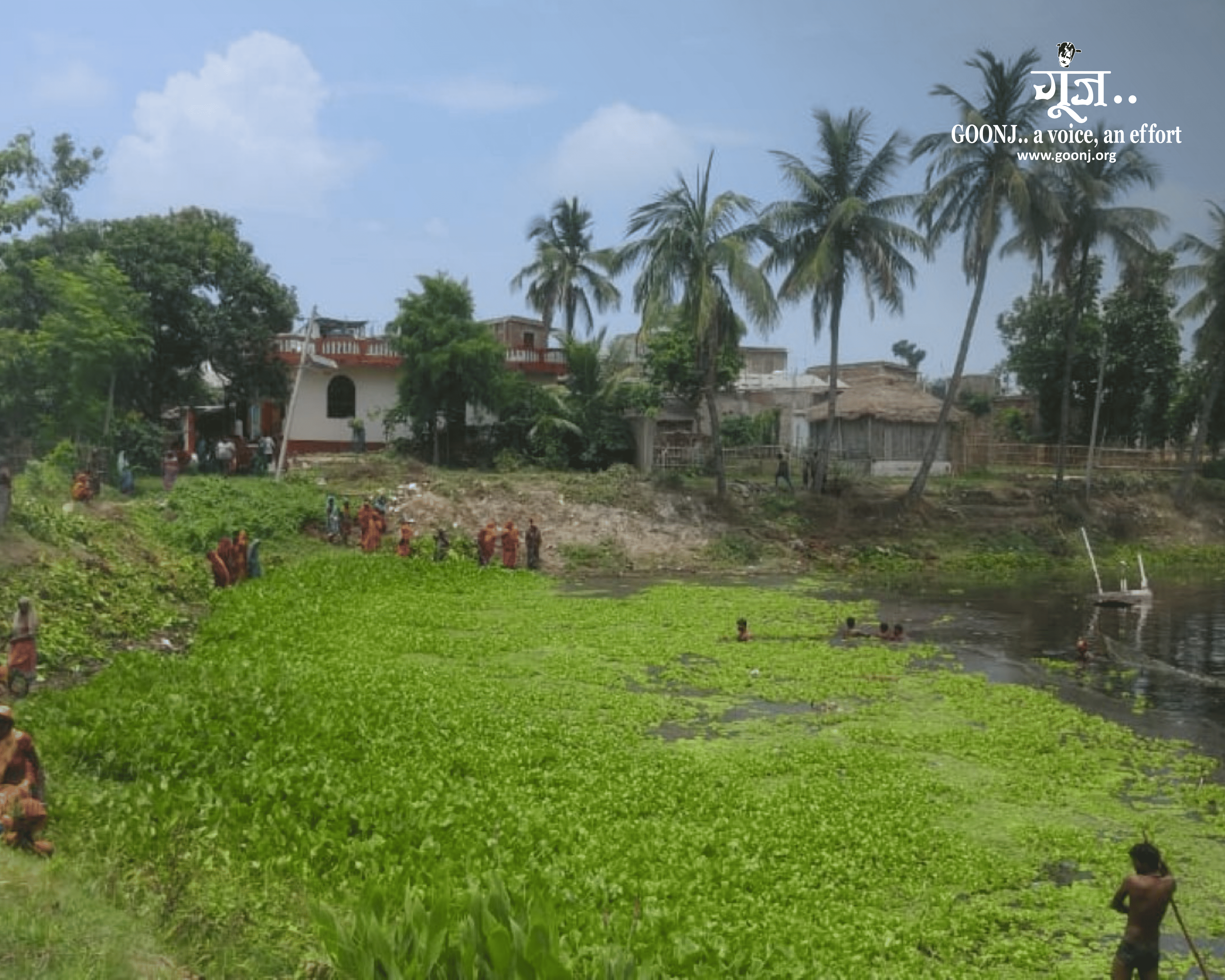
Community members clear water hyacinth to revive their village pond.
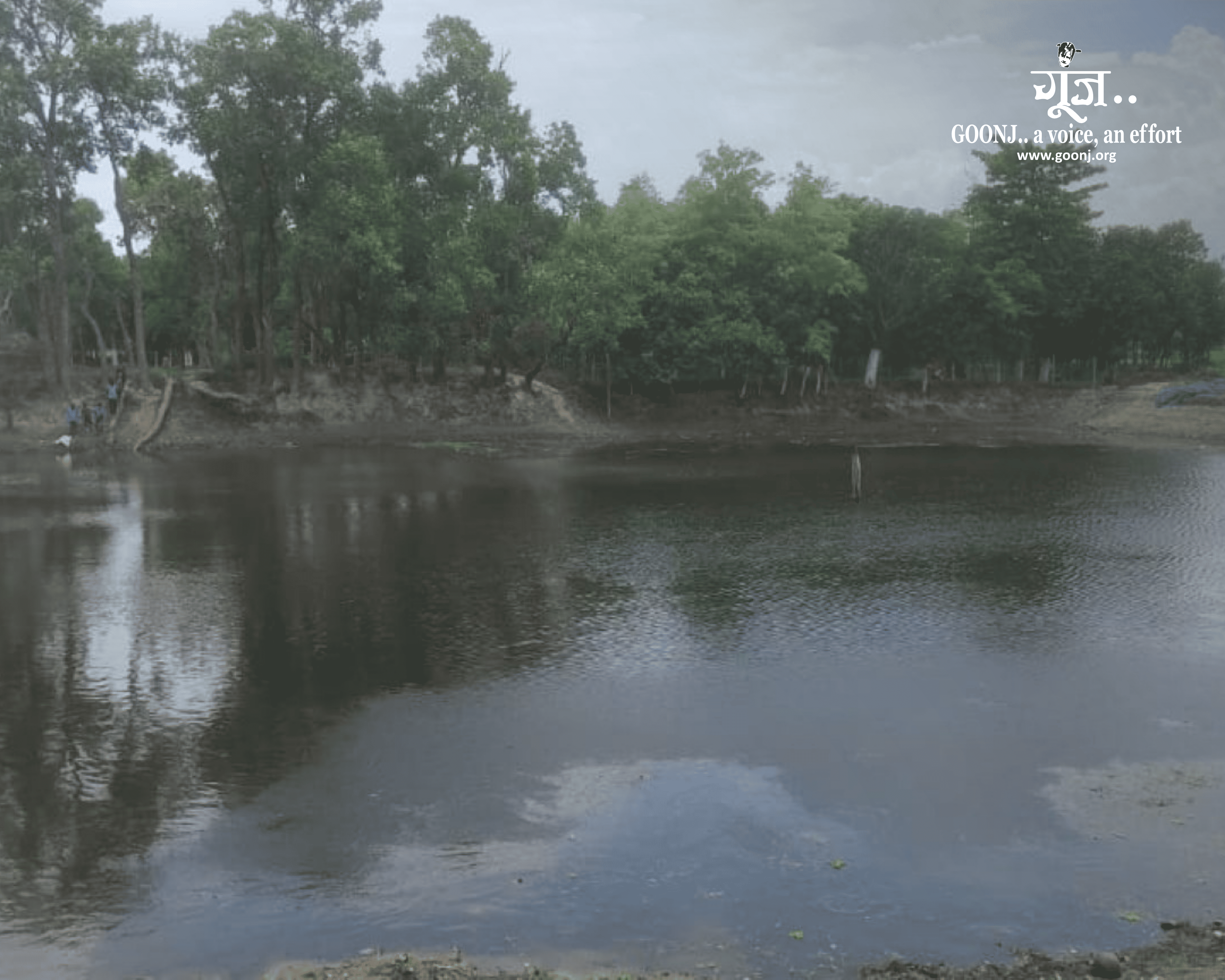
The revived pond now serves nearly 500 families in Musahari Tola.
Restoring a Drinking Water Source in Tondli
Meanwhile, in Tondli village of Maharashtra’s Ratnagiri district, geography shaped the nature of the challenge. Located in a valley surrounded by hills and forests, the village depended on a single pond for its water needs. Over time, the pond became filled with silt, leaving the community without a reliable source of drinking water.
Villagers collectively decided to restore the pond. Over four to five days, community members worked together to remove accumulated silt and clean the waterbody. As the pond was revived, drinking water became available once again, easing a long-standing water shortage.
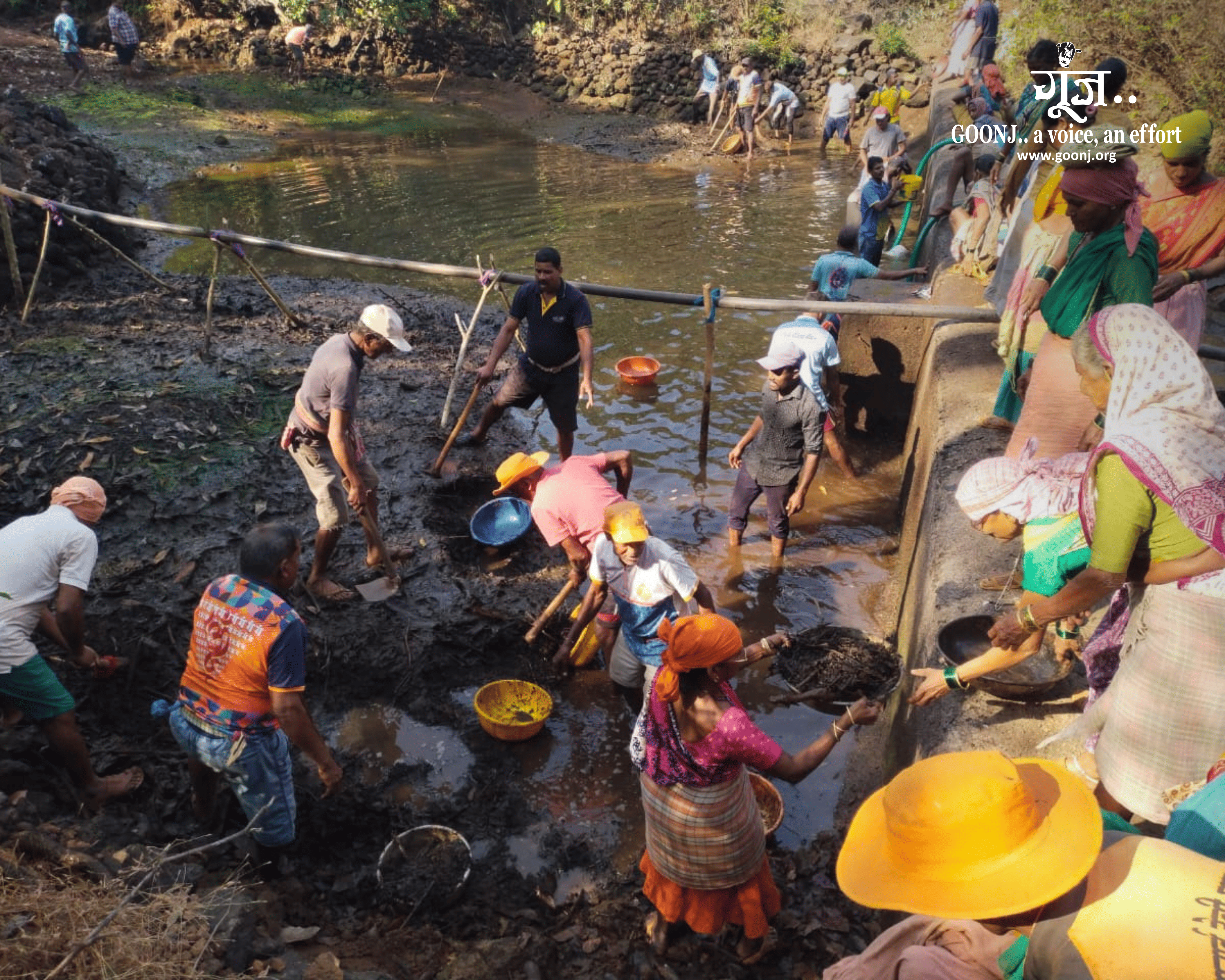
Desilting the village pond brought drinking water back to Tondli.
Different Water Challenges, Locally Rooted Solutions
Together, these experiences demonstrate that water management cannot be reduced to a single intervention. Depending on local realities, it may involve cleaning irrigation canals, constructing storage ponds, reviving traditional water bodies or restoring drinking water sources. The solutions differ because the contexts differ.
What connects these stories is the process. Communities first came together to identify the issue that mattered most to them. They then contributed their own labour, local understanding and available resources to address it collectively. Goonj’s role was to facilitate this process— creating the space for dialogue, enabling the work and recognising people’s contribution through need-based family kits made from urban material surplus.
Across all four regions, the stories reaffirm that when communities are trusted to define their priorities and lead the response, locally rooted solutions can emerge that are practical, sustainable and owned by the people themselves.
About Goonj
Goonj’s menstrual wellbeing work across India connects urban textile surplus to become a resource for menstrual wellbeing of women and other menstruators in rural India. Our focus is on enabling participation with dignity as we strongly believe that development begins when people engage with their own challenges using their own effort, strengthened by shared resources.
Be a Stakeholder in our Work
Start where you are. Organise a collection drive. Begin a Goonj kee Gullak. Volunteer. Intern. Or stay connected through the monthly newsletter. Many ways to engage. One choice to make — take action.
More on www.goonj.org | Write to [email protected]