Names have been changed to protect privacy.
Sanitation is often associated with toilets and waste management. Yet, in many rural communities, it is closely connected to much more like access to clean water, menstrual health, privacy in everyday life and the dignity with which people carry out basic activities.
In parts of West Bengal, Karnataka and Bihar, improvements in sanitation often began with something simpler: a conversation. Through Cloth for Work (CFW) and Not Just a Piece of Cloth (NJPC), communities reflected on everyday practices that had long been accepted but continued to affect their health and wellbeing. These conversations created space to identify local concerns and find practical responses using existing knowledge, resources and collective effort. Participants’ contributions were rewarded through need-based family kits made from responsibly channelled urban material surplus, while women were reached out with MY Pad reusable cloth pad kits to have safer menstrual hygiene practices.
Connecting Menstrual Health and Water in Maheshpur
In Maheshpur, South 24 Parganas, West Bengal, a Chuppi Todo Baithak (Break the Silence) session created a space for women to speak openly about menstruation.
Saheba: “We never talk openly about menstruation. We use old cloth and dry it in hidden corners so that our father-in-law or brother-in-law doesn’t see it. It doesn’t dry properly in the sun, and I often suffer from infections.”
Manjiri: “We’ve never used sanitary pads from the market because we can’t afford them. I live with my three daughters-in-law, and all of us use cloth.”
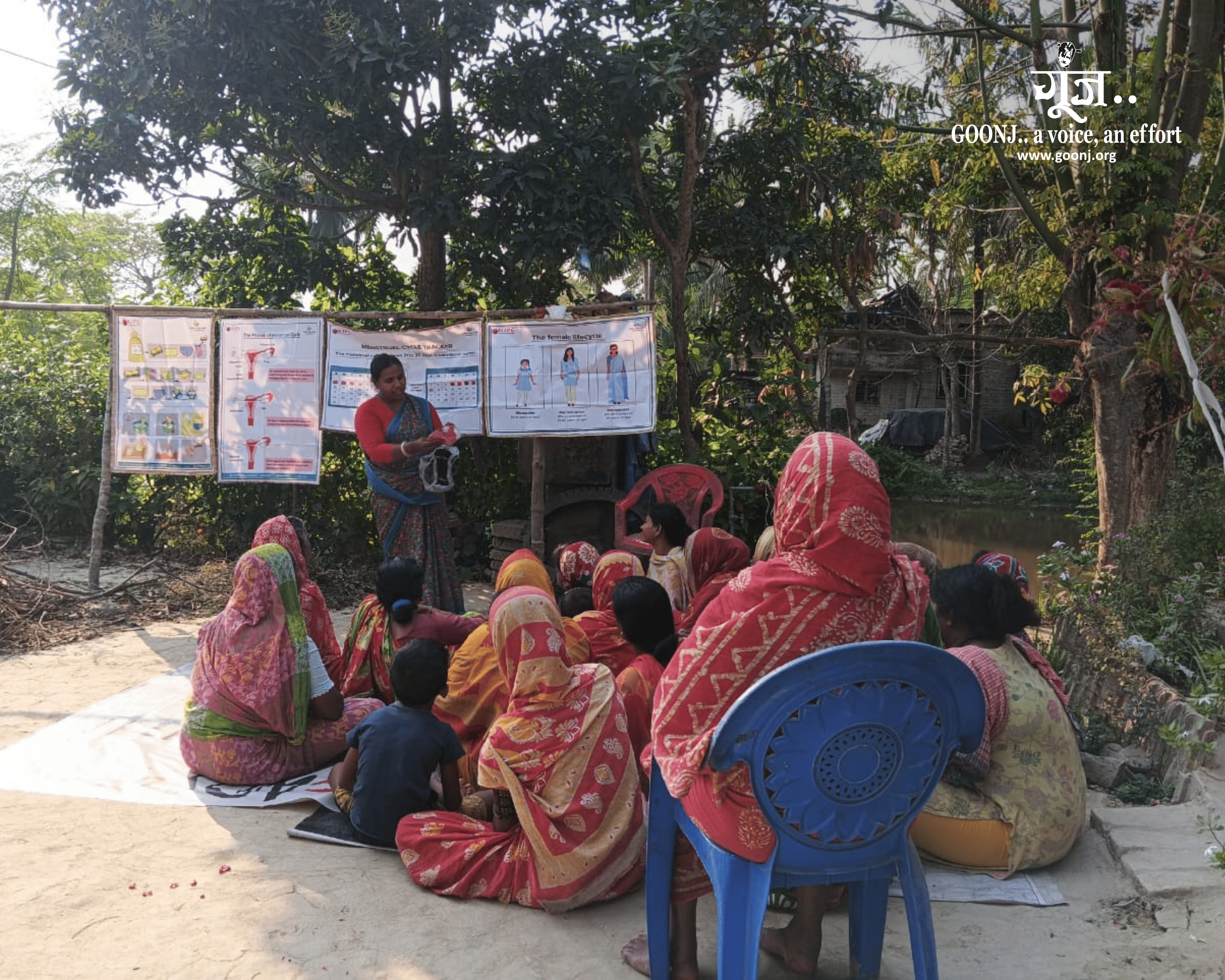
Women in Maheshpur speak openly about menstruation during a Chuppi Todo Baithak session.
As the discussion unfolded, women connected menstrual hygiene to water shortage. During summer, tubewell water was insufficient, and the village depended on local ponds. Heavy weed growth and dirt had made these ponds difficult to use. The community decided to restore one such pond. Over three days, ten villagers cleaned the 50-foot by 50-foot pond, making the water usable again for bathing and daily needs.
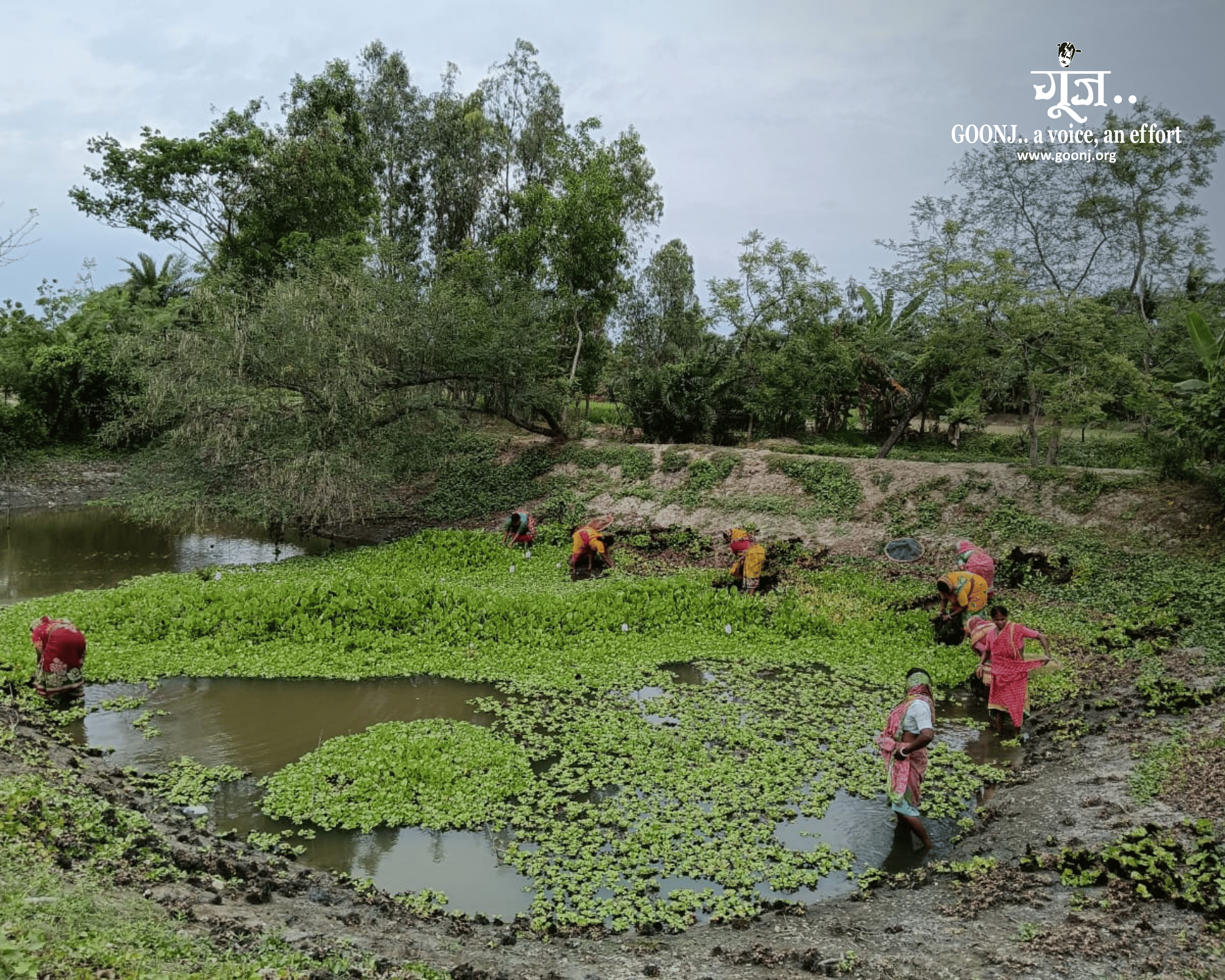
Ten villagers cleaned the 50-by-50-foot pond over three days to make it usable.
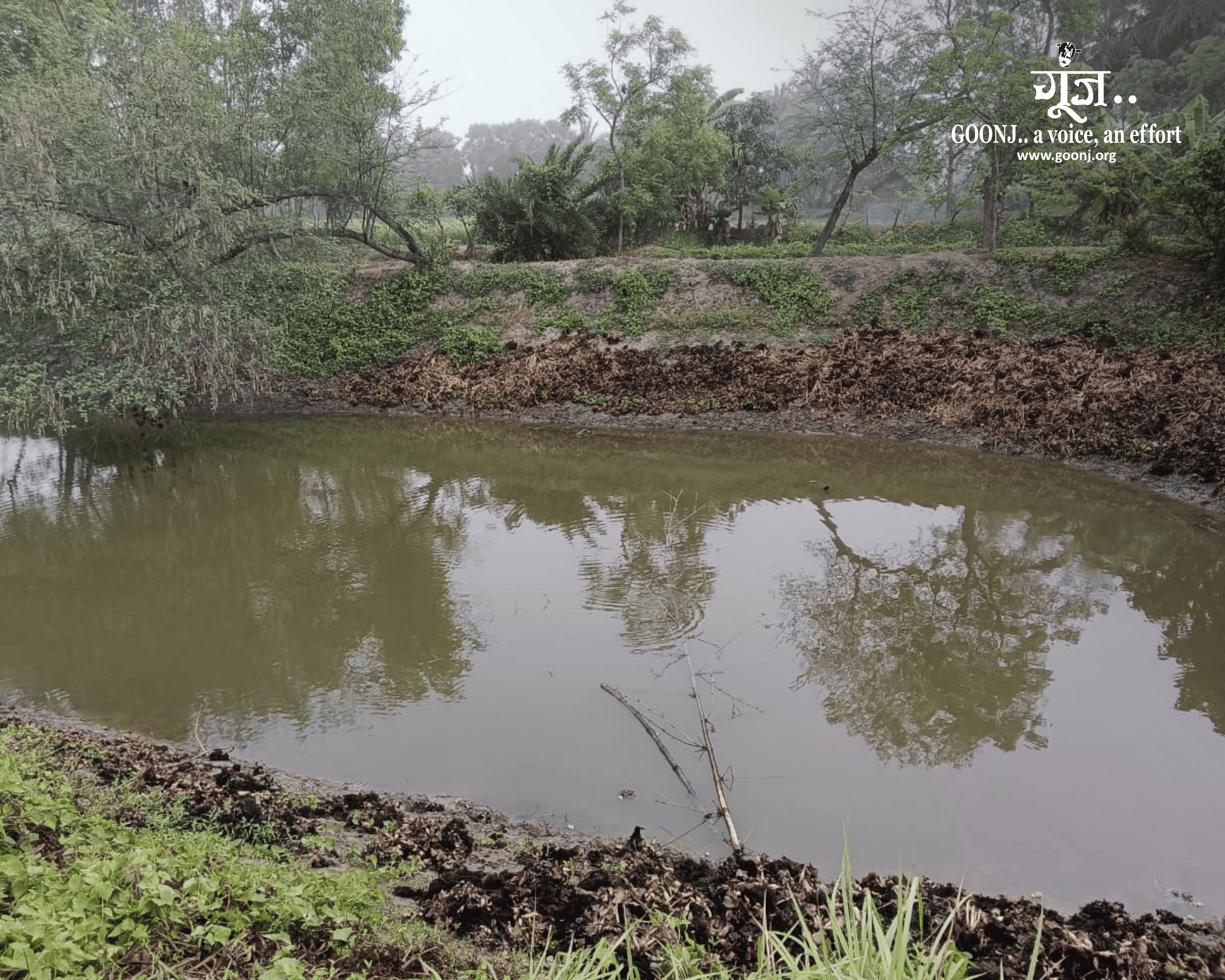
The restored pond now supports bathing and daily water needs during summer.
Afsana: “We’ve done some work with Goonj before, but this kind of health-focused work is new to us. Now that we understand its value, we’ll try to maintain the pond better in the future.”
Rita: “I used to work with Goonj earlier. Now, through this menstrual awareness session, we received a special kit that included two MY Pads for each of us. That has been very helpful for me and my three daughters.”
What began as a conversation about menstrual health also led to action around a shared water resource, showing how closely sanitation, hygiene and access to clean water can be connected.
Making Shared Spaces Cleaner in Shrirangapur
In Shrirangapur, Belagavi, Karnataka, the community identified the need to improve shared public spaces. More than 75 people, including agricultural workers, daily wage earners and members of the Devdasi community, came together to clean the school, bus stop and surrounding areas over two days.
Alongside the cleanliness drive, an awareness session under Not Just a Piece of Cloth initiative, created a space for women and adolescent girls to discuss menstruation. Women shared their experiences, questions and concerns around practices and myths that were rarely discussed openly.
Creating Privacy Around the Handpump in Chhanguri Banjariya
In Chhanguri Banjariya, West Champaran, Bihar, community discussions highlighted another everyday concern: privacy.
Women, including Der Devi, bathed at an open handpump near a busy Musahari hamlet. They often had to return home in wet clothes before changing. The presence of men made the situation particularly uncomfortable, especially for younger women.
During discussions facilitated by Goonj, women explored a simple solution using locally available materials: creating an enclosure around the handpump. Der Devi and her neighbour installed a bamboo screen, and other families began adopting similar solutions.
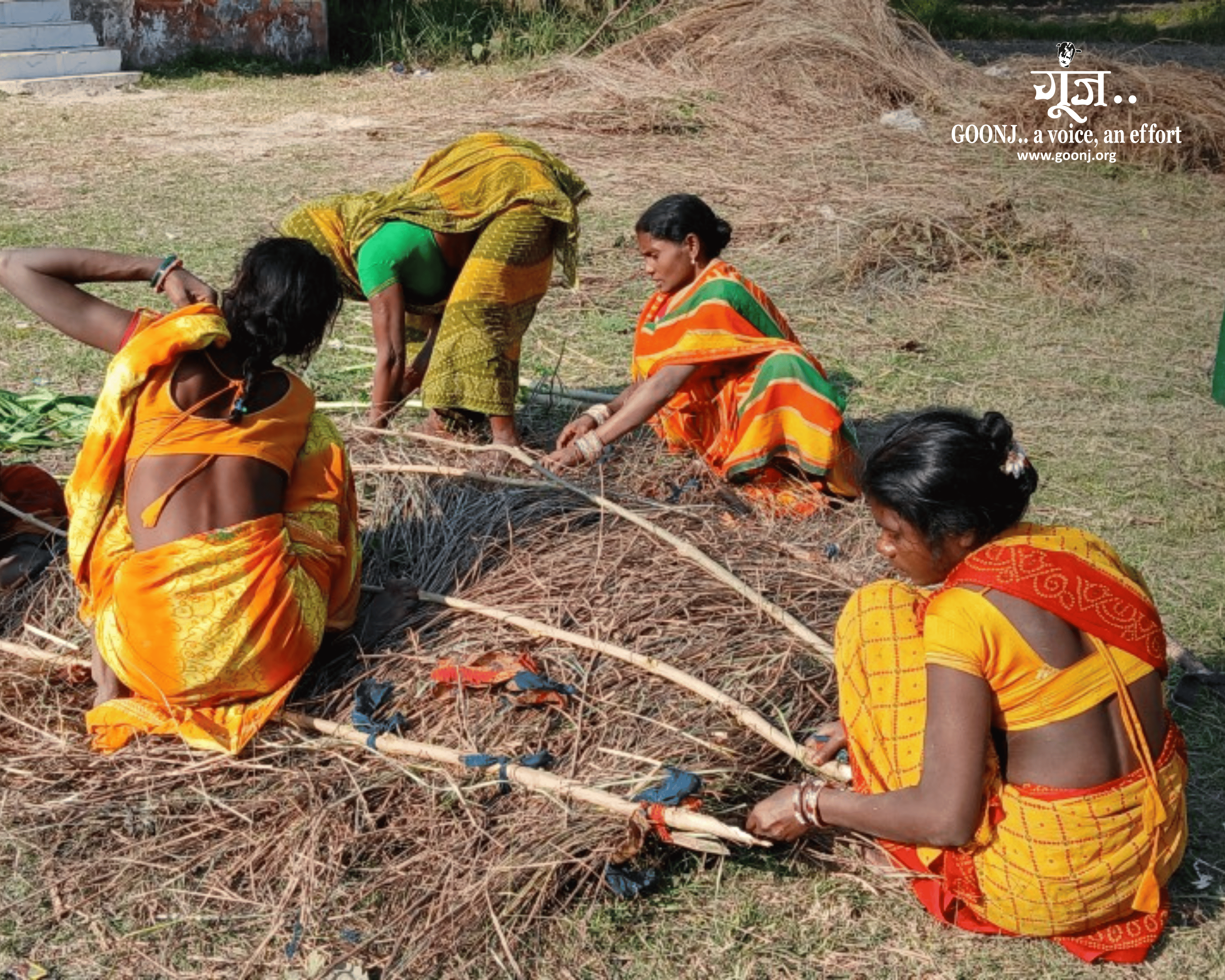
Women use local bamboo and dry grass to build a screen around the village handpump.
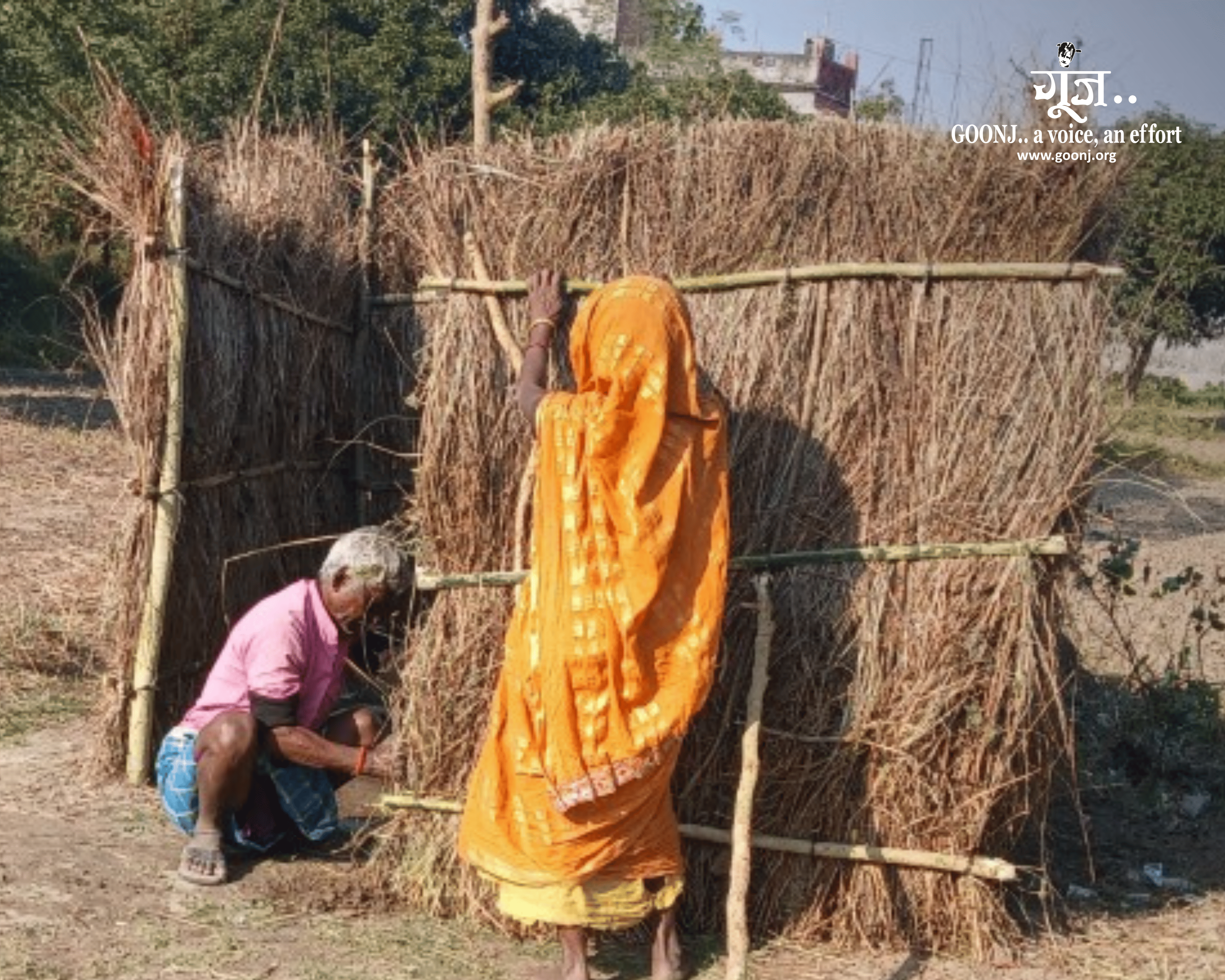
The enclosure gives women privacy while bathing; other families have since built similar ones.
The intervention required no complex infrastructure. Yet, it offered greater privacy and showed how practical solutions can emerge from everyday community experiences.
Building Changing Spaces for Women in Dightor
In Dightor, Bankura, West Bengal, conversations around menstrual health prompted women to speak about another gap: the lack of privacy while changing menstrual cloth near ponds and workplaces.
Lakshmi: “We expected a general discussion like before, but I was stunned by how openly team Goonj explained menstrual health. It was surprising to see a man discuss such a topic so simply and without hesitation.”
When the conversation turned to menstruation, three men left the session. The women continued talking, and the discussion gradually opened up to wider concerns around privacy and menstrual hygiene.
Saini: “Most of us work at brick kilns. Although there is access to water, there is no facility for washing or changing clothes, making menstruation days extremely difficult. This initiative is a major relief for us.”
The women decided to act on the issue themselves. A group of 84 women organised teams and collected bamboo, palm leaves, date leaves, wood and nails from the village. Over three days, they constructed six changing rooms at locations they had identified as necessary.
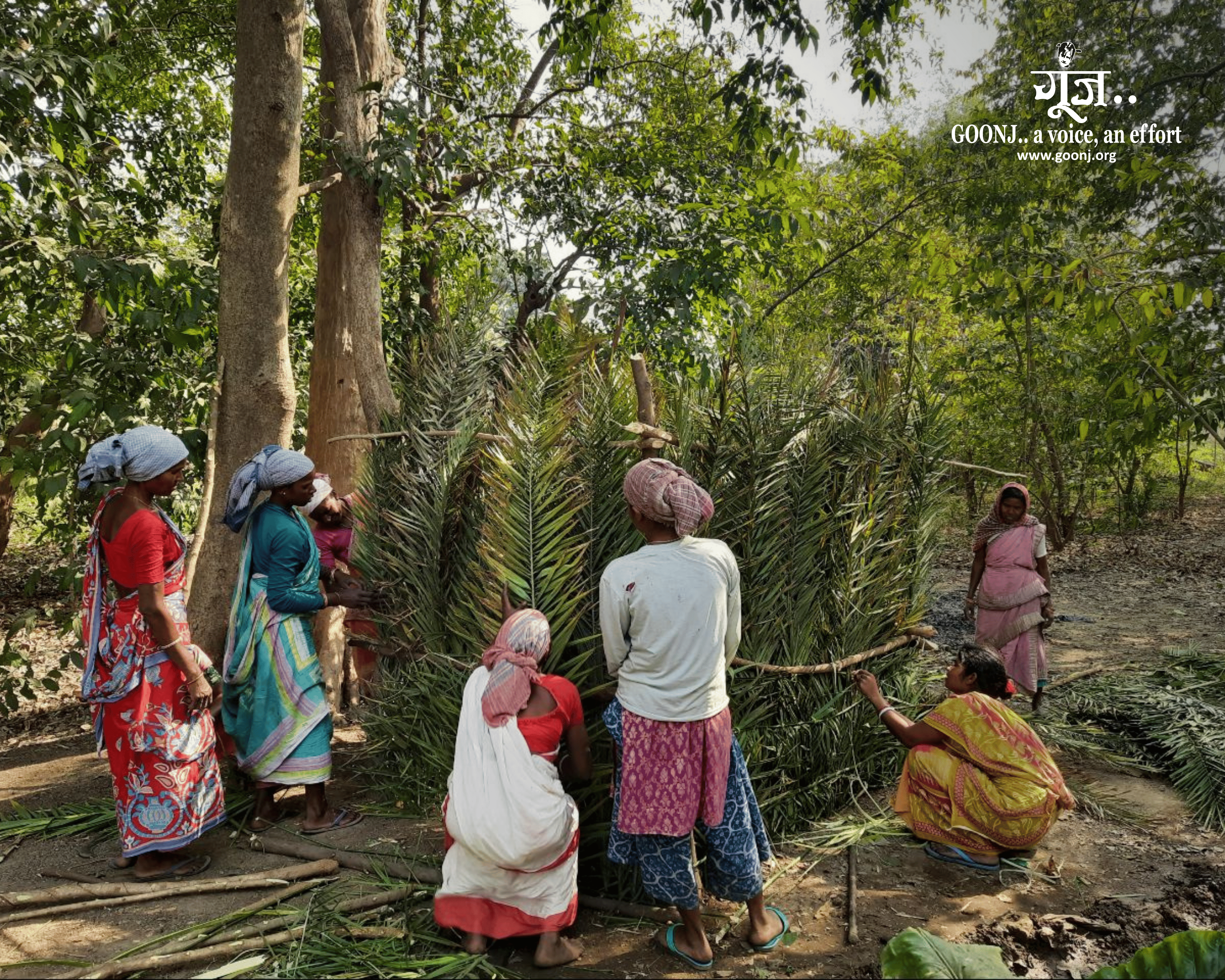
84 women built six changing rooms over three days using bamboo and palm leaves.
The result was a practical solution shaped by the women themselves, using materials available within the community.
What These Stories Show About Sanitation
Across these four regions, sanitation priorities looked different because everyday realities were different. What connected them was the process: communities came together to speak about issues affecting their daily lives, identify practical responses and act using locally available resources.
Goonj’s role was to facilitate these conversations, enable community-led action and recognise people’s contribution through need-based family kits made from urban material surplus.
Together, these stories show that sanitation is about more than cleaner surroundings. It is also about access to clean water, privacy, safe public spaces, menstrual health and the confidence to shape solutions to everyday challenges.
About Goonj
Goonj’s menstrual wellbeing work across India connects urban textile surplus to become a resource for menstrual wellbeing of women and other menstruators in rural India. Our focus is on enabling participation with dignity as we strongly believe that development begins when people engage with their own challenges using their own effort, strengthened by shared resources.
Be a Stakeholder in our Work
Start where you are. Organise a collection drive. Begin a Goonj kee Gullak. Volunteer. Intern. Or stay connected through the monthly newsletter. Many ways to engage. One choice to make — take action.
More on www.goonj.org | Write to [email protected]