A Place of Necessity
Across the world, shelter is seen as a basic need — a space to live with safety and dignity. In Panasi Bari, a small village in the southern part of Rajasthan’s Banswara district, with limited employment opportunities many men migrated to Gujarat for daily wage work, leaving behind households with basics. In this backdrop young girls and women took action for their menstrual hygiene.
A Challenge Rooted in Dignity
When a Goonj volunteer arrived in Panasi Bari, conversations with the villagers revealed a shared but rarely spoken hardship:
Girls and women spoke about the need for a safe, private space to change clothes during menstruation. The size of the homes and the lack of enclosed spaces led to hesitation, shame.
Community-Led Innovation: Building with What They Had
Spurred by the urgency of this need, 45 women and girls — joined by four men — decided to act. Harnessing local wisdom and available resources, they came together to build community bathrooms in their mohallas (neighborhoods).
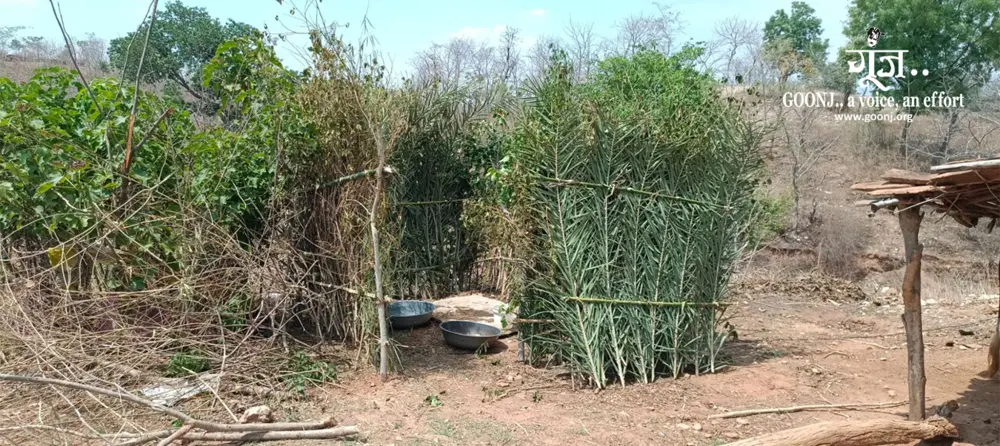
Newly built community bathrooms restoring dignity
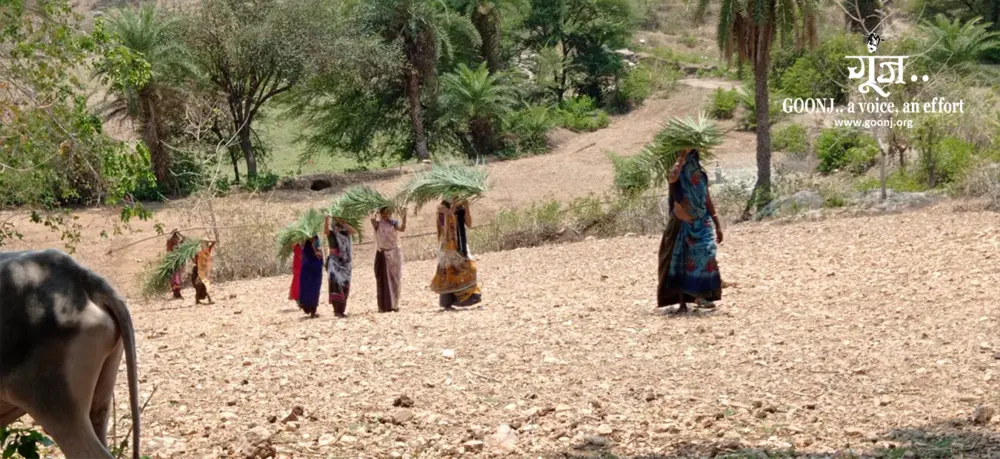
- Date palm leaves were collected from distant areas.
- Pits were dug manually.
- Structures were built collectively — with no external contractors or expertise.
It was simply communities designing and executing solutions based on their lived realities.
Voices of Change
During the making of the private spaces, pride and ownership bloomed across the village.
Sita Devi (30 years old): “I never knew that such a beautiful bathroom could be built with local resources around us.”
Thaneswar Ji (38 years old): “Now, the dignity of the girls and all the women in our village will be preserved.”
Kavita Devi, School Teacher (40 years old): “Girls will now be able to change their clothes during menstruation on time, which will reduce menstrual-related illnesses.”
These testimonials reflect a community reclaiming dignity not through charity, but through collective action and resilience.
Beyond Infrastructure: Building Dignity and Health
Through simple materials and shared efforts, this small community built the dignity,wellbeing and confidence of their women and girls.
It’s proof that long standing challenges need small, simple people led solutions — they simply need to be mobilised, motivated and empowered.
About Goonj
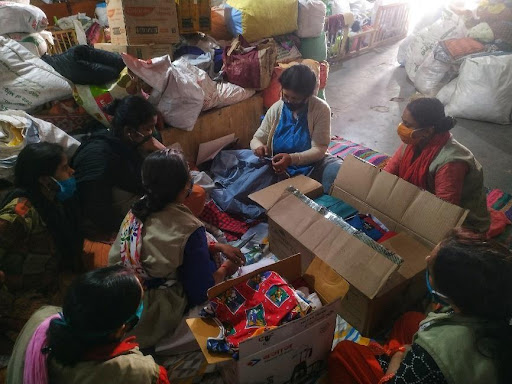
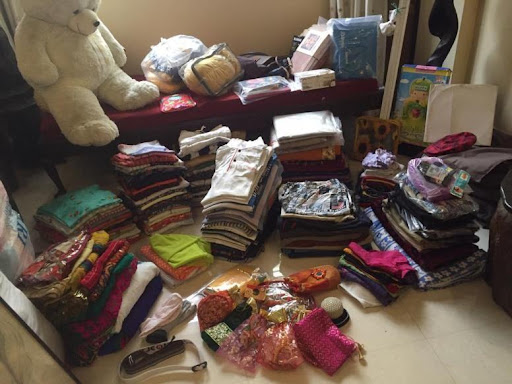
Goonj’s menstrual wellbeing work across India connects urban pre and post consumer textile surplus to become a resource for menstrual wellbeing of women and other menstruators in rural India. Our focus is on enabling people led action with dignity as we strongly believe that development begins when people engage with their own challenges using their own effort, strengthened by shared resources.
Be a Stakeholder in our Work
Start where you are. Organise a collection drive. Begin a Goonj kee Gullak. Volunteer. Intern. Or stay connected through the monthly newsletter. Many ways to engage. One choice to make — take action.
More on www.goonj.org | Write to [email protected]