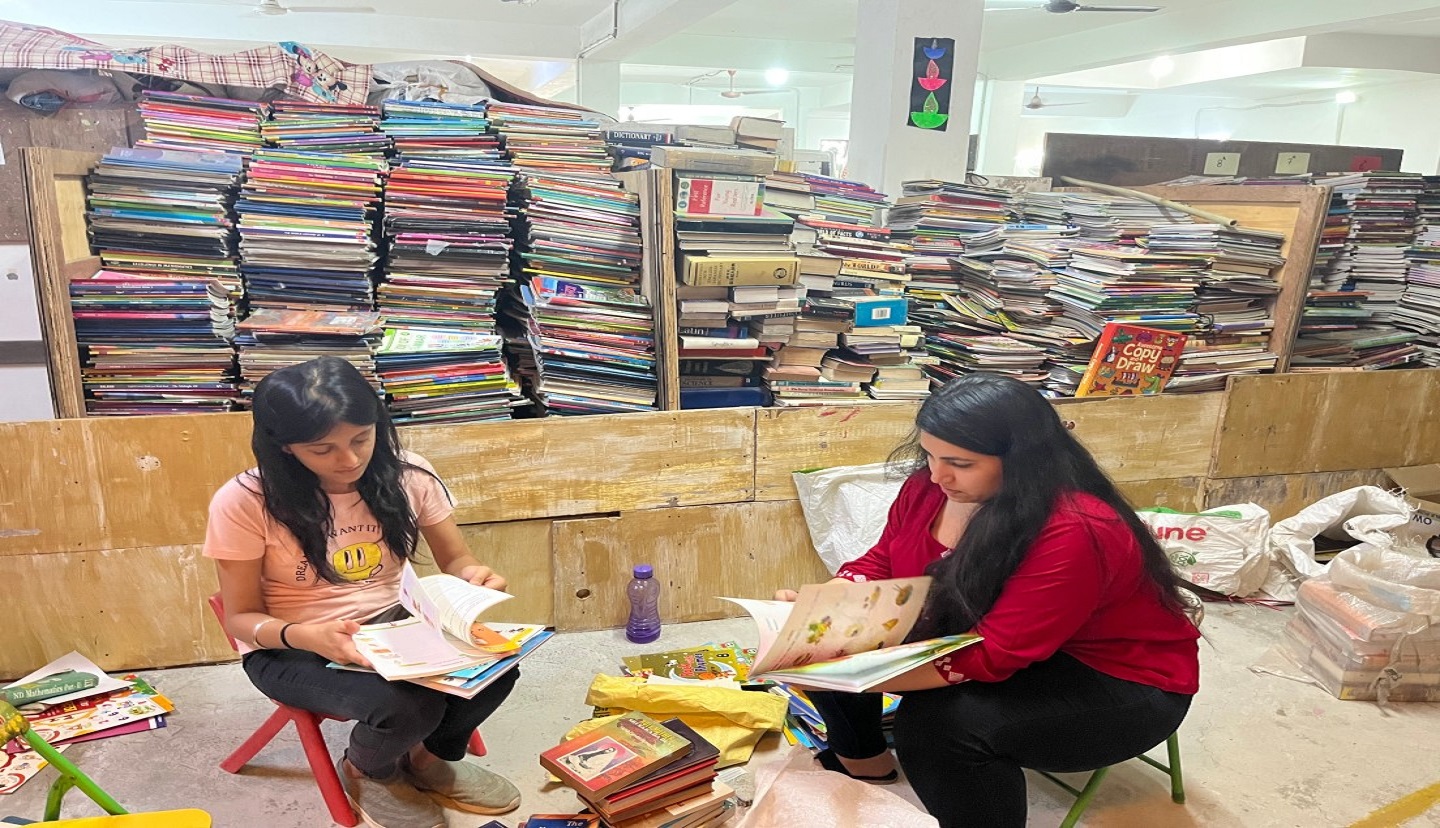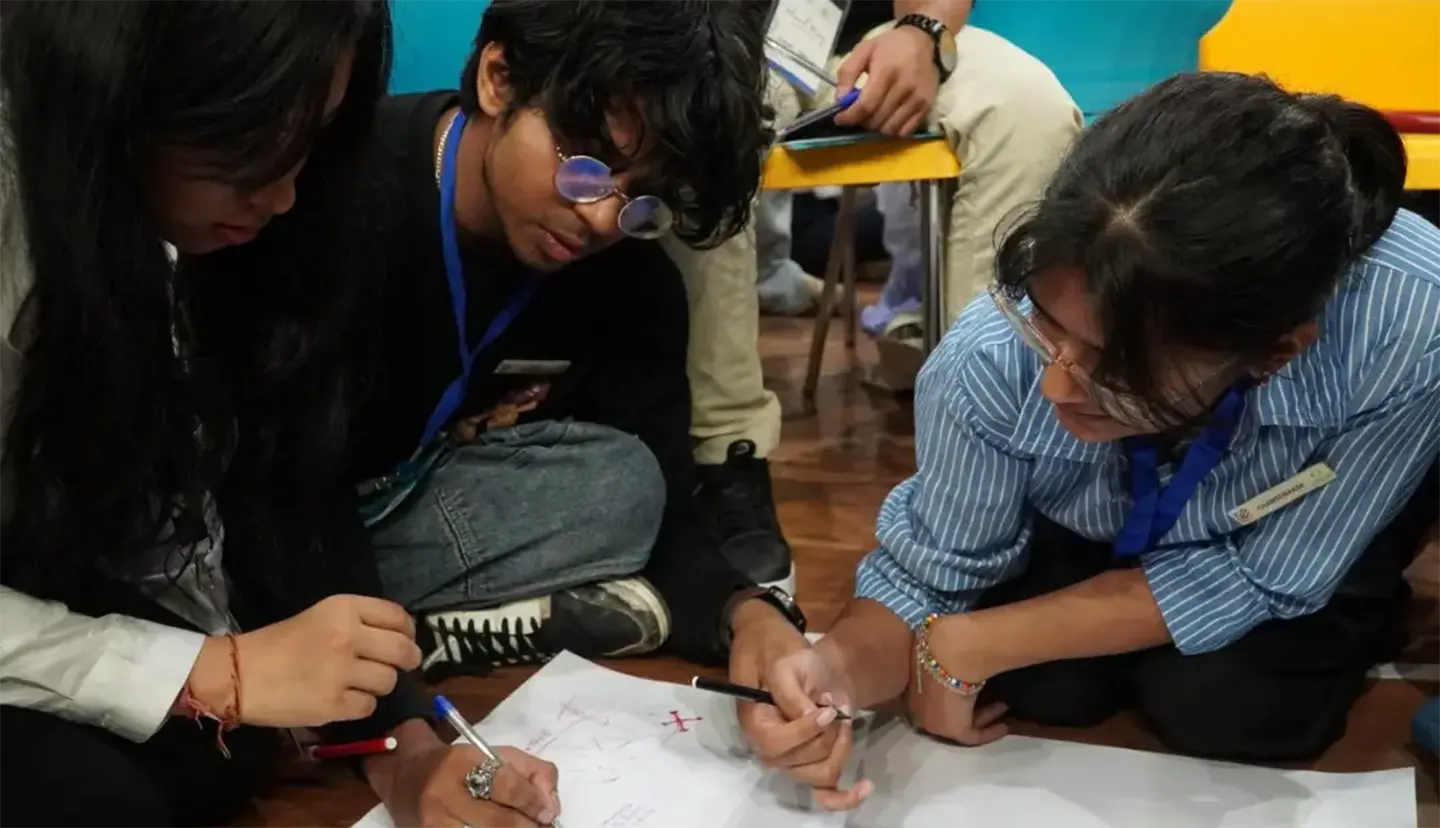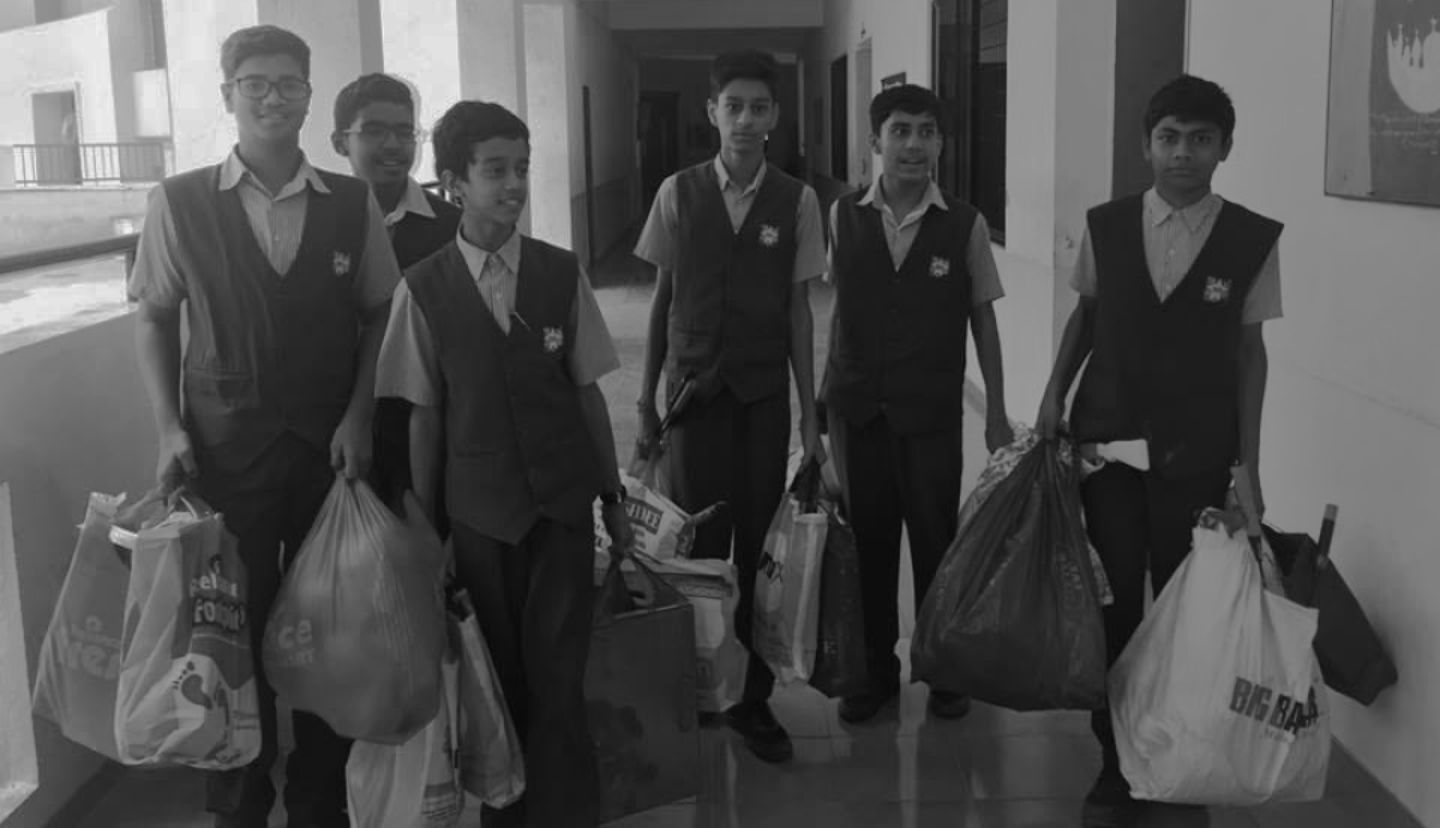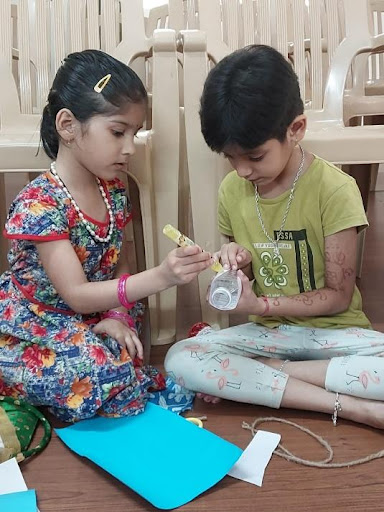
A collection drive can often begin with a familiar thought: What can we give? At St. Pious X Degree & PG College for Women in Hyderabad, the question began to take a slightly different shape. The college had planned a month-long collection drive with Goonj. Before the drive began, the college felt it was important to first understand the work behind it. So, despite a few last-minute hiccups in getting the session organised, the team made time for a Knowing Goonj session.
Starting with a Knowing Goonj Session
That conversation became an important starting point. The shift became more visible when we put on the exhibition on disasters in the college. The exhibition brought photographs from Goonj’s work on the ground into the college space, giving students, teachers and other visitors a glimpse of what communities experience during disasters and how people come together to respond.
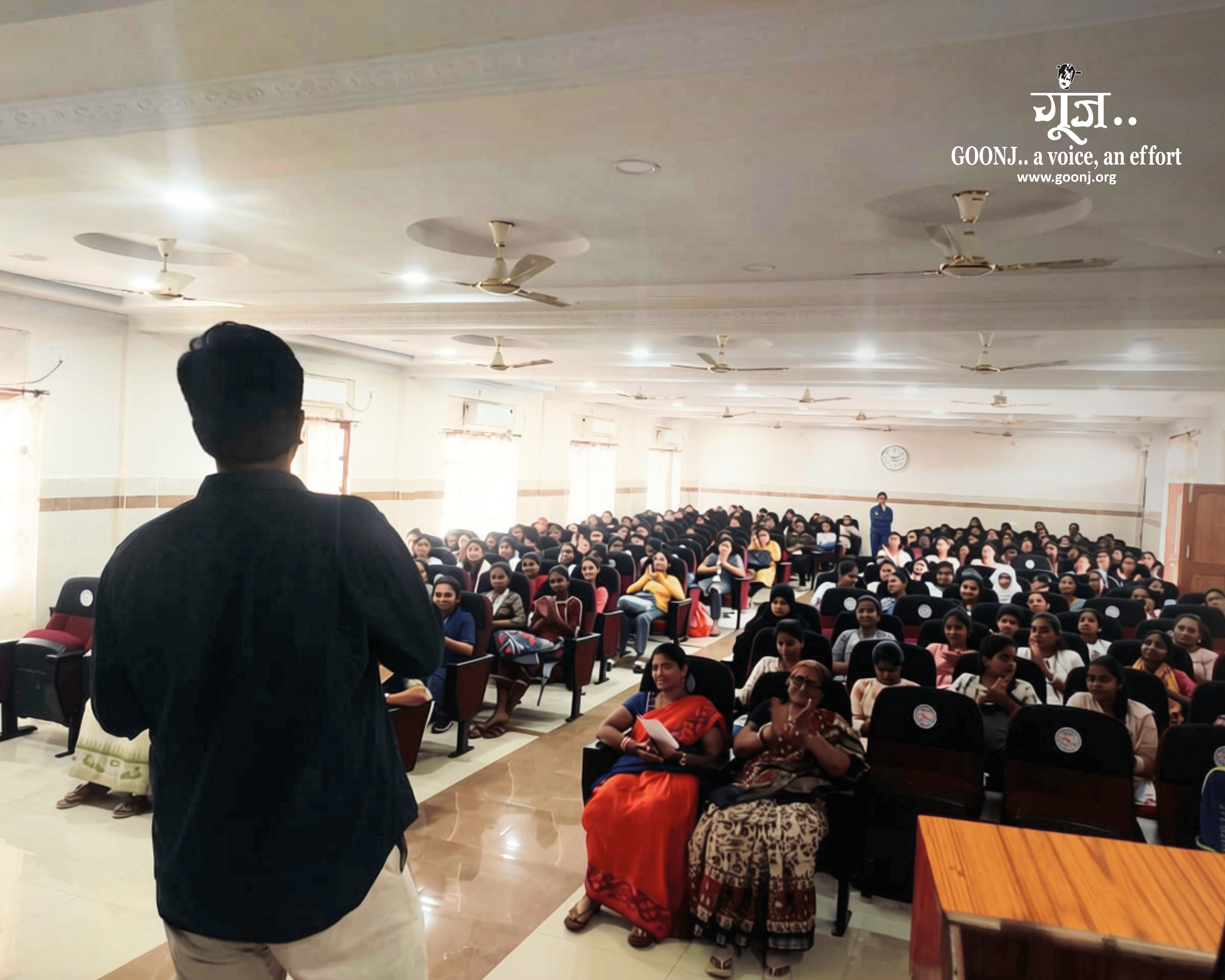
A Knowing Goonj session with students and faculty
When an Exhibition Became a Space for Conversation
Not everyone stopped at every photograph. Some walked through, taking in the images along the way. But, here and there, the photographs prompted conversations. A teacher spoke about how powerful the photographs were and how thoughtfully they had been captioned. One visitor felt that the images needed no explanation — they spoke for themselves. Another began interpreting the photographs in their own words, while someone else shared that they could not imagine being in the situations shown.
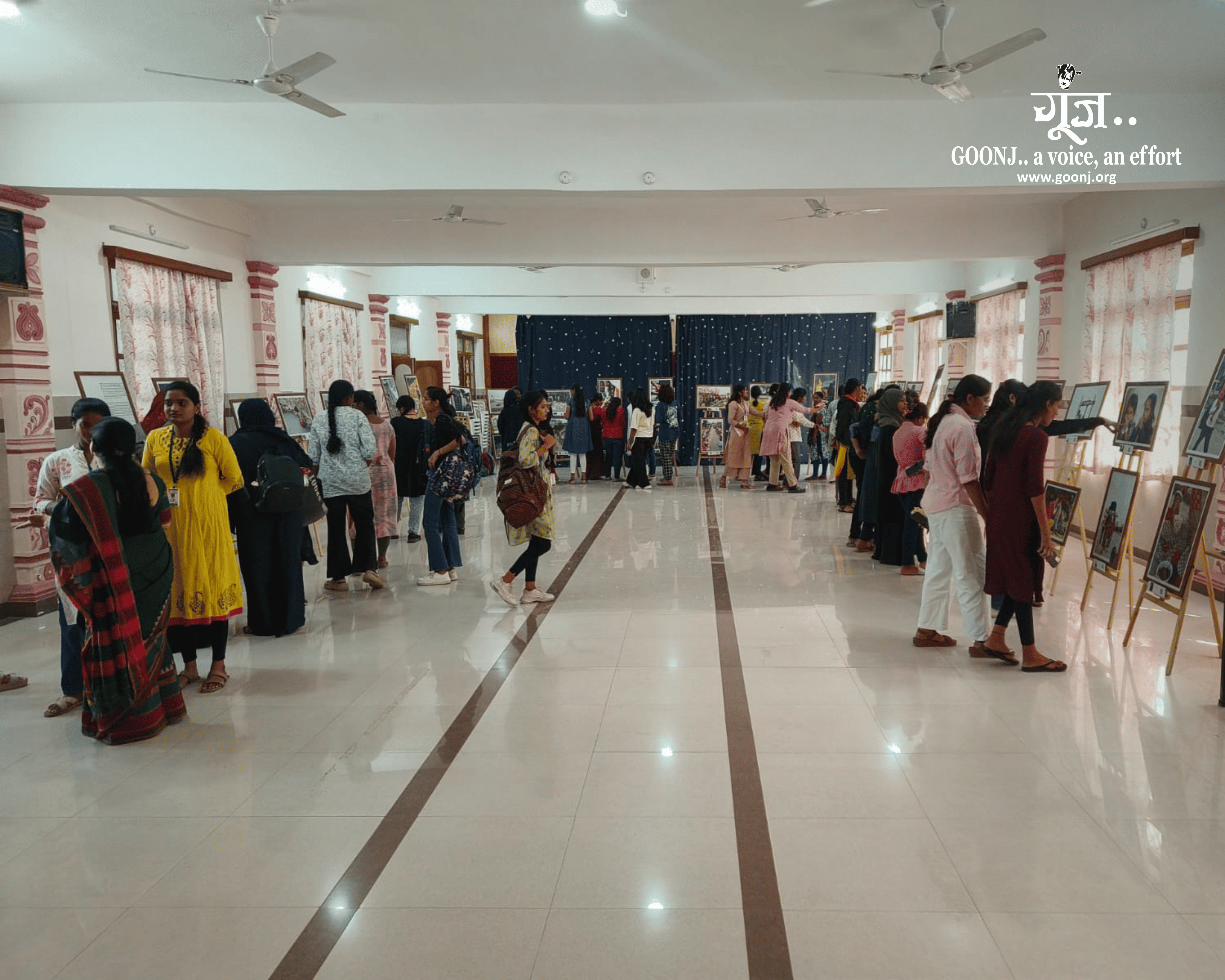
Exploring Goonj’s disaster exhibition
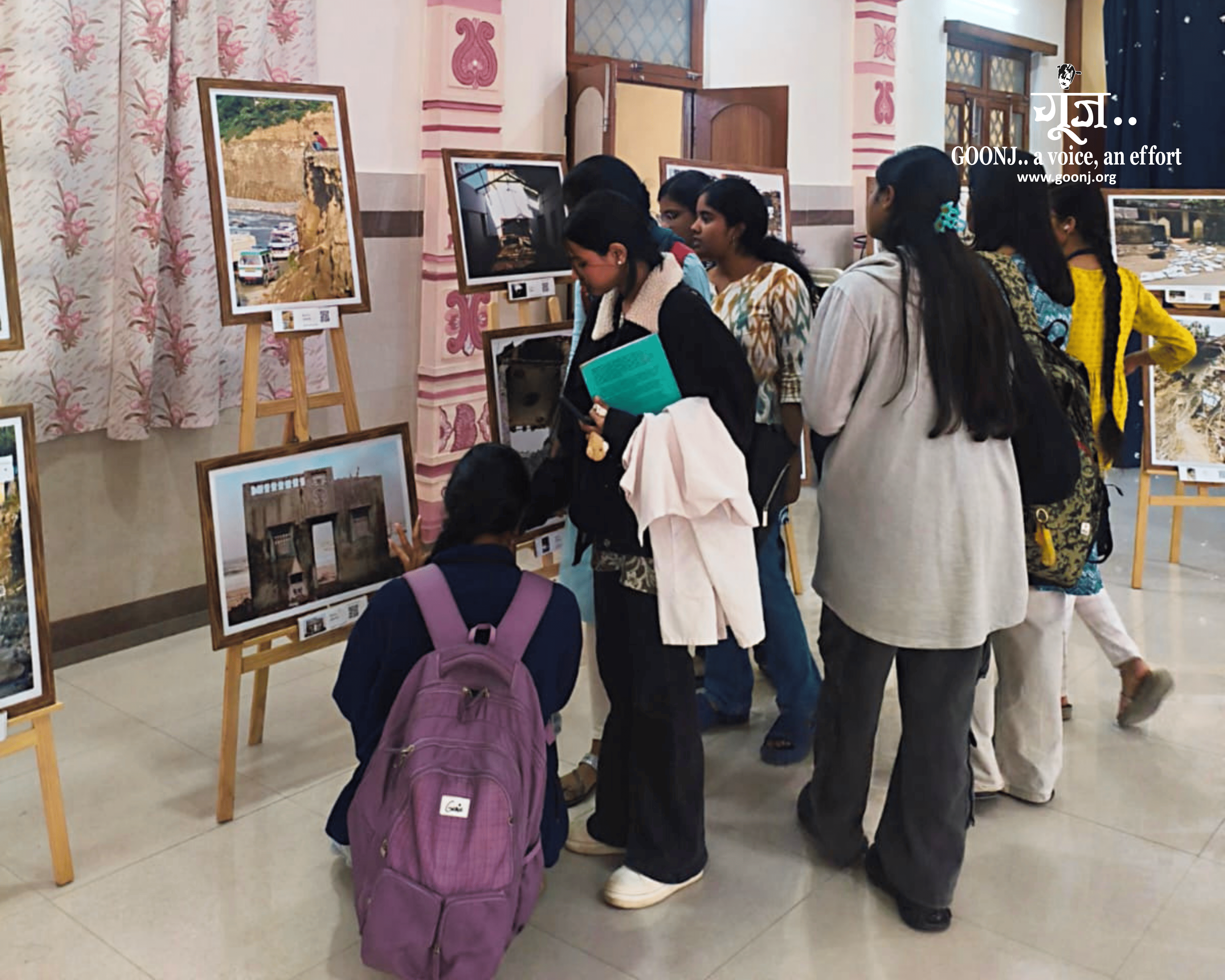
Reflecting on photographs from disaster-affected areas
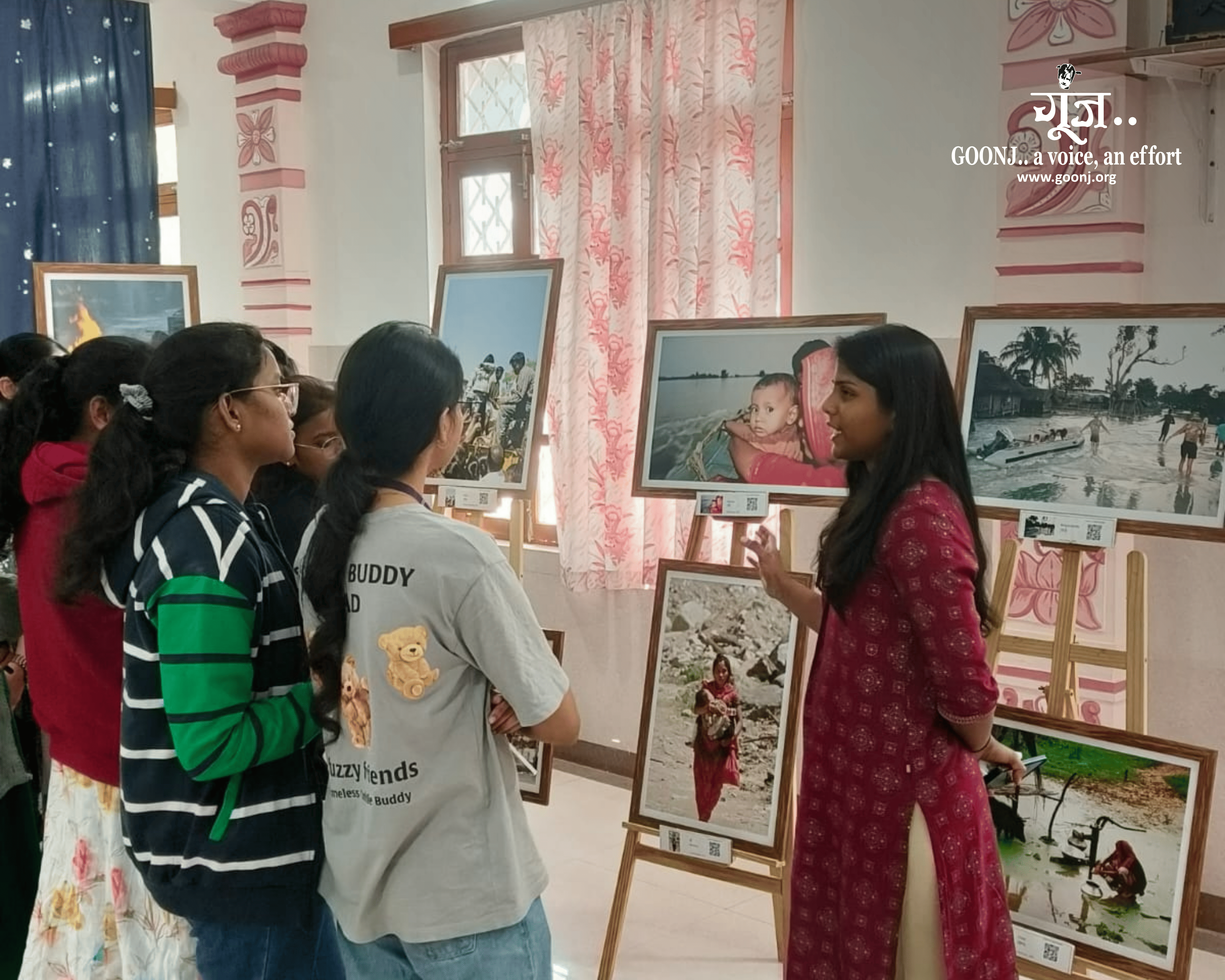
Stories behind the photographs
The responses were different, but they had something in common: people were pausing to look, think and talk.
For the college organiser, the exhibition was also part of a larger change in how she viewed such activities. She shared that similar initiatives at the college had earlier been approached largely as donation drives, centred around the idea of giving.
The Knowing Goonj session had introduced a different way of looking at it — one rooted in contribution, dignity and participation.
From Donation to Contribution
The idea stayed with the students too. They created a selfie board carrying a simple message:
“Contribution instead of Donation.”
It was a small expression of a larger shift — from thinking about what we give to thinking about how we participate.
From Collection Drive to Participation
The exhibition was originally planned for one day. By the end of it, the college wanted parents to experience it too and requested that it stay for another day. The following day brought more opportunities to speak with individual stakeholders, allowing the conversations to continue beyond the planned exhibition.
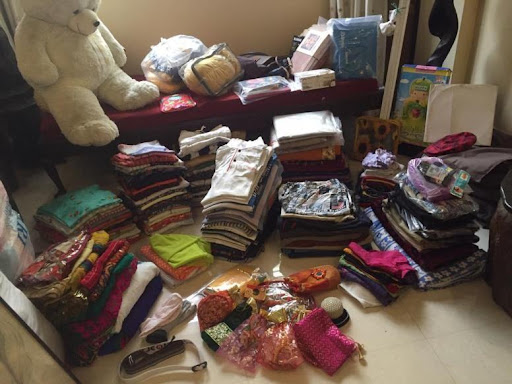
A few days later, the materials collected through the month-long drive reached Goonj. What had begun as a collection drive had travelled through a conversation, an exhibition and a change in perspective — eventually taking the form of participation.
At St. Pious, the most meaningful part was perhaps not just what was collected, but the question that came before it: Is sharing only about giving something away, or can it be about contributing to something larger?
About Goonj
Goonj’s menstrual wellbeing work across India connects urban textile surplus to become a resource for menstrual wellbeing of women and other menstruators in rural India. Our focus is on enabling participation with dignity as we strongly believe that development begins when people engage with their own challenges using their own effort, strengthened by shared resources.
Be a Stakeholder in our Work
Start where you are. Organise a collection drive. Begin a Goonj kee Gullak. Volunteer. Intern. Or stay connected through the monthly newsletter. Many ways to engage. One choice to make — take action.
More on www.goonj.org | Write to [email protected]