A Flood-Prone Village Cut Off Every Rainy Season
In Dhunaguri Pait village in Assam’s Dhemaji district, the monsoon season brings more than just rain. Every year, rising water levels and damaged pathways cut off a section of the village, making even routine activities difficult. Children struggle to reach school, elderly residents find it challenging to move around, and access to essential services becomes uncertain.
The road connecting the village has three broken stretches that traditionally require people to use boats for crossing. These repeated boat journeys are not only time-consuming but also risky, especially during periods of heavy rainfall and flooding.
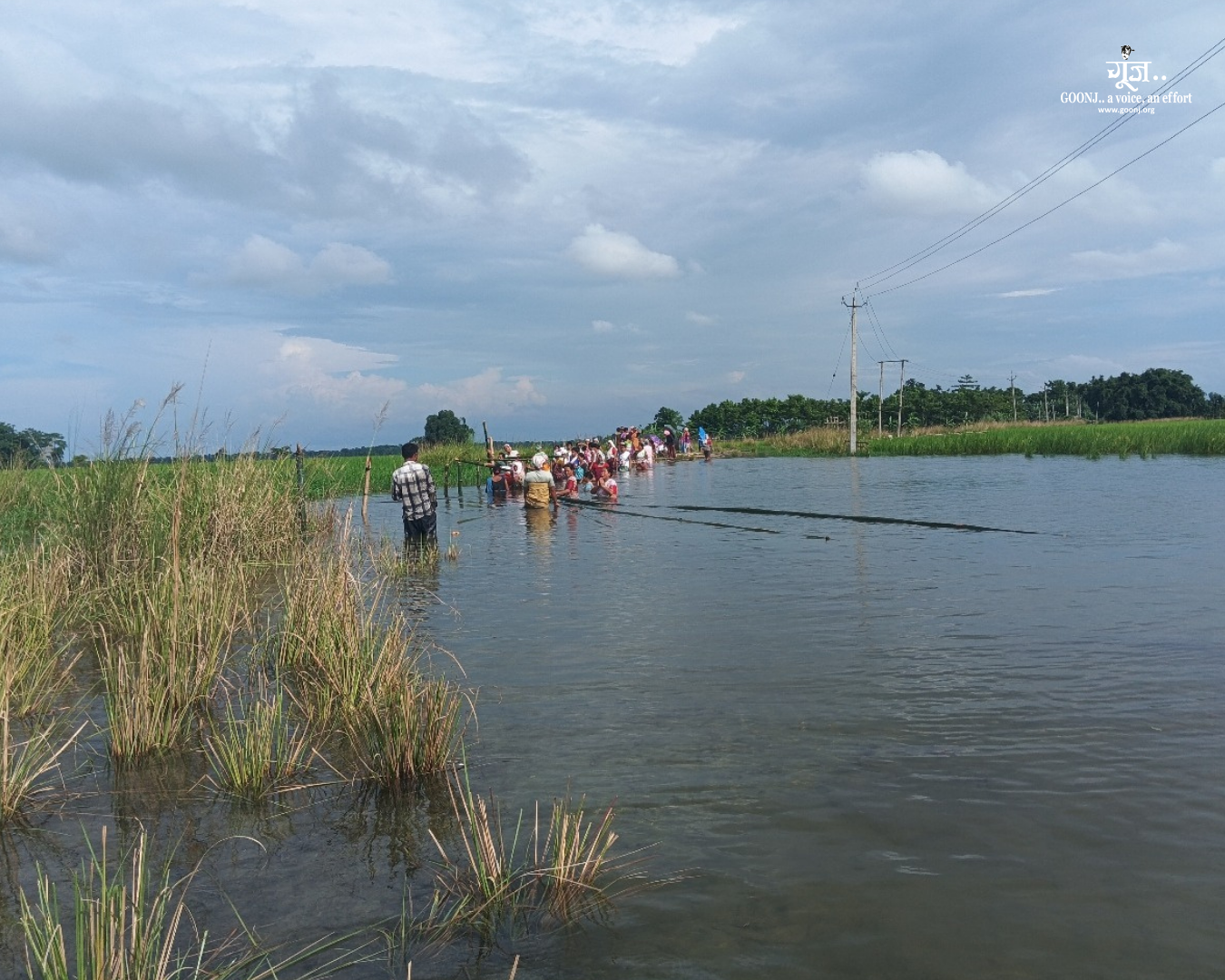
Villagers Crossing Flooded Pathways in Dhemaji During Monsoon
Community-Led Disaster Response Through Collective Action
Recognising the growing challenges, the local Goonj team, through its Cloth for Work-Rahat initiative, created a space for the villagers to come together, discuss their concerns, and identify practical solutions to improve mobility during the rainy season. Through these collective conversations, the community decided to construct two bamboo bridges, reducing the number of boat crossings from three to just one.
Rather than bringing in external solutions, the initiative enabled and motivated residents to draw upon their own resources, skills, and local wisdom. While not every household owned bamboo, each family contributed in whatever way they could. Community members pooled money to purchase bamboo and rope, and volunteered their labour to turn the idea into reality. A total of 99 villagers—most of them women—worked side by side for two full days to build a bamboo bridge measuring 121 feet in length and 5 feet in width.
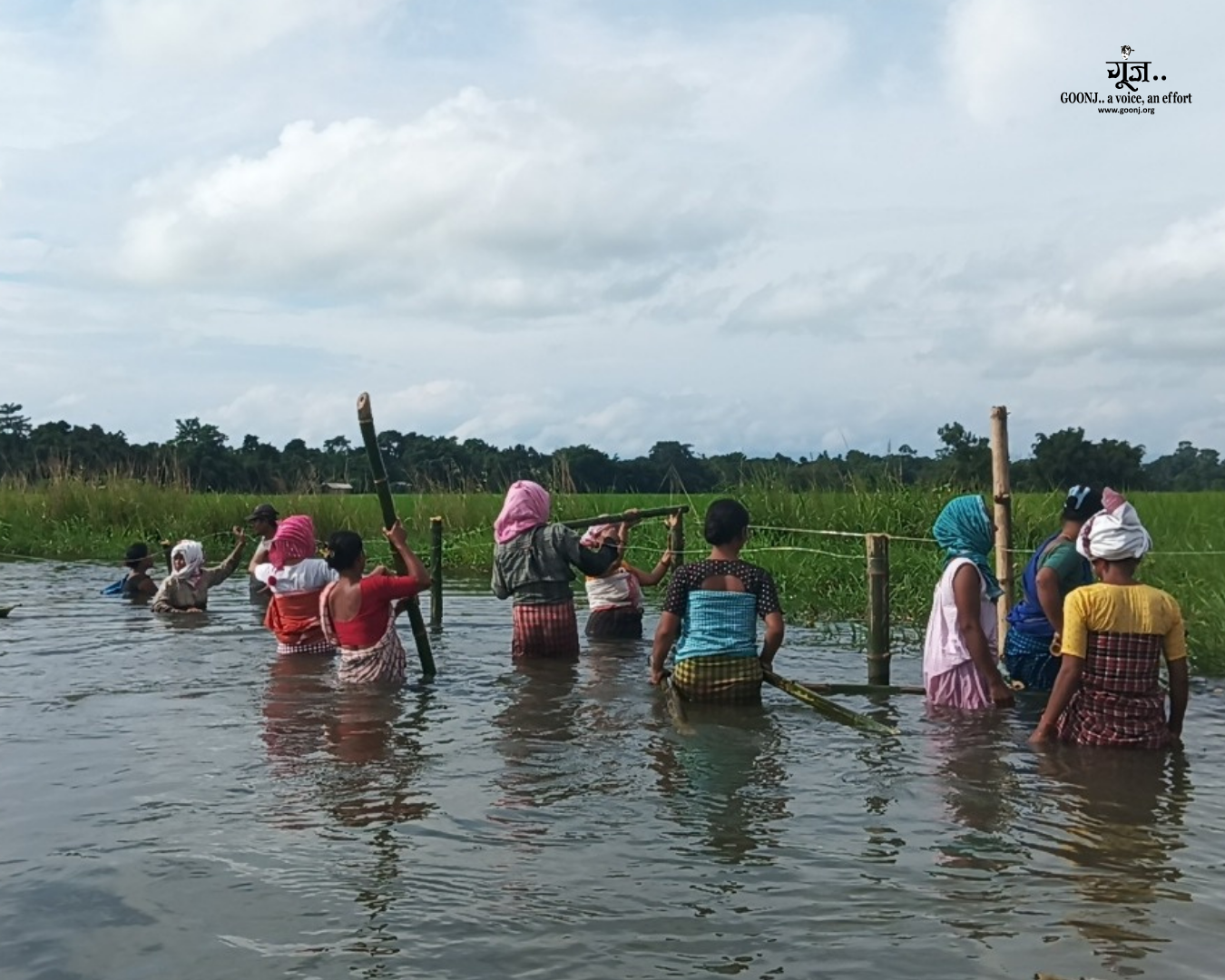
Community Members Building a Bamboo Bridge in Flood-Affected Assam
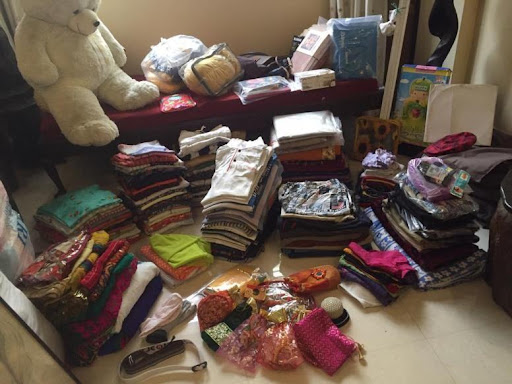
The effort demonstrated how local knowledge, community participation, and shared responsibility can address immediate challenges in disaster-prone regions. As recognition for their collective work, thoughtfully curated family kits made from urban surplus were channelised to participating families, reinforcing the dignity of their contribution while connecting urban abundance with rural needs.
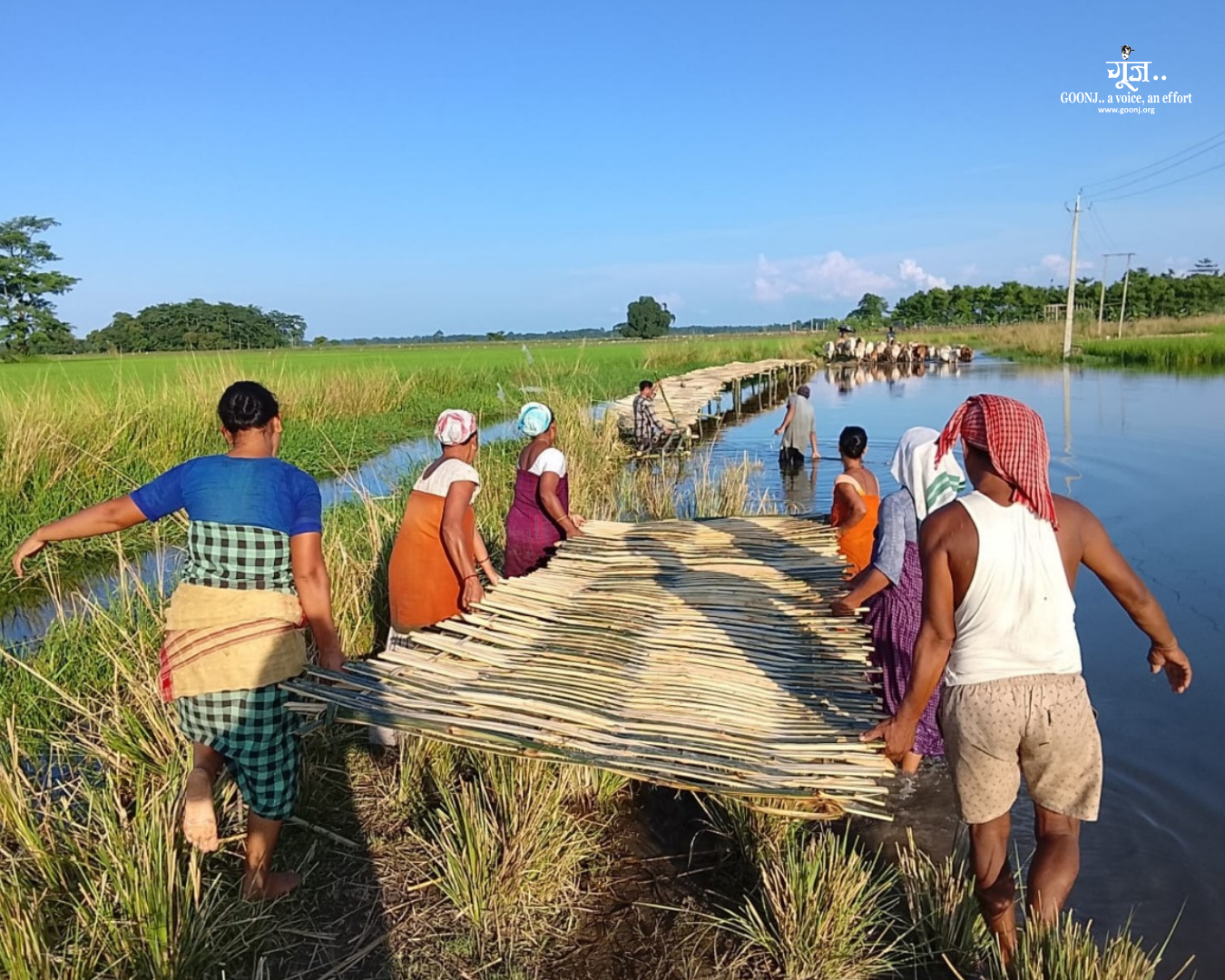
Transporting Bamboo Materials for Community Bridge Construction
Strengthening Disaster Resilience Through Local Solutions
The newly built bamboo bridges have significantly eased movement within the village during the monsoon. More importantly, the process strengthened community ownership and confidence in solving local problems together.
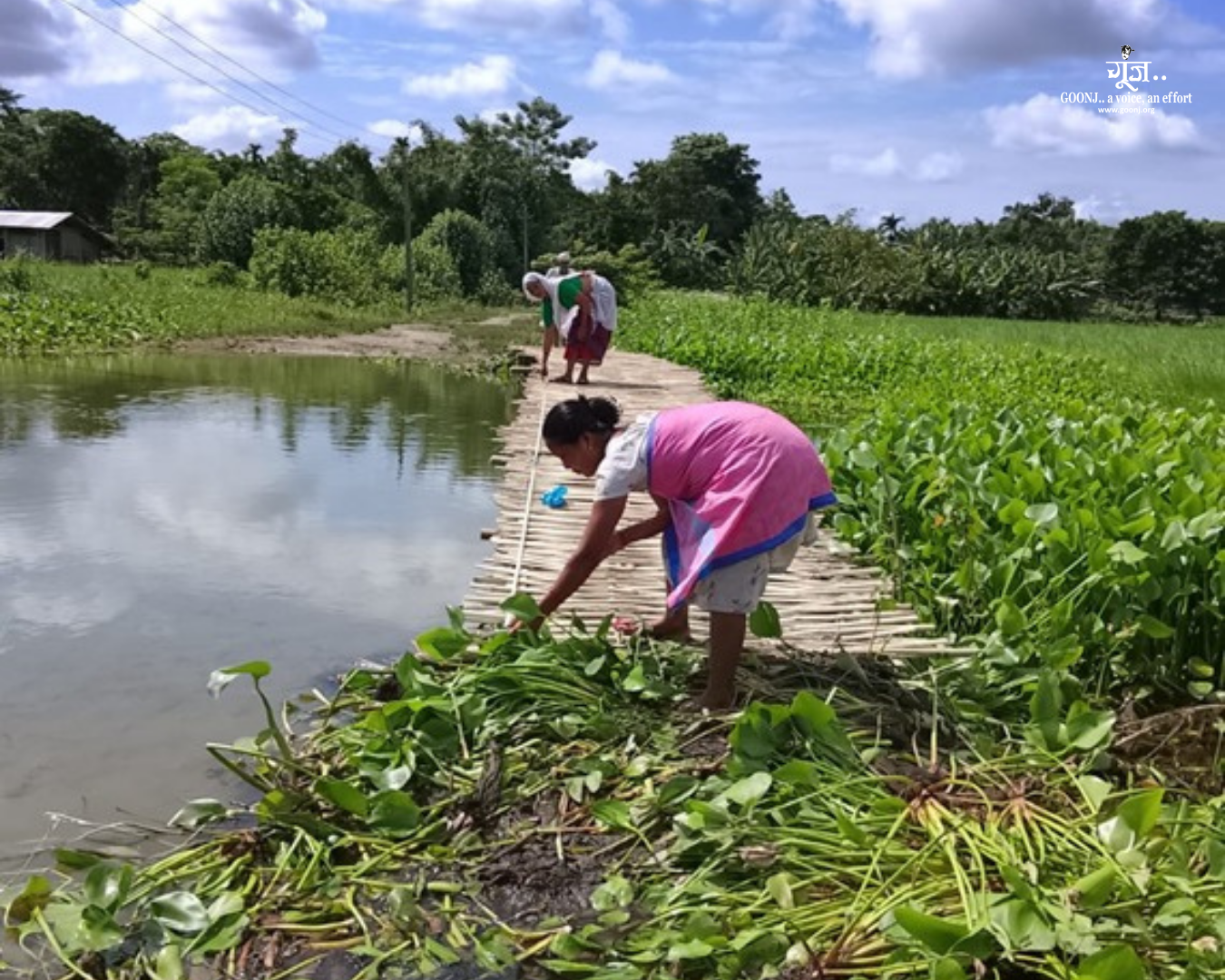
Newly Constructed Bamboo Bridge Improving Village Connectivity
What began as a response to seasonal isolation has become a powerful example of community-driven disaster resilience. Through collective action and locally available resources, the people of Dhunaguri Pait created a safer and more accessible pathway for their village, proving that meaningful change often starts from within the community itself.
About Goonj
Rahat, is Goonj’s disaster response and resilience initiative built on over two decades of our experience across disasters in India. It goes beyond relief to support rehabilitation and resilience building in the long term. Your early commitment helps ensure timely, need-based action, allowing communities affected by floods, cyclones, and other emergencies to recover with dignity and rebuild stronger. Contribute for our Rahat Initiative
We also invite you to join Societal Alliance for Resilience and Response to Disasters (SARRD) that’s around building a multisectoral alliance of committed entities. It is aimed at building a societal culture of care and resilience to create more coordinated, dignified, and community-led responses to disasters. JOIN US – Write to [email protected] with what you would like to commit.
Be a Stakeholder in our Work
Start where you are. Organise a collection drive. Begin a Goonj kee Gullak. Volunteer. Intern. Or stay connected through the monthly newsletter. Many ways to engage. One choice to make — take action.
More on www.goonj.org | Write to [email protected]