Where Work Once Defined Life
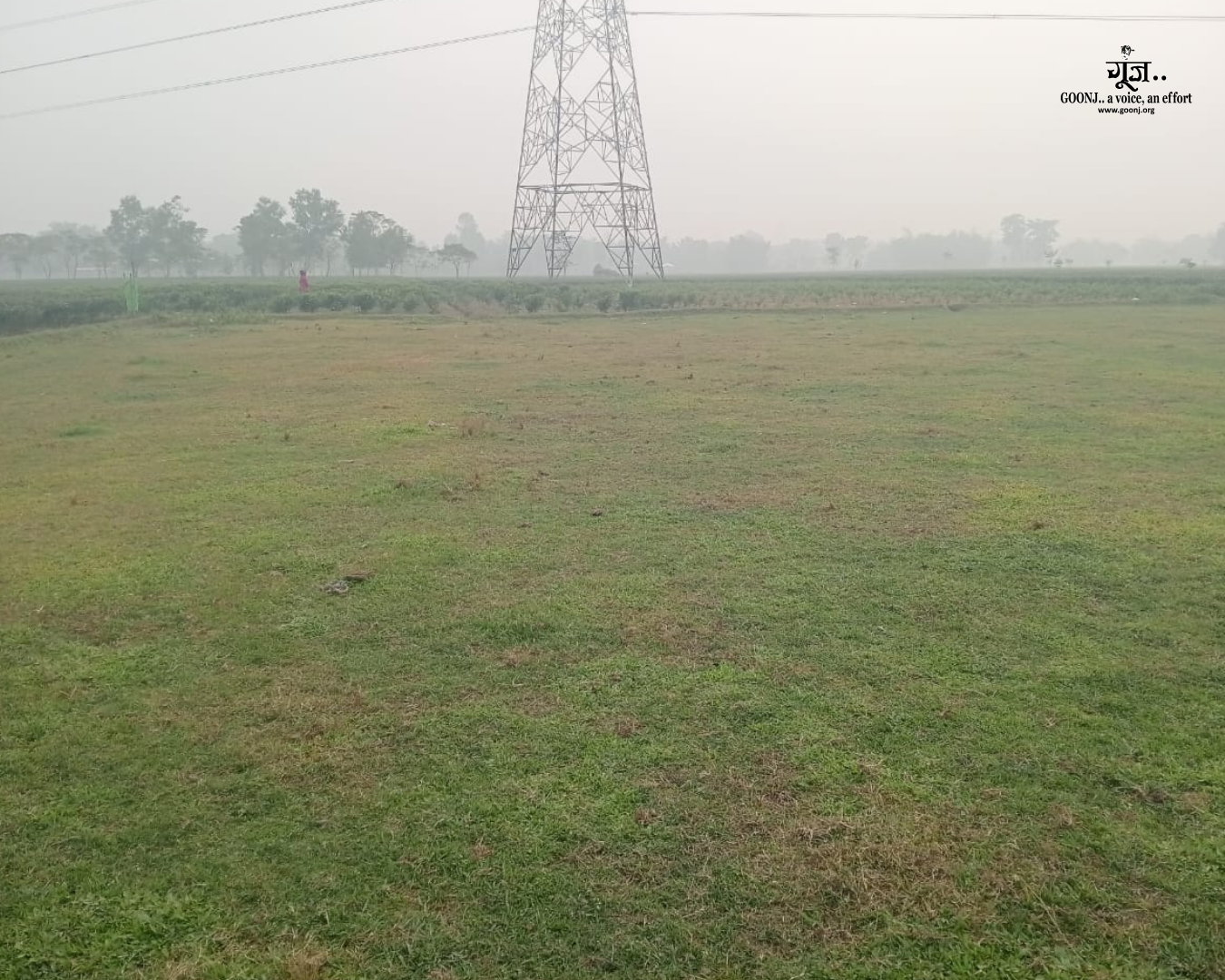
People of Raipur TG village in Jalpaiguri district, West Bengal, carry the memory of work that once held the community together. The local tea garden has remained inactive for over two decades. What was once a source of steady livelihood now lies unused, stretching quietly across the village.
Over time, this absence of work has reshaped daily life of different communities in this tea-growing region of North Bengal.
Living with Limited Choices
Migration has become a common path in this time. Many travel to states like Kerala, Tamil Nadu, Delhi, and Maharashtra in search of work. Some return after short stints while others never come back. For those who stay, survival often depends on what the surroundings can offer. The 30 year old Sima Rajak from the village shares how people here walk long distances to the nearby Teesta River to catch fish and crabs, and sell in nearby markets like Denguajhar and Rangdhamali. Others enter the Baikunthapur forest to collect wood and honey, navigating the constant risk of snakes, wild animals, and elephants.
Starting Again with What Exists
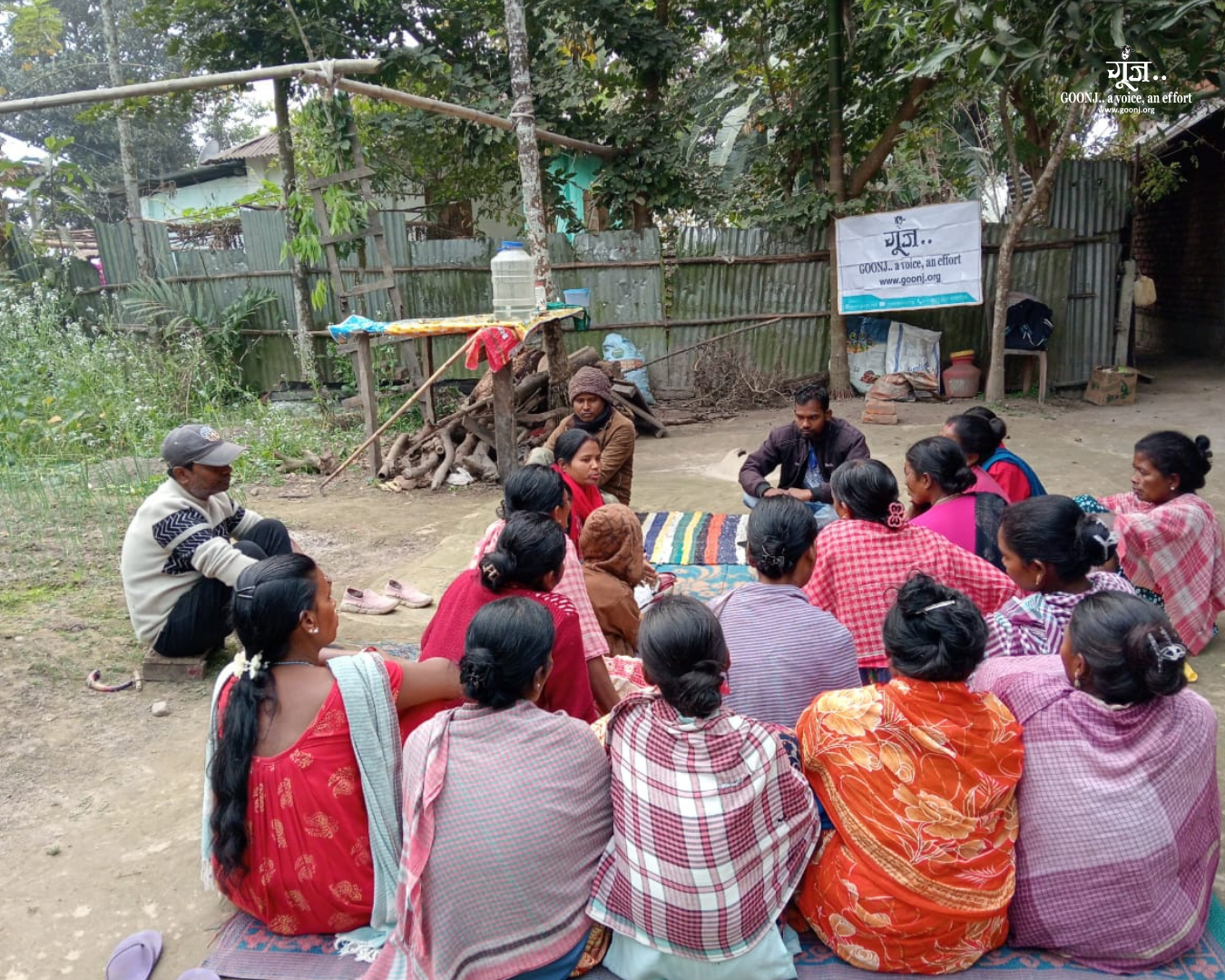
When Team Goonj reached the village, the conversation began with listening, asking the community to look for what they have. The community’s response was clear. They wanted to revive their Tea cultivation.
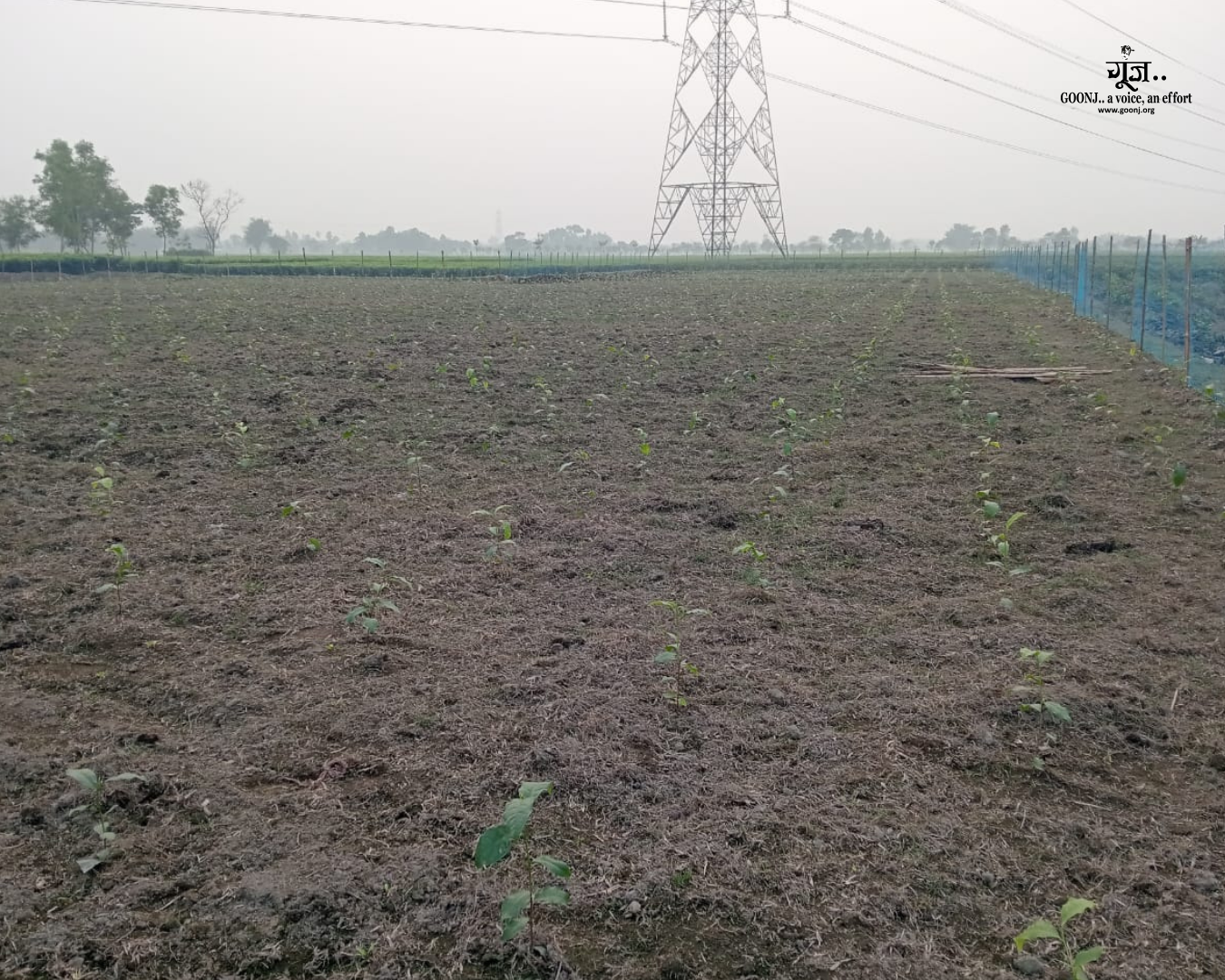
The abandoned land, once part of the tea garden, still held a possibility for a community-led tea cultivation initiative in Jalpaiguri.
A Collective Step Forward
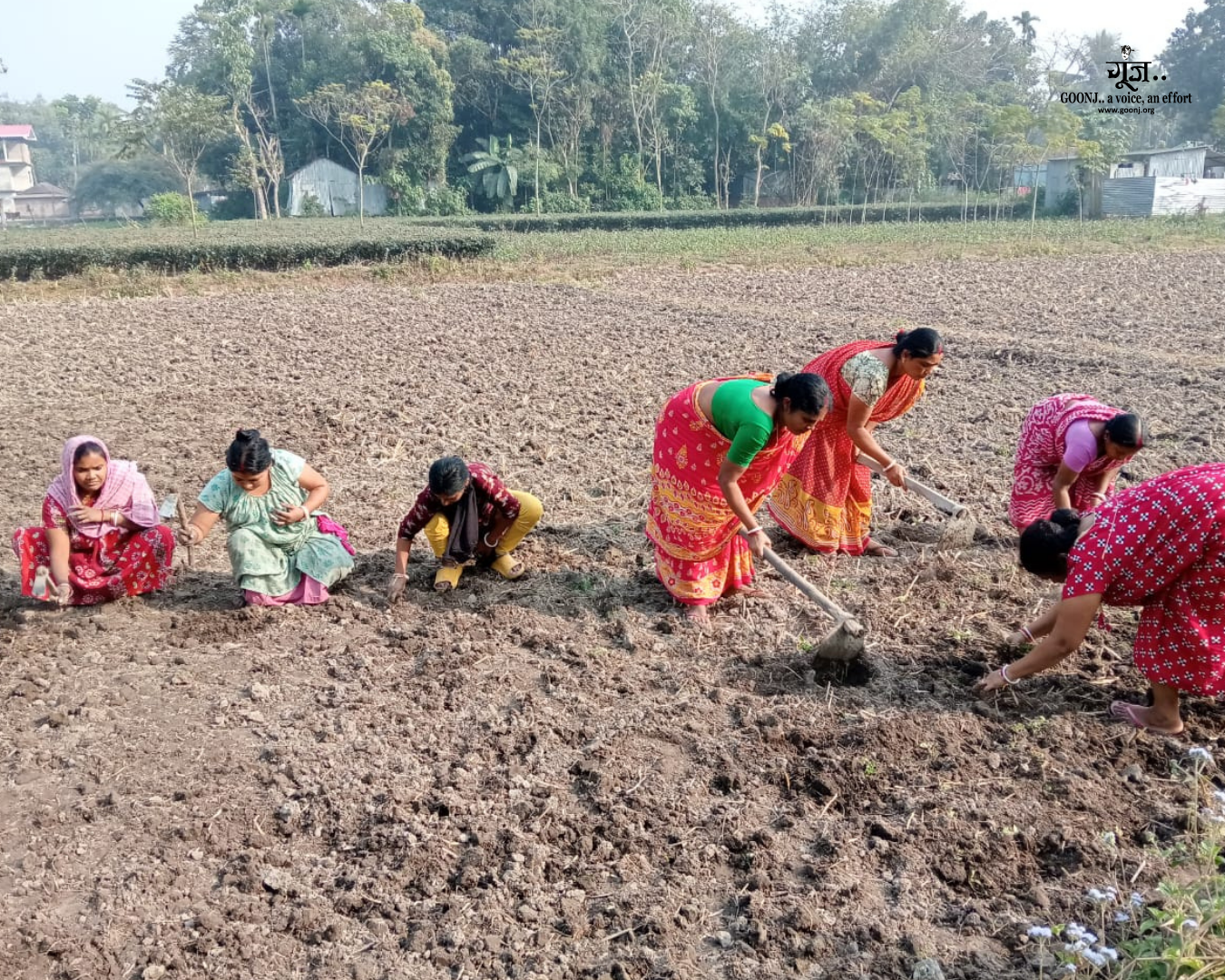
After the meeting, people came together to restart tea cultivation on the unused land. Knowing that this was a long-term idea for sustainable rural livelihood, people came together to raise close to Rs 2000 to buy tea saplings. They also cleaned the 190-foot-long drain in the area to ensure excess water could flow out, as tea plants do not survive in stagnant water.
The cultivated area now stretches 240 feet in length and 235 feet in width. What was lying unused has begun to take shape again—slowly, collectively.
Thinking in Years, Not Days
Bipasha Murmu, a college student from the area, says “It will take about three years for the tea plants to fully grow. Only then can the leaves be sold. But this will become a steady source of income for us. Whatever we earn will be shared among everyone.”
Choosing something that takes time is not easy for the people yet this decision reflects a shift—from short-term survival to building a long-term income source through tea cultivation.
What This Effort Holds
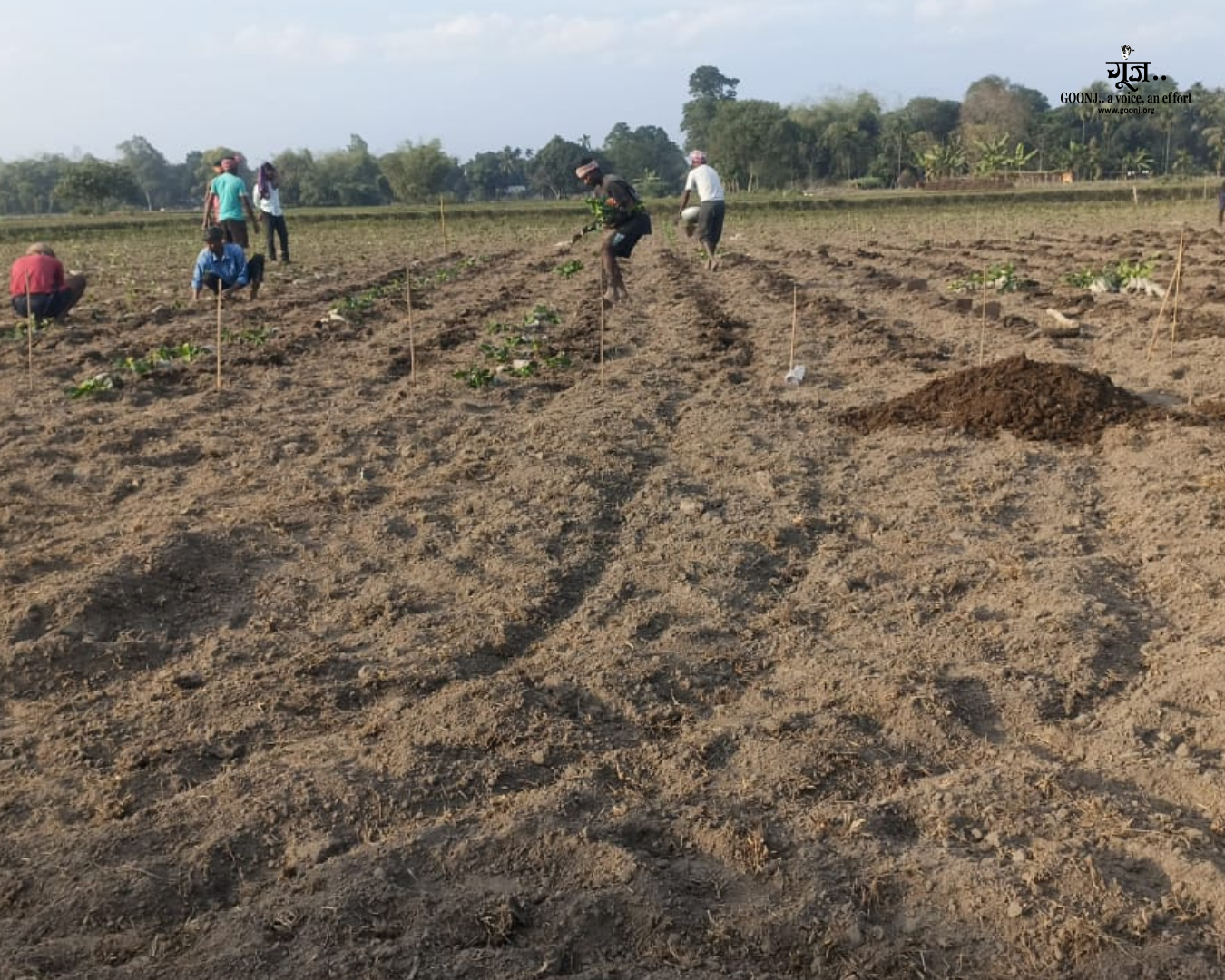
The tea garden is still growing. It will take time before it begins to generate income.
But something has already begun to change. The land is no longer abandoned. People are working on it together.
The community is also looking ahead— planning to expand the tea garden using future earnings and to cultivate other crops to reduce their dependence on markets for vegetables. This shows the seeds of community-led livelihood restoration and resilience.
In a place shaped by years of uncertainty, this effort does not remove all the challenges but it gives people a glimpse of a different possibility of staying, of working locally, and of rebuilding something that once defined life here.
About Goonj – Material shared by urban citizens and organisations is at the heart of these rural development stories. What lies idle in our urban homes and organisations is addressing material poverty, which is the lack of basic things needed for daily life. Goonj repositions cities’ unused material as a resource that brings rural communities together to take collective action on their own priorities. Material is shared back with people as a reward for their effort, wisdom and local resources, not as charity. What emerges is a model where people’s participation becomes central to their own development.
Be a Part of Change
Our invitation to you is, start from where you are.. From a small change of starting a Goonj kee Gullak or Team 5000, joining a long and deep change process, or things in between- organising a collection drive, a volunteering journey, an internship, or simply walking with us signing for a Goonj monthly newsletter subscription.. More on www.goonj.org or write to [email protected].
Many options, but the choice is always one; Taking Action