Life in Sagardwip: Environment and Social Realities
Sagardwip, an island at the southernmost edge of West Bengal, about 110 km from Kolkata. Within it, Uttar Haradhanpur village lies in the Sundarban region where land, water, and life are closely tied. Most families depend on farming, though many men migrate for work while women largely remain at home. In such a setting, conversations around women’s health, especially menstruation are often limited and deeply held social norms.
Starting the Conversation: Breaking Silence Through Not Just A Piece of Cloth
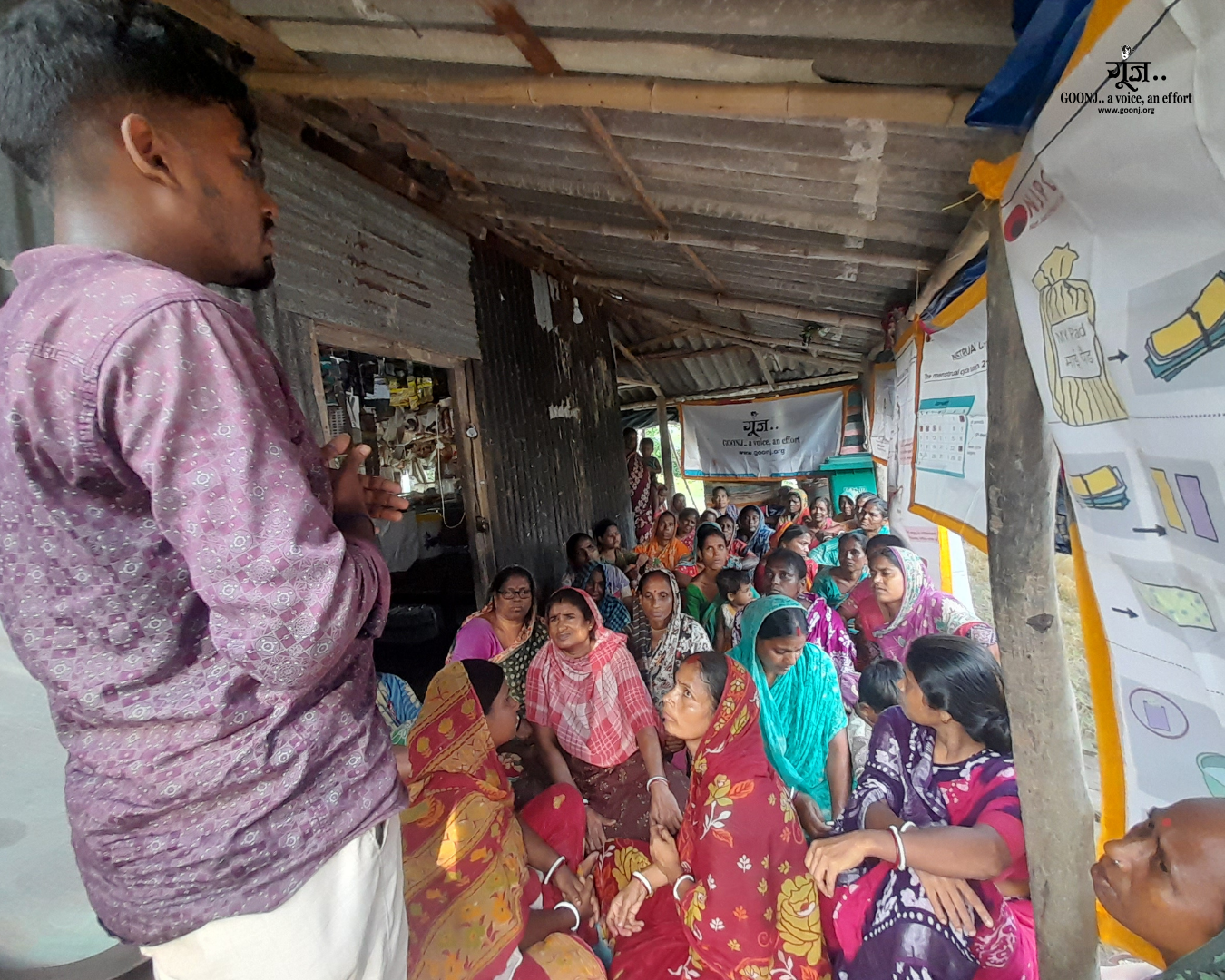
As part of Goonj’s Not Just a Piece of Cloth (NJPC) initiative, menstruation is approached not as a standalone issue of products, but through four interconnected pillars— Access, Affordability, Awareness, and Action. In Uttar Haradhanpur, this translated into a Chuppi Todo Baithak (Breaking the Silence meeting)- a community-led open discussion space. These spaces are designed to go beyond information-sharing to enable women to reflect on their realities, question norms, and collectively explore solutions. Alongside, conversations around ‘MY Pad’— cloth pad made out of pre and post urban surplus cotton textile opened up dialogue on choices that are both practical and sustainable within their context.
What Women Shared: Shifting Practices and Persistent Challenges
Manasi Guriya (community member) shared, “Before, most women used old cloth during their periods, but now many use sanitary pads. Due to the financial crisis and lack of availability, some of us still use cloth. We have many superstitions like not going to temples or wearing sindoor. Earlier, we never discussed periods openly. Now things are slowly changing.”
Connecting the Dots
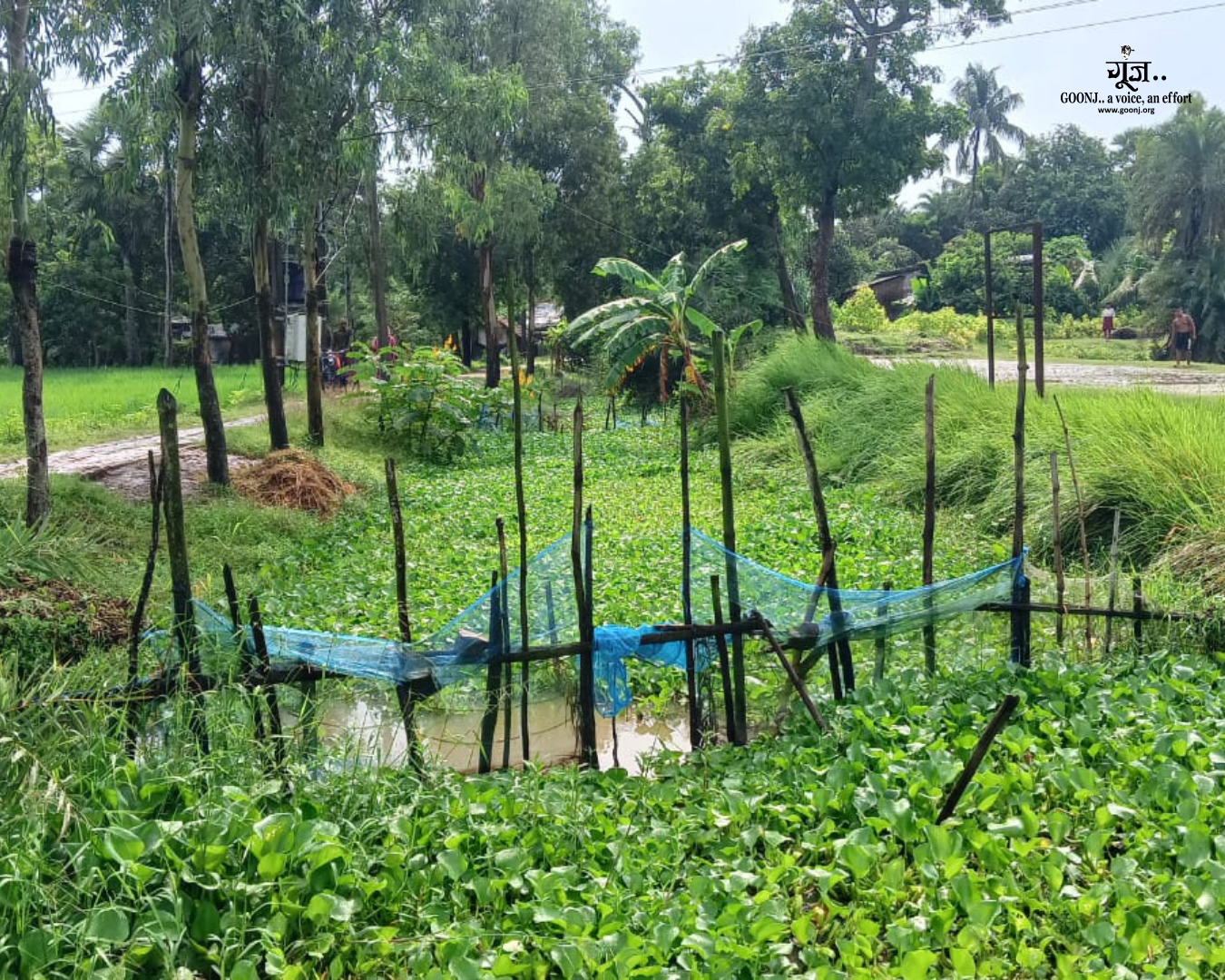
As the conversation deepened, women began connecting their menstrual health to larger, everyday challenges around them. During the monsoon, farming (done only once a year) often suffers due to waterlogging. A single canal, meant to drain excess rainwater, had remained clogged with weeds and waste for years. The result was not just damaged crops, but stagnant water that bred mosquitoes and disease.
Namita Das (community member) explained, “In the rainy season, dengue and malaria increase. The canal is dirty and filled with weeds, causing mosquitoes. Many people also depend on it for catching fish, but because it was unclean, it created more problems.”
In this geography, where water defines both risk and survival, the idea that cleaning a canal could influence menstrual wellbeing may not seem obvious at first. But for the women of Uttar Haradhanpur, the connections were clear. Poor sanitation, rising disease, lack of nutrition, and limited access to clean spaces all intersect with how women experience their periods.
From Dialogue to Action: Women Lead the Action
Recognising this, 40 women came together and spent three days cleaning the canal. What followed was not just improved water flow, but a shift in everyday life. Farmlands were protected from flooding, mosquito breeding reduced, and overall health conditions improved. The canal also became usable again for washing clothes, including menstrual cloth, and for supporting small kitchen gardens.
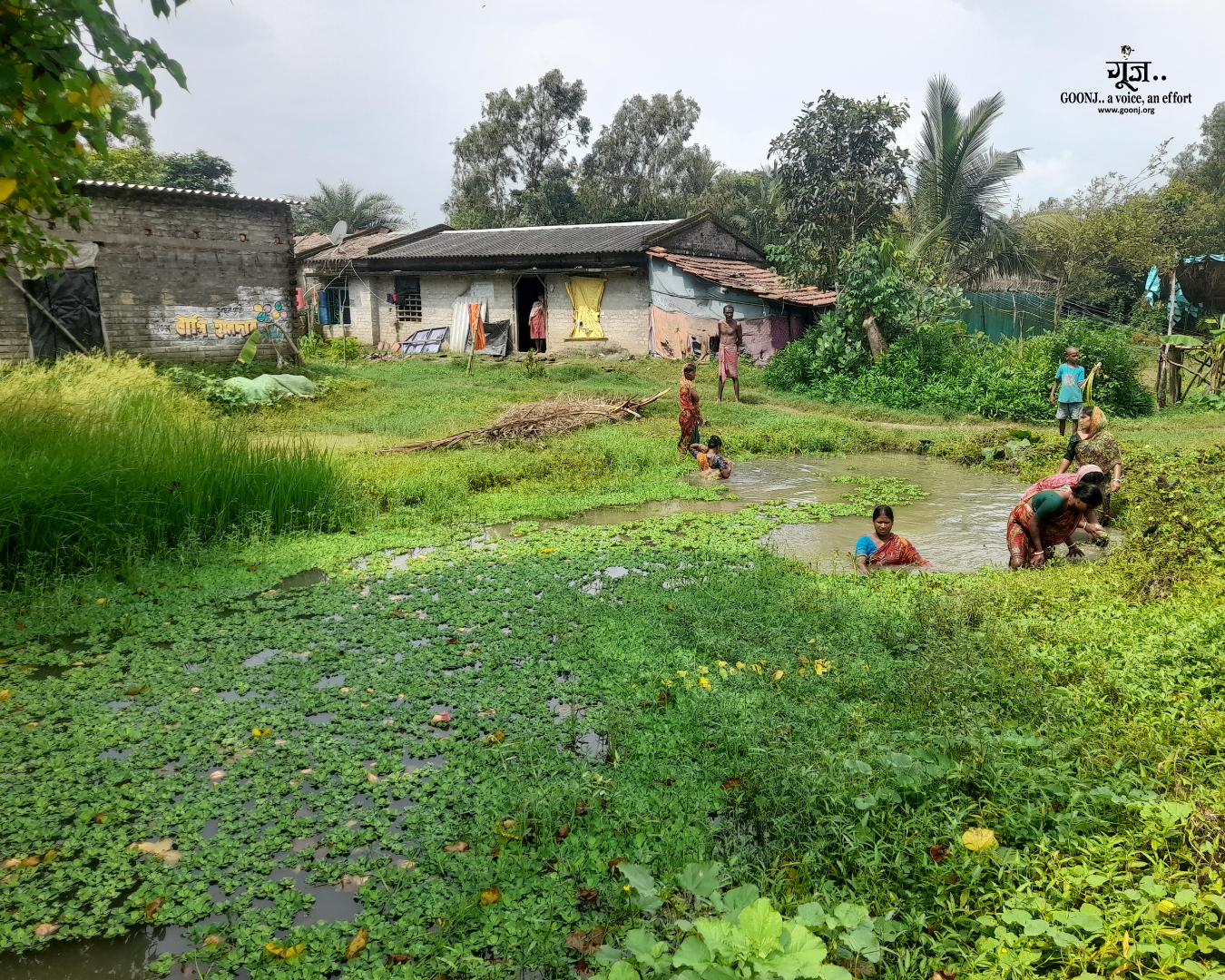
Sefali Maity (community member) reflected, “During periods, women should eat more vegetables. With canal water, we can grow kitchen gardens for fresh food. Cleaning the canal reduces mosquitoes, so our health improves.”
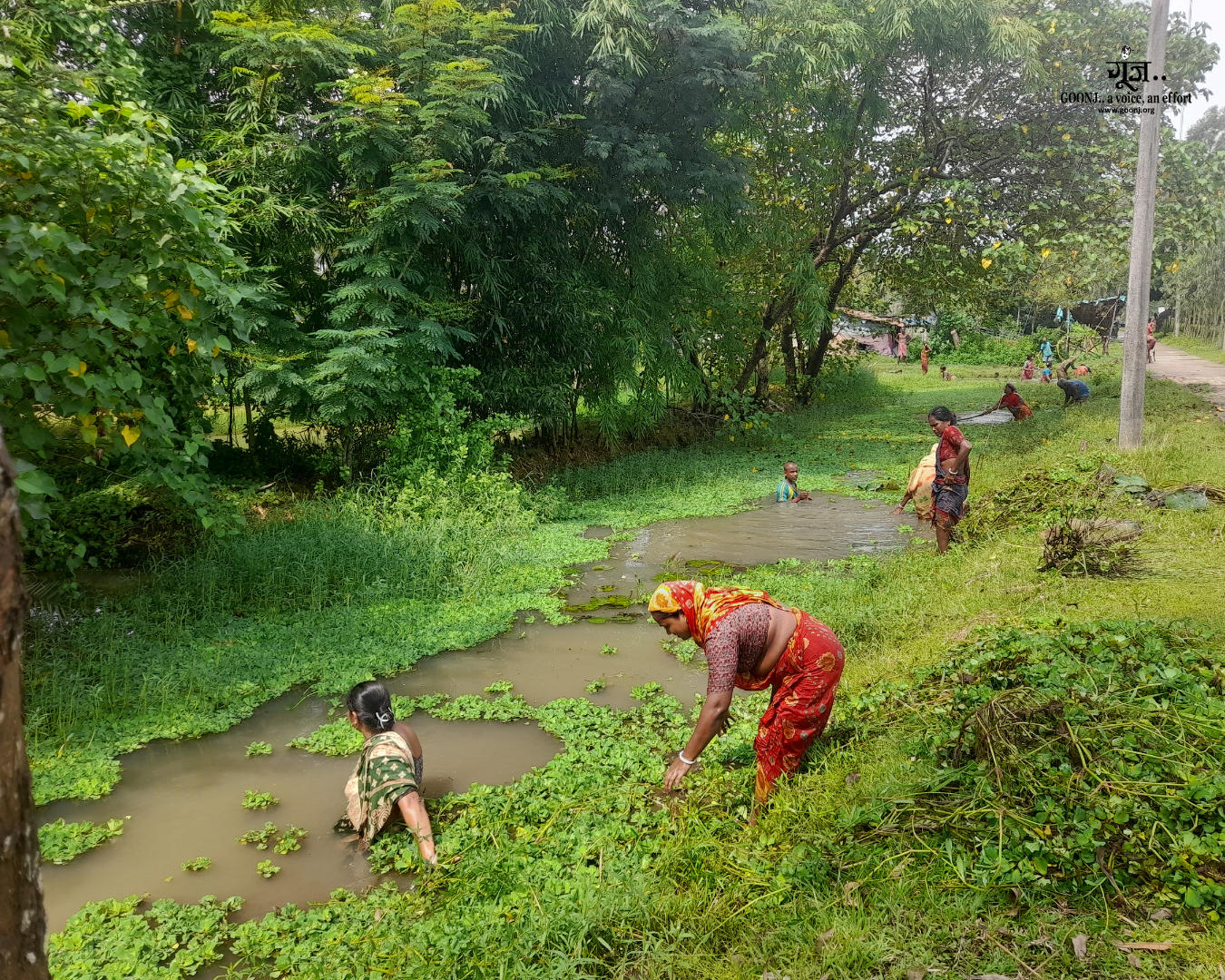
Ripple Effects: Health, Nutrition, and Dignity
This effort shows how communities often hold a deep understanding of their own challenges and solutions. What emerged was not a standalone health intervention, but a collective action rooted in local realities where a single step like canal cleaning created ripple effects across agriculture, nutrition, disease prevention, and menstrual wellbeing.
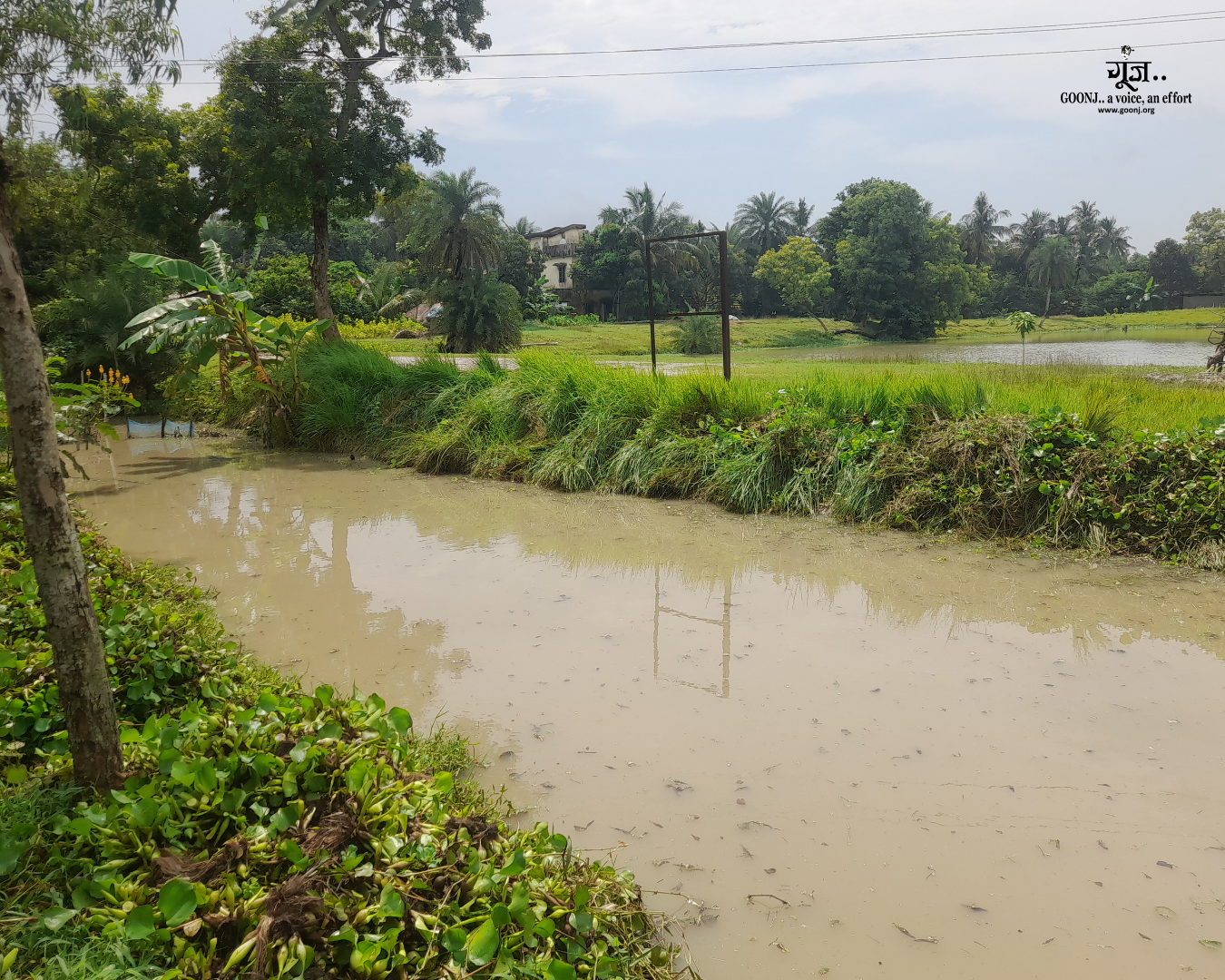
In Uttar Haradhanpur, the story of menstruation moves beyond products. It becomes a story of interconnected needs— of awareness, affordability, and action shaped by the environment people live in, and the solutions they build together.
About Goonj – Material shared by urban citizens and organisations is at the heart of these rural development stories. What lies idle in our urban homes and organisations can address material poverty, the lack of basic things needed for daily life. Goonj repositions cities’ unused material as a resource that brings rural communities together to take collective action on their own priorities. Material is shared back with people as a reward for their effort, wisdom and local resources, not as charity. What emerges is a model where people’s participation becomes central to their own development.
Be a Part of Change
Our invitation to you is, start from where you are.. From a small change of starting a Goonj kee Gullak or Team 5000, joining a long and deep change process, or things in between- organising a collection drive, a volunteering journey, an internship, or simply walking with us signing for a Goonj monthly newsletter subscription.. More on www.goonj.org or write to [email protected].
Many options, but the choice is always one; Taking Action