When Silence Becomes a Tradition
Shikaripara is a hamlet in Deulbari Debipur village of Kultali block in West Bengal’s South 24 Parganas district. Around 100 households live here.
In this community, the word Mashik (periods) is often used as an offensive word. Conversations around menstruation are uncommon, and many women grow up with limited opportunities to speak openly about their experiences.
Like many rural communities across India, silence has long been a part of menstrual health and wellbeing.
Starting a Difficult Conversation
When Goonj volunteer Dipa Sarder learnt about Goonj’s Not Just a Piece of Cloth (NJPC) initiative, she wanted to organise Goonj’s Chuppi Todo Baithak (break the Silence Meeting) with women in the village.
When women learnt that the Baithak would focus on menstruation, many did not want to attend. Dipa Sarder, Goonj team member Anup, and a few women from the village requested them to join the discussion.
Eventually, 35 women and four men became part of the Baithak.
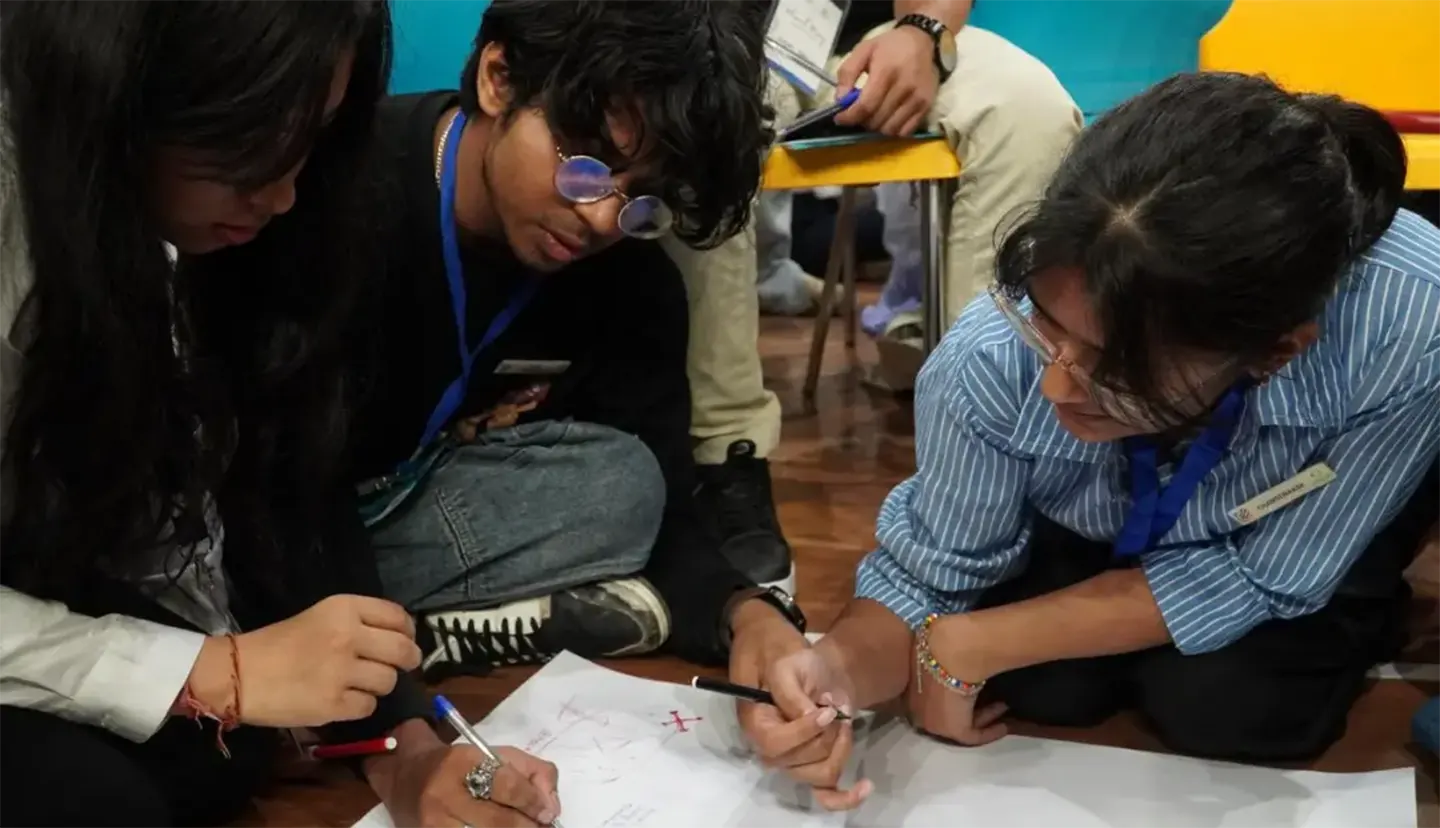
Most women preferred to sit inside a room, and many covered their faces with their sarees before the discussion began. As the ice-breaking session progressed, women slowly started sharing their experiences.
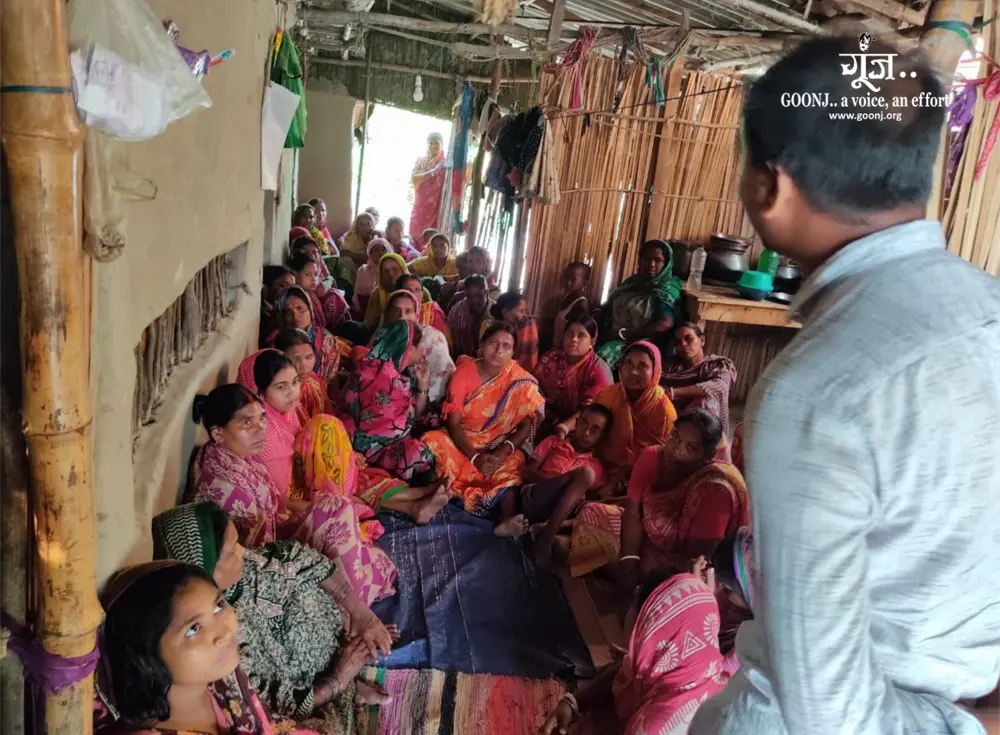
Women participating in a Chuppi Todo Baithak in Deulbari Debipur
Stories That Had Remained Unspoken
Among those who spoke was Tuktuki Sk (31).She shared that she was twelve years old when she got her first period while playing in a field. Frightened, she ran home but found her father standing outside the house. Unable to tell him what had happened, she waited until her mother noticed. Her mother gave her four pieces of cloth and showed her how to use them.
After that, she did not menstruate again for nearly three years, something that worried her mother.
Her periods returned on the day of her marriage when she was fifteen. Once again, she was given a piece of cotton cloth.
Tuktuki shared that she had never used sanitary pads after her marriage. She also spoke about experiencing a health problem related to menstruation. After consulting a doctor and drinking more water, she said her condition improved.
She also spoke about a belief followed in her community. Menstrual clothes are dried carefully because it is believed that if a husband sees them before leaving for honey or crab collection in the Sundarbans forest, he may face danger.
Another practice she spoke about was keeping menstruating women inside a dark room for five to seven days. She felt this practice continued because many families did not know how to use menstrual cloth safely or where to dispose of it.
Today, when her daughter menstruates, Tuktuki talks openly with her about managing periods. Her daughter now uses sanitary pads and sometimes also uses cloth.
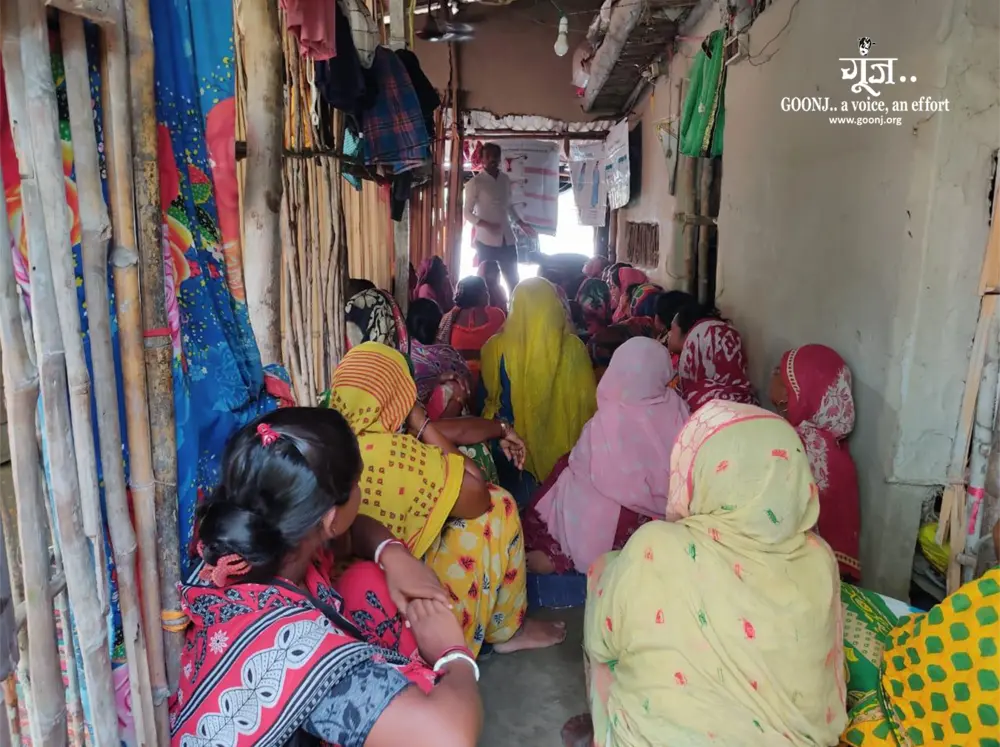
Women sharing personal experiences during the Chuppi Todo Baithak
A Space to Speak
Goonj’s Chuppi Todo Baithak (Break the Silence meeting) did not offer immediate solutions. Instead it created a space where women spoke openly about menstruation, shared personal experiences and listened to one another. For many participants, it was the first time they had spoken about periods in a group.
Creating these spaces of listening and conversations is one of the most important parts of Goonj’s menstrual wellbeing work across the country. It is here that communities come together to reflect on long-held practices, start to discuss their menstrual health and wellbeing more openly and understand the interconnections with other local challenges and most importantly are motivated and empowered to take collective action on their challenges, with their own efforts, wisdom and local resources.
Beyond Menstrual Health
Menstrual wellbeing is not only about access to menstrual materials. It is also about information, dignity and the confidence to talk openly.
No physical structure was built in Shikaripara that day. Instead, a conversation began.
The baithak (meeting) ended that day, but the conversation had just begun. For a community where menstruation had long remained unspoken, speaking openly was itself the first step towards change.
About Goonj
Goonj’s menstrual wellbeing work across India connects urban pre and post consumer textile surplus to become a resource for menstrual wellbeing of women and other menstruators in rural India. Our focus is on enabling people-led action with dignity as we strongly believe that development begins when people engage with their own challenges using their own effort, strengthened by shared resources.
Be a Stakeholder in our Work
Start where you are. Organise a collection drive. Begin a Goonj kee Gullak. Volunteer. Intern. Or stay connected through the monthly newsletter. Many ways to engage. One choice to make — take action.
More on www.goonj.org | Write to [email protected]
Many options, but the choice is always one; Taking Action..