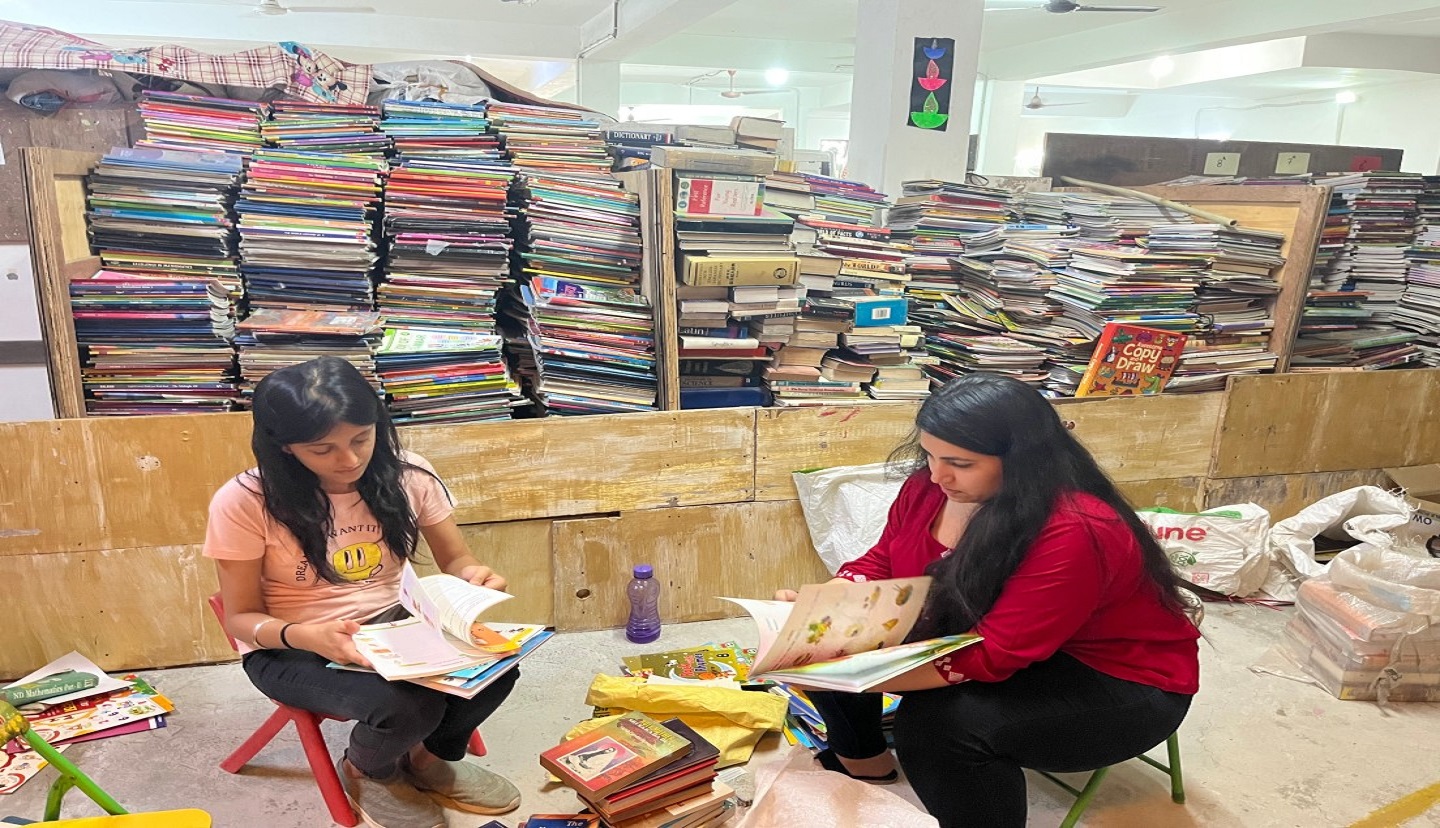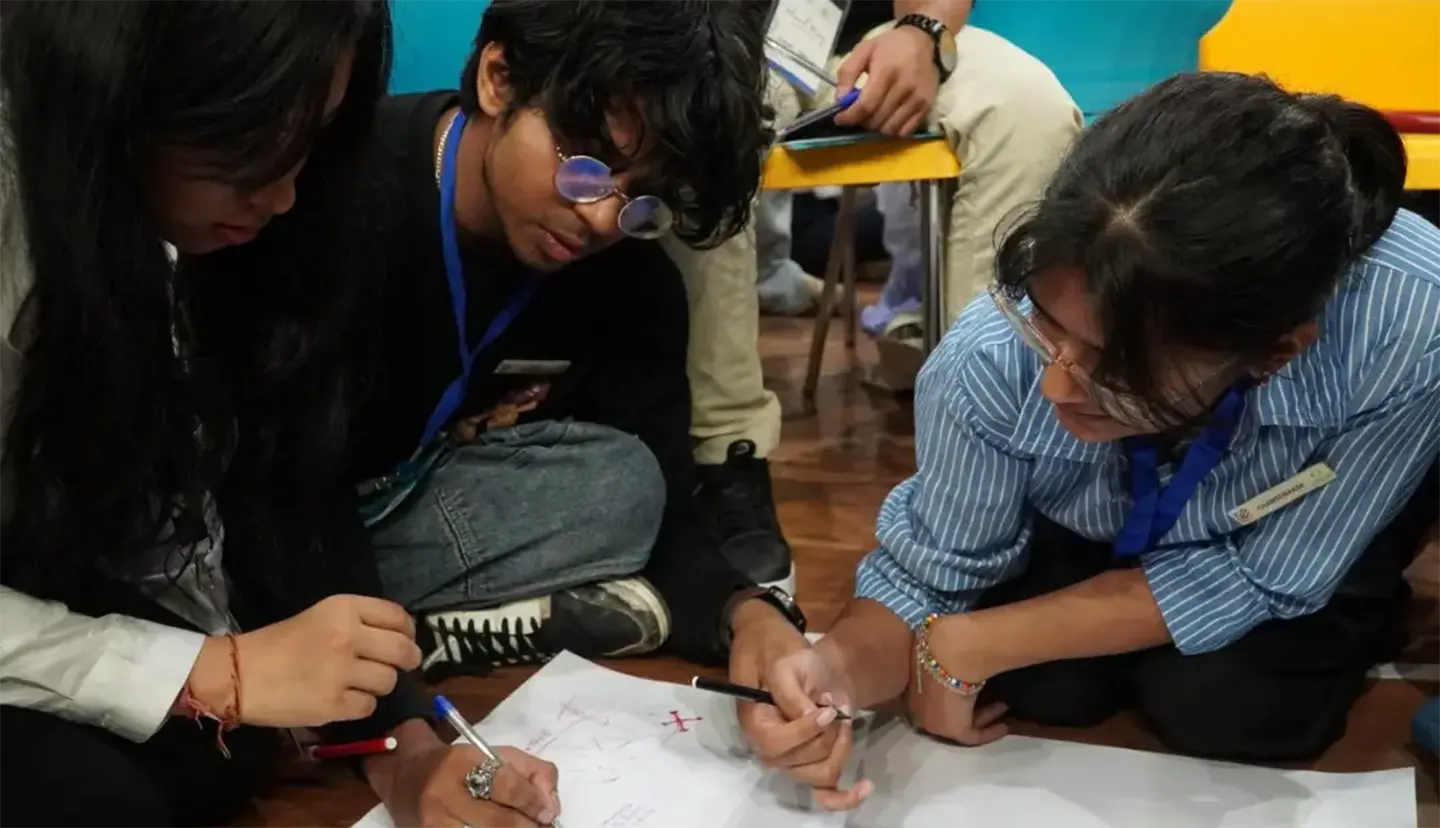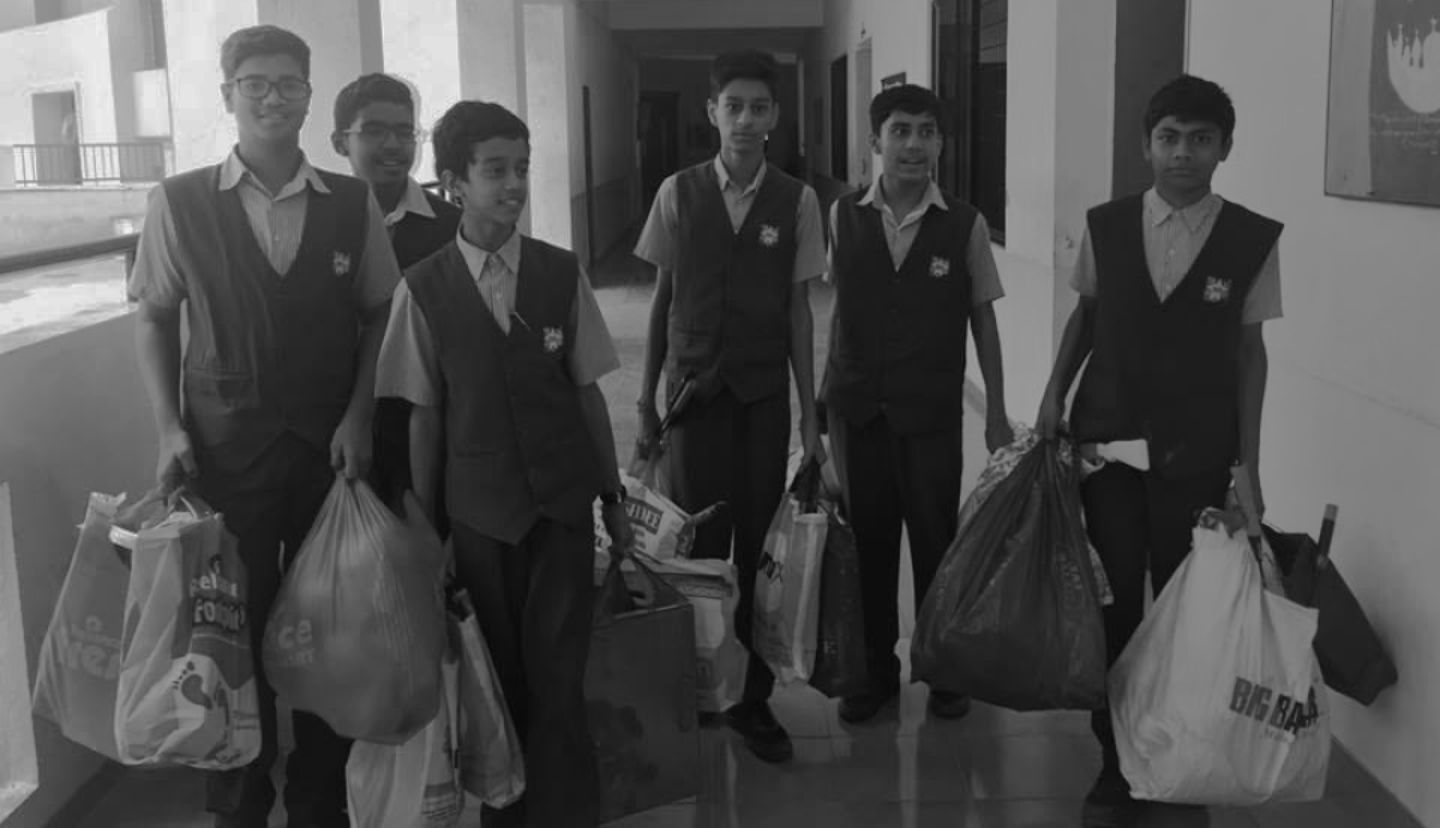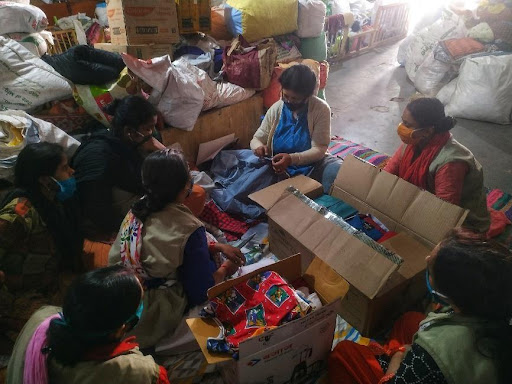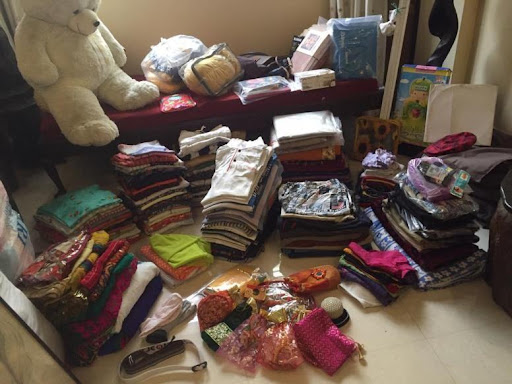
Twenty-five students of Class 9 from Shri Ram Universal School spent a day at Goonj Center of Circularity in Hyderabad. They had come to volunteer, but before they began working, they first got to understand what happens to material once it reaches Goonj.
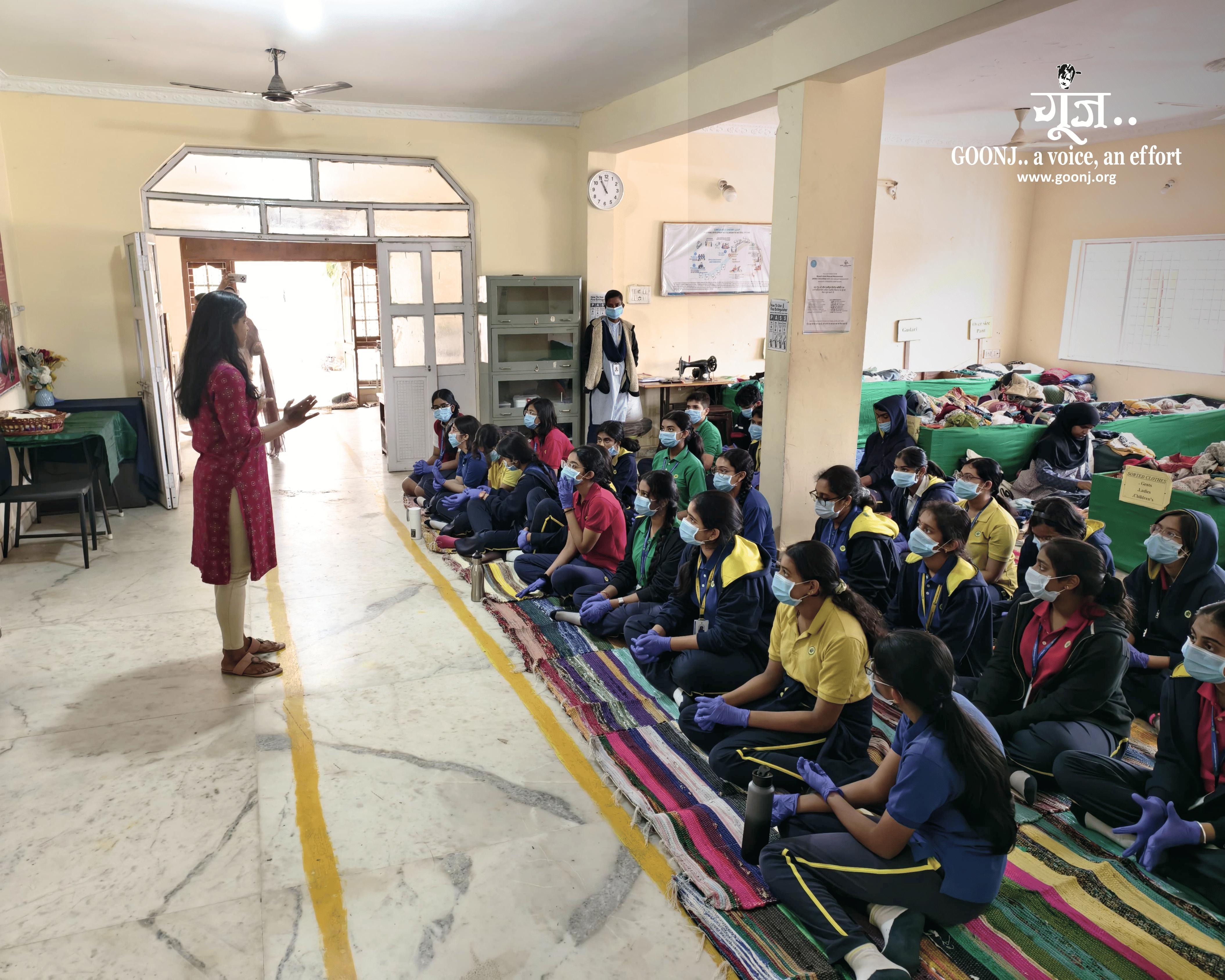
Introducing students to Goonj
Understanding the Journey of Material
They learnt about the journey of the material — how things from urban areas are sorted and processed, how they are put together into useful kits, and how these kits eventually travel to rural communities. But the journey does not end with the material reaching a village.
What the Material Makes Possible
The students also learnt about the idea behind it: that the material is not simply given away as charity. Communities come together around the issues they want to work on — whether it is improving a road, addressing sanitation, restoring a water source or finding another local solution. They bring their own knowledge, time, effort and available resources to the process, and the material becomes part of that exchange.
With this context, the students began their own part of the journey.
Taking Responsibility as a Team
They quickly understood the task, divided themselves into groups and took responsibility for different parts of the work. There was little need for instructions. One group moved ahead with its task while another worked alongside it, with students communicating and helping each other to keep things moving.
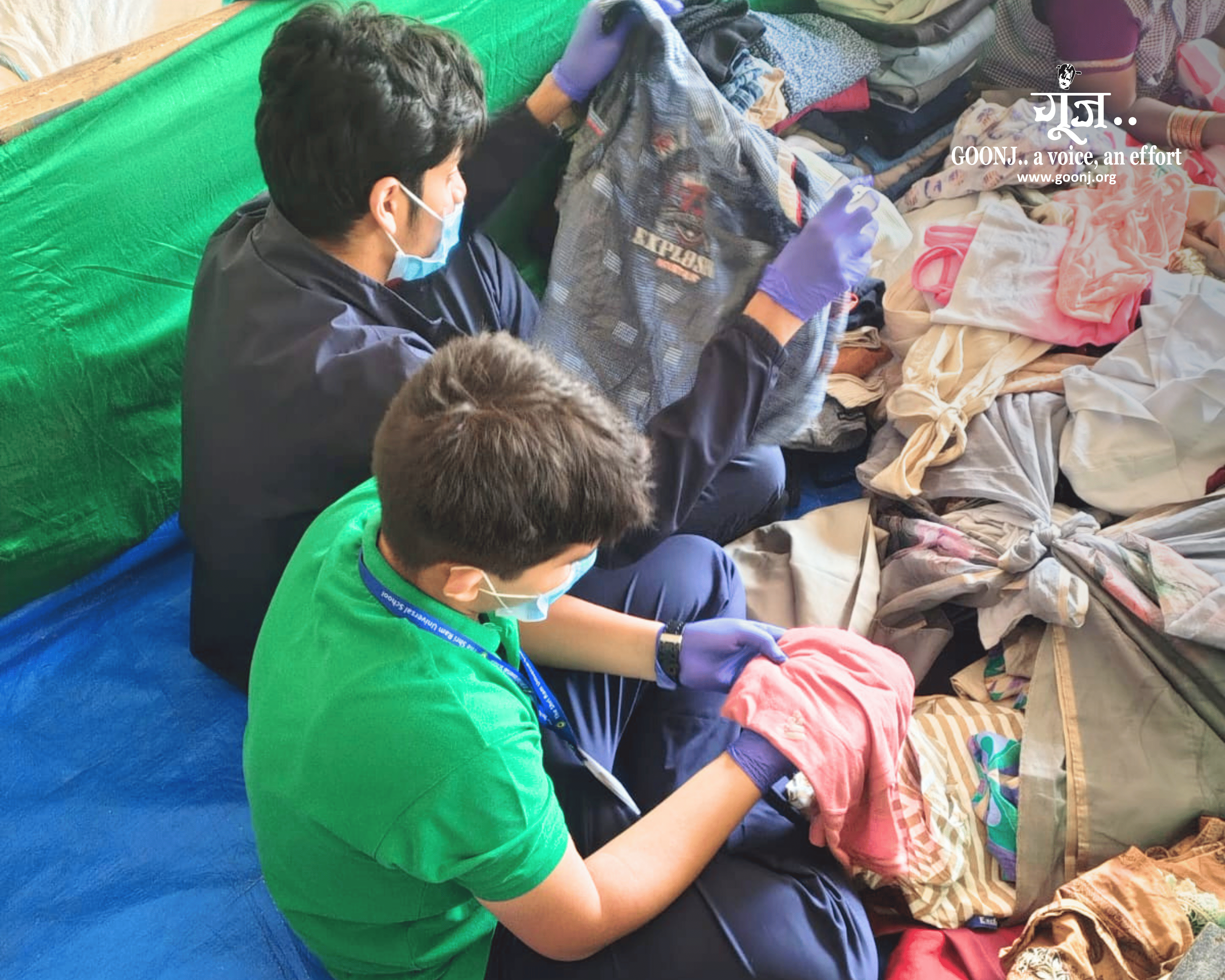
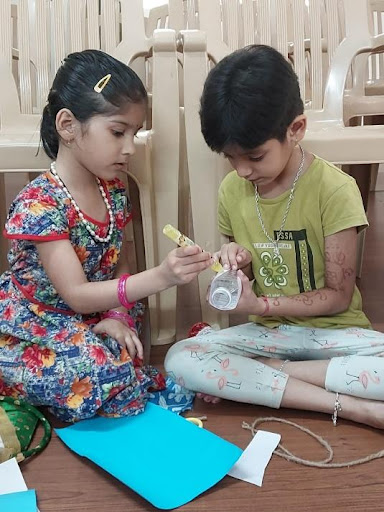
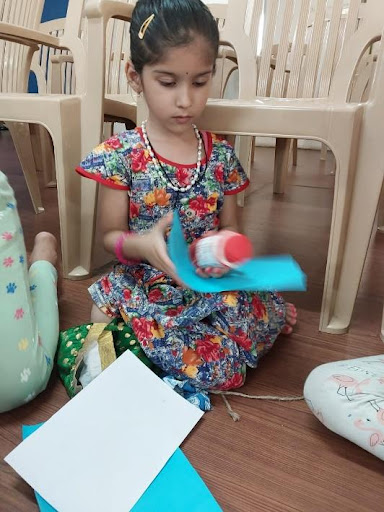
Children putting together need-based kits
What stood out was how naturally they took ownership.
There was no sense of simply completing an activity because they had been asked to. They talked and laughed as they worked, checked on one another and stepped in when something needed to be done. Their work had a rhythm of its own.
Seeing the Bigger Picture
For much of the day, the adults around them could simply observe.
The students were not working as 25 individuals completing separate tasks. They were beginning to understand how their own contribution fitted into a larger process — just as the material they were working with would become part of something larger once it left the centre.
By the end of the day, they had prepared 100 family kits.
At a Goonj Centre of Circularity, the journey of material is one way of understanding circularity. For these students, the day offered another kind of learning too, that when people bring their time, effort and skills together, they can become part of something that extends far beyond the task in front of them.
About Goonj
Goonj’s menstrual wellbeing work across India connects urban textile surplus to become a resource for menstrual wellbeing of women and other menstruators in rural India. Our focus is on enabling participation with dignity as we strongly believe that development begins when people engage with their own challenges using their own effort, strengthened by shared resources.
Be a Stakeholder in our Work
Start where you are. Organise a collection drive. Begin a Goonj kee Gullak. Volunteer. Intern. Or stay connected through the monthly newsletter. Many ways to engage. One choice to make — take action.
More on www.goonj.org | Write to [email protected]