The Check Dam Three Years Later
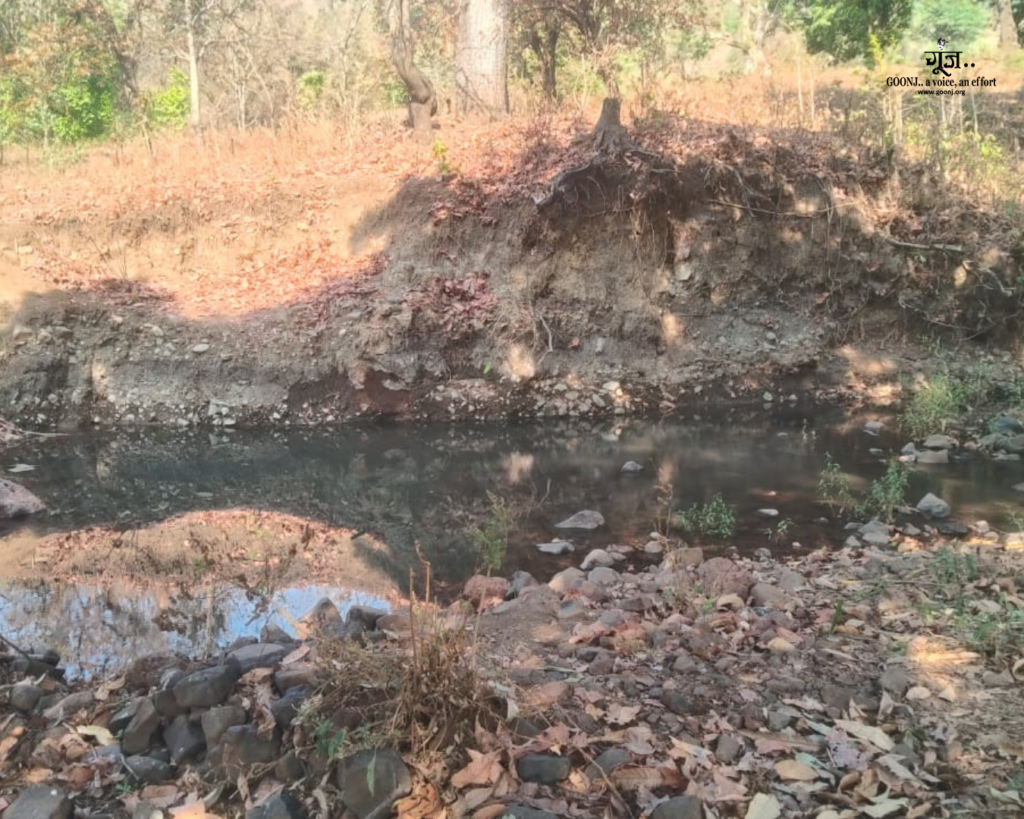
The spot where people had collectively tried to store water three years ago (in 2023) now resembles a small pond. Over time, both its appearance and utility have changed, yet it continues to serve the needs of people, livestock, and wildlife alike.
Understanding the Everyday Challenge
This story is set in Dhursi village, located amidst dense forests and hills, in the Pandariya block of Kabirdham district, Chhattisgarh. Members of the Baiga and Gond communities have lived here for two to three generations. Water, forests, and land form the foundation of life and livelihoods in the area. There are approximately 80 to 100 villages spread across the region. Due to the hilly terrain, meeting basic needs such as water, access roads, fertile land, and employment remains a constant challenge. Agriculture is the primary occupation here, but due to water scarcity, people rely heavily on crops that require little water, such as ‘kodo’ and ‘kutki’. Meanwhile, natural resources obtained from the forest, such as ‘char’, ‘tendu’, ‘mahua’, and ‘chironji’ serve as a vital source of income for the people.
As the heat intensified, the flow of small water sources originating from the mountains would diminish. During such times, people had to travel long distances to fetch water for their household needs. Fetching water along mountain paths was no easy task; it required both time and considerable effort. The impact of the water shortage was clearly visible in daily life.
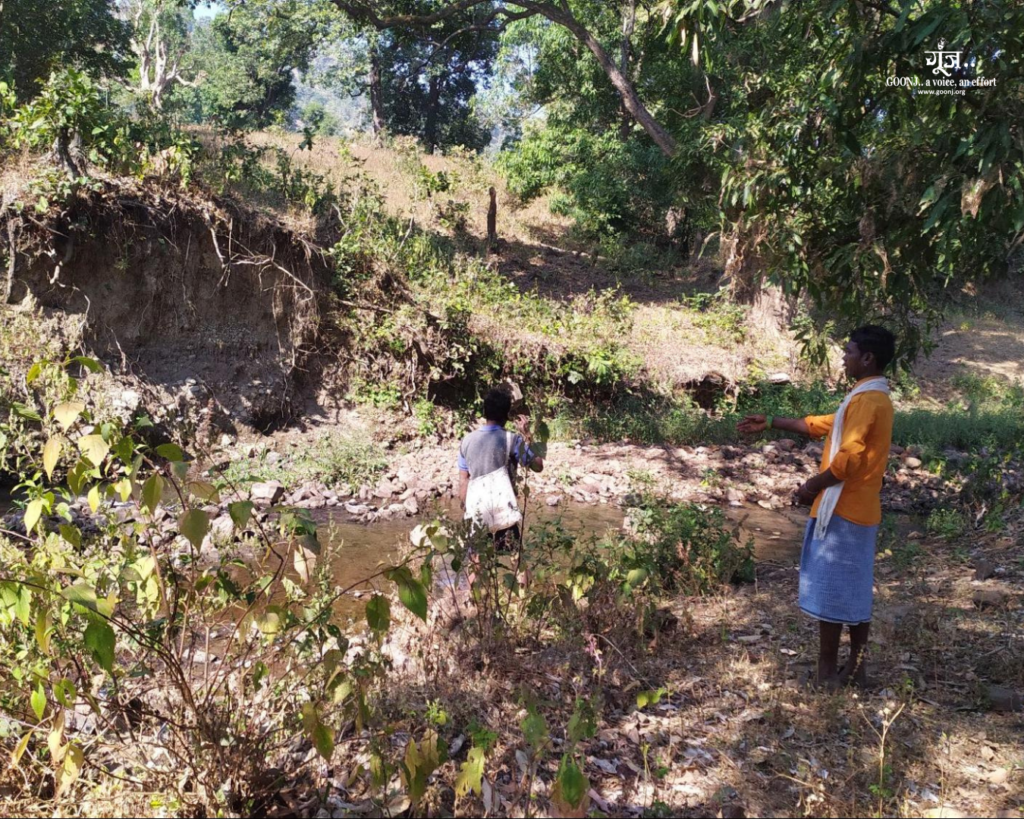
The Water Source Before the Check Dam
When the Community Chose to Act
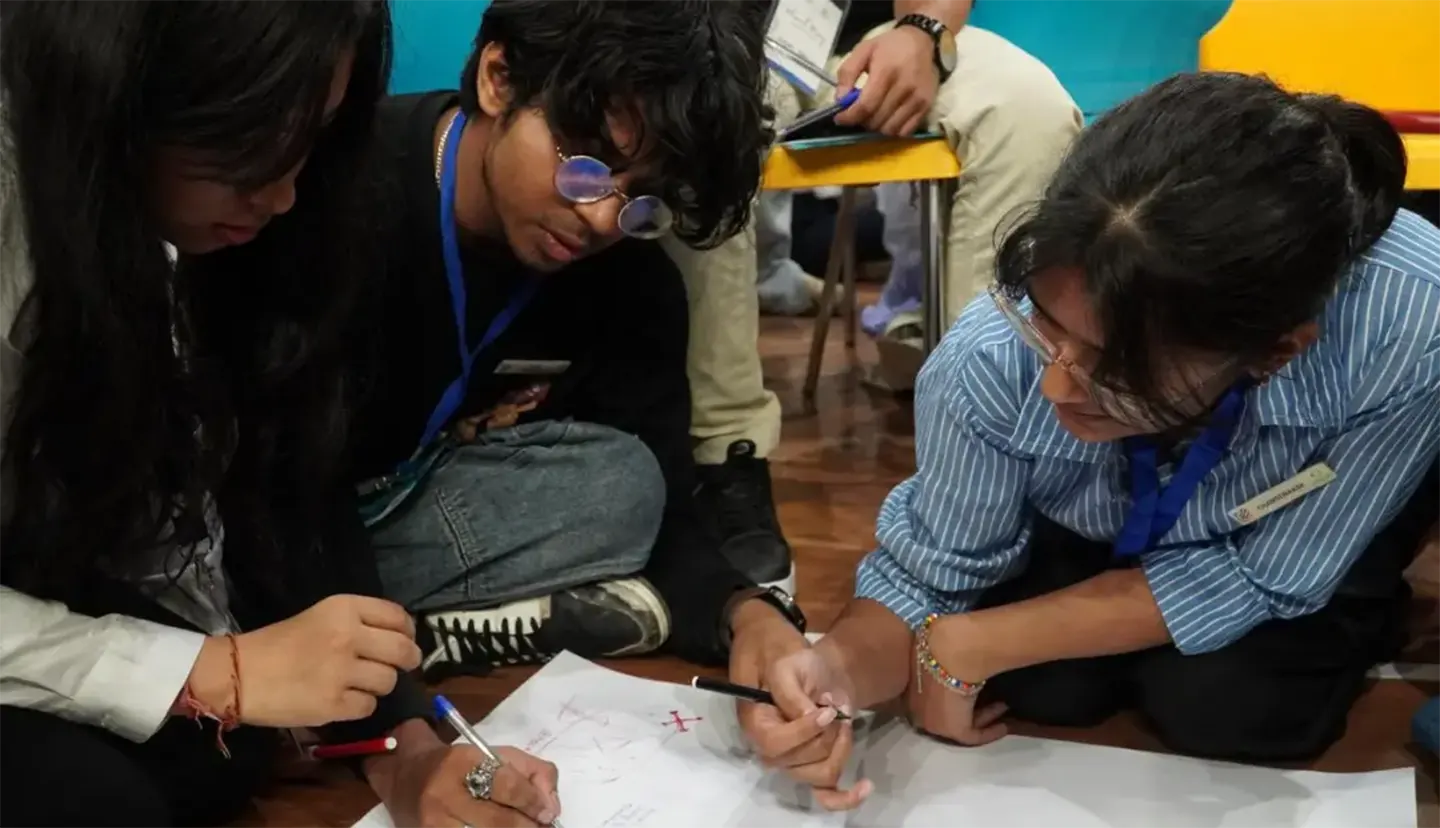
In 2023, to address this very issue, a meeting was held in the village under the “Cloth for Work” (CFW) initiative by Goonj and community members spoke openly during the discussion. They explained that during the summer months, the flow of water from the river and mountains diminishes significantly, making water availability a major challenge. Through this dialogue, the community explored ways to temporarily retain the water flowing down from the mountains; this line of thinking paved the way for a future solution.
A solution emerged from the discussions: building a check dam to enable water storage. 68 families came together for this initiative. Pooling their labor, they constructed a check dam measuring 20 feet in length and 4 feet in width. This was not merely a construction project; it was a collaborative effort driven by an understanding of the community’s own needs.
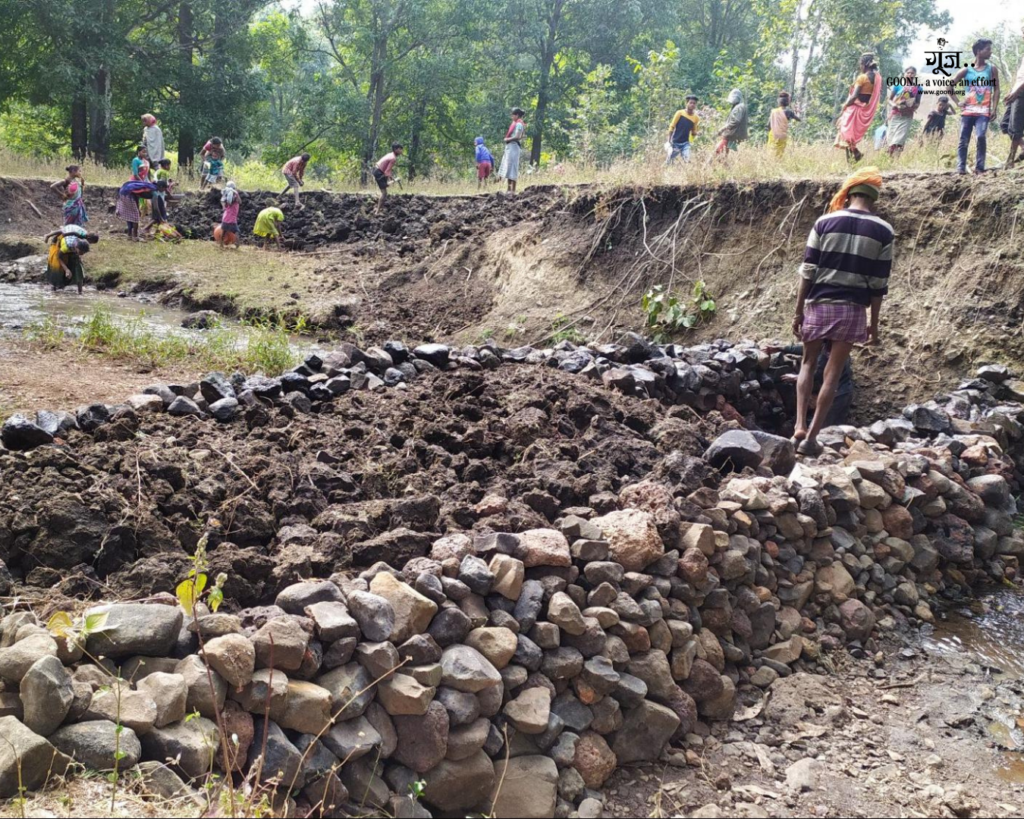
Community Members Building the Check Dam
Once the work was completed, the water that used to simply flow away began to be retained and accumulated in one place. As a result, the community had access to water for about four months. Gathering water for household needs became somewhat easier than before. People no longer had to travel as far, bringing some relief to their daily routine.
Holding More Than Just Water
This effort was not limited merely to constructing a check dam. It began by sitting down with community members to understand and discuss their daily challenges. The people themselves identified the water-related issues, deliberated on them together, and then worked collectively towards a solution. The aim of Goonj’s initiative is to encourage people to speak openly about their local needs and problems, find solutions together, and actively participate in improving the quality of life in their surroundings.
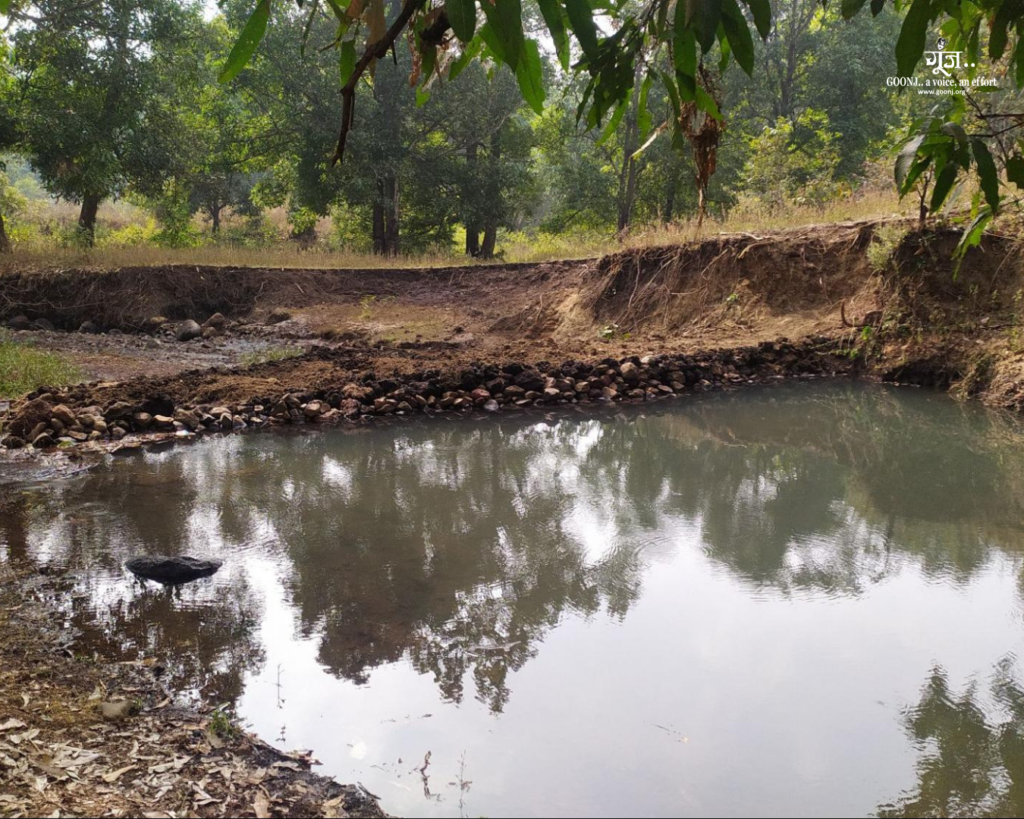
The Check Dam Continues to Serve the Community
Over time, both the form and the utility of this structure have evolved. When Goonj’s local team revisited the site in 2026, community members noted that the water here is no longer primarily used for household needs as it once was; instead, water is now supplied to residents under the “Har Ghar Nal Yojana” (Tap Water for Every Household scheme). Nevertheless, the structure has not lost its significance entirely. Even today, villagers occasionally bathe here, and livestock or wild animals heading towards the forest are often seen drinking water at the site.
Still Part of Everyday Life
While the nature of this work may have evolved over time, it remains connected in one way or another to the community and the life around it. This is not merely a story about retaining water; it is a testament to the collective understanding and effort of the people – where a small, collaborative initiative continues to make its presence felt to this day.
About Goonj
Goonj’s menstrual wellbeing work across India connects urban textile surplus to become a resource for menstrual wellbeing of women and other menstruators in rural India. Our focus is on enabling participation with dignity as we strongly believe that development begins when people engage with their own challenges using their own effort, strengthened by shared resources.
Be a Stakeholder in our Work
Start where you are. Organise a collection drive. Begin a Goonj kee Gullak. Volunteer. Intern. Or stay connected through the monthly newsletter. Many ways to engage. One choice to make — take action.
More on www.goonj.org | Write to [email protected]